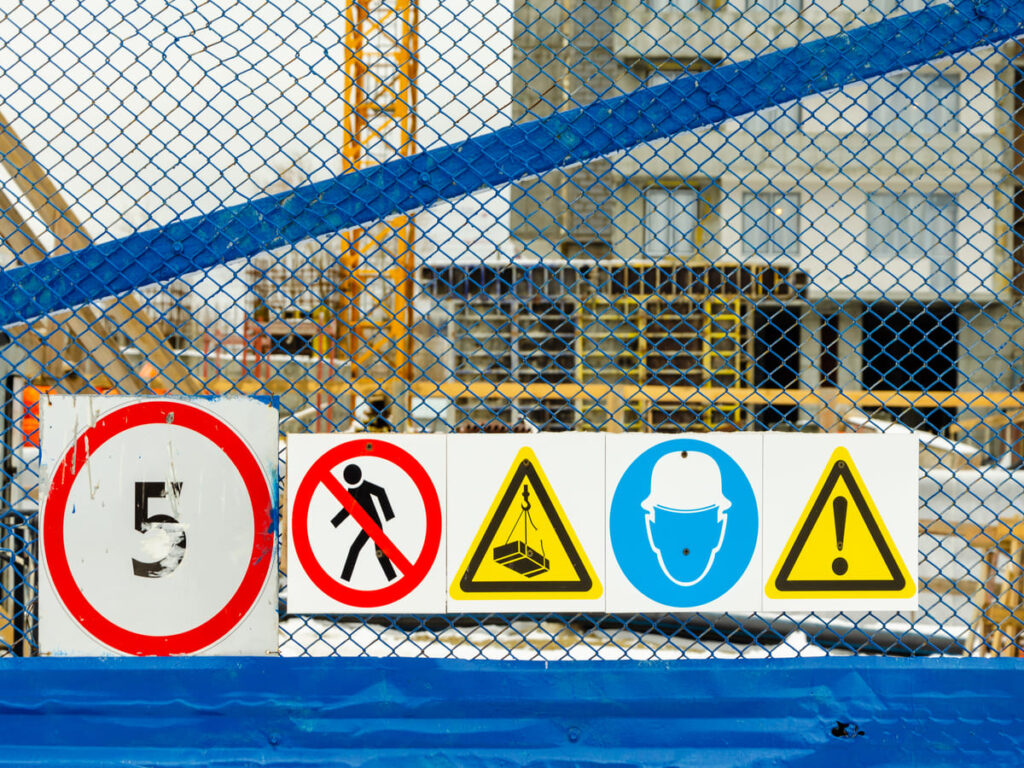
Les réglementations des panneaux de signalisation et les instructions générales établissent des règles pour les panneaux routiers au Royaume-Uni. Les panneaux réglementaires et les panneaux d'avertissement de sécurité aident à assurer la sécurité des gens et à s'assurer que tout le monde suit la loi. Chaque panneau doit rester facile à voir, clair, Et en bon état. Le manuel des panneaux de trafic donne des conseils importants pour utiliser les panneaux et s'occuper d'eux.
Chez OPTRAFFIC, we ensure that our traffic signs adhere to the highest standards set by the Traffic Signs Regulations and General Directions. Our signs are designed to be durable, visible, and compliant with UK regulations. To learn more about the impact of these regulations on the traffic sign industry, Consultez notre blog, Comprendre TSRGD 2016 Et ce que cela signifie pour les panneaux de trafic à vendre.
Vue d'ensemble TSRGD
Cadre juridique
Le Règlements sur les panneaux de circulation et instructions générales (Tsrgd) est une loi au Royaume-Uni. Il explique aux gens comment concevoir, faire des réserves, and use official road signs in Great Britain and the Isle of Man. The government made the TSRGD using the Road Traffic Regulation Act 1984 et la loi sur la circulation routière 1988. The newest version started on 22 Avril 2016. This law is very important for road safety in the UK. It says which traffic signs can be used and how they should look and work.
Le Département des transports (DfT) and local councils both help make sure people follow the traffic signs rules. The DfT gives advice for the whole country and writes the traffic signs manual. This helps everyone use the same rules. Local councils look after, vérifier, and make sure traffic signs are followed on their roads. Depuis 2022, councils in England and Wales can now stop people breaking rules about TSRGD signs, like banned turns or bus lane misuse. This change lets local councils do more to keep roads safe and make sure people follow the rules.
| Government Body | Role in TSRGD Enforcement and Compliance |
|---|---|
| Département des transports (DfT) | Gives advice and rules for the whole country, including the traffic signs manual, so everyone follows the same standards. |
| Autorités locales (Conseils locaux) | Look after, vérifier, and make sure traffic signs are followed on local roads; can now stop people breaking rules about TSRGD signs because of new Road Traffic Act changes. |
Key Parts
The traffic signs rules have some very important sections. Partie 3 is about regulatory signs, comme des limites de vitesse, Entrée interdite, and turn bans. These signs tell drivers what they must do or not do. Partie 4 is about warning signs in the TSRGD. These signs warn drivers about dangers like sharp bends, Les gens traversent, ou changements dans la route. Both parts help keep roads safe and traffic moving well.
The traffic signs manual gives helpful advice for using the traffic signs rules. It helps road workers, constructeurs, and engineers pick the right signs, matériels, and places to put them. If people follow the manual, all signs will meet the law and work well in every situation.
Regulatory Signs Compliance

Exigences clés
Regulatory signs are very important for road safety. TSRGD Part 3 gives the main rules for these signs. The law uses ‘must’ and ‘shall’ to show what you have to do. Every regulatory sign has to follow these rules to be legal and work well.
- All regulatory signs must follow TSRGD rules and help enforce traffic laws.
- There are two main types of signs. Some signs tell you what to do, and they are blue and round. Other signs tell you what not to do, and they are round with a red edge. STOP signs look like an octagon. GIVE WAY signs are shaped like a triangle.
- Extra plates can only go with some signs. They must use the layouts from the Department for Transport.
- The size of a sign depends on how fast cars go. Signs on fast roads need to be bigger so drivers can read them.
- Les signes doivent être faciles à voir de loin. Rien ne devrait les bloquer. La distance dépend de la vitesse à laquelle roulent les voitures.
- Signs that start a rule or ban must be on both sides of the road. This is unless the road is narrow or the rule is only for one side.
- Signs must always be clear and easy to see. This is true even for road works or temporary signs.
Note: Using regulatory signs the right way helps drivers know what to do. This stops confusion and accidents.
Conception et placement
Regulatory signs have strict rules for how they look and where they go. Each sign must be put at the place where the rule starts. This helps drivers know when and where the rule begins.
- Signs must be big enough for drivers to read at their speed.
- All regulatory signs must shine in car lights or be lit up. This helps people see them at night and during the day.
- Most regulatory signs are rectangles. STOP and GIVE WAY signs have special shapes.
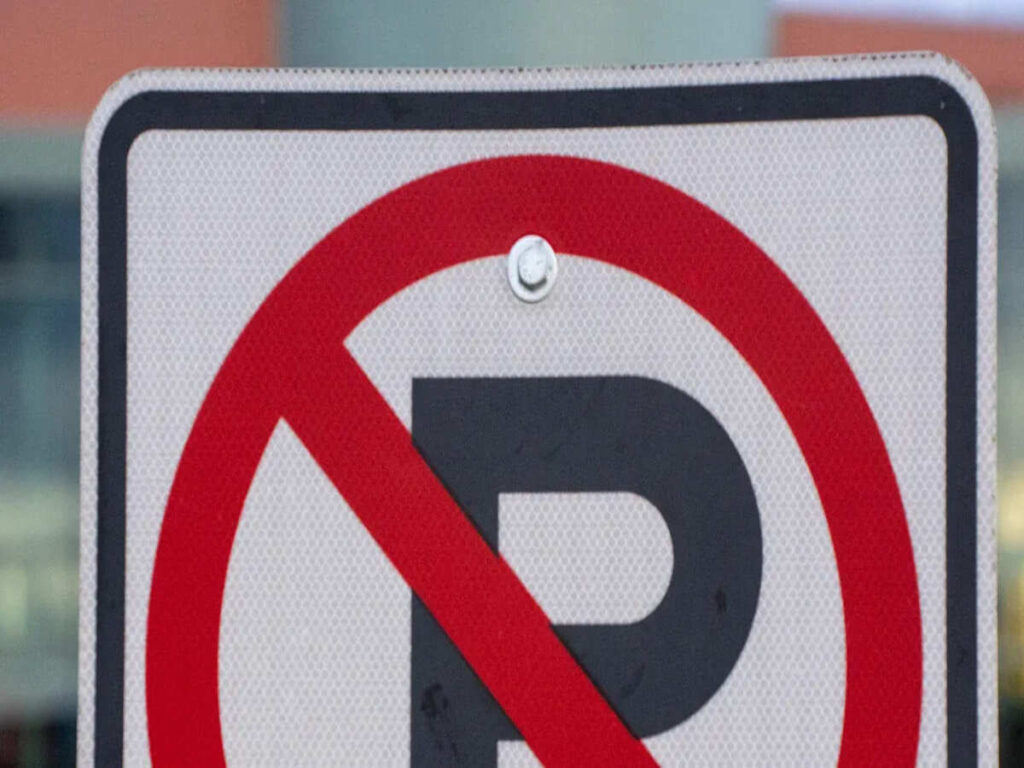
- Parking signs with arrows should point between 30 et 45 degrees to the road. Cela les rend plus faciles à voir.
- At junctions, engineers must think about how many cars use the road, how fast they go, jusqu'où les conducteurs peuvent voir, and if there have been crashes.
- If a sign is put at a right angle to the kerb, there must be two signs back-to-back with extra plates where zones change.
| Type de signe | Forme | Schéma de couleurs | Règle de placement |
|---|---|---|---|
| Limitation de vitesse | Circulaire | Frontière rouge, blanc | Both sides at start of zone, visibilité claire |
| Entrée interdite | Circulaire | Frontière rouge, blanc | At entry point, both sides if possible |
| ARRÊT | Octogonal | Red with white text | At junction, clear line of sight |
| CÉDER | Triangulaire | Frontière rouge, blanc | At junction, visible from approach |
Pièges communs
Many groups have problems when they do not follow the rules for regulatory signs. Certaines erreurs courantes sont:
- Using signs that are too small for fast roads. Cela les rend difficiles à lire.
- Putting signs where trees, voitures, ou les bâtiments les bloquent.
- Using the wrong shape or colour, qui peut confondre les conducteurs.
- Not putting signs on both sides of the road when needed.
- Using old or broken signs that do not shine at night.
- Adding too much writing or unclear words, which makes the sign less helpful.
Not following the rules for regulatory signs can cause big problems:
- Road councils may give fines for signs that are the wrong size or in the wrong place.
- Accidents from unclear or missing signs can lead to court cases.
- Projects might lose their permissions or be delayed after checks fail.
- Insurance might not pay if a bad sign caused a crash.
- Companies could lose their good name and future jobs.
- People may stop trusting the signs if they are confusing or not legal.
Conseil: Checking and fixing signs often helps avoid these problems. It keeps all regulatory signs following the law.
Safety Warning Signs

Normes de conception
Safety warning signs help drivers know about dangers ahead. TSRGD Part 4 gives strict rules for how these signs look. Each sign must have a shape and symbol that people know. Most safety warning signs are triangles with a red border, white inside, and a black symbol. This makes it easy for drivers to see danger and react fast.
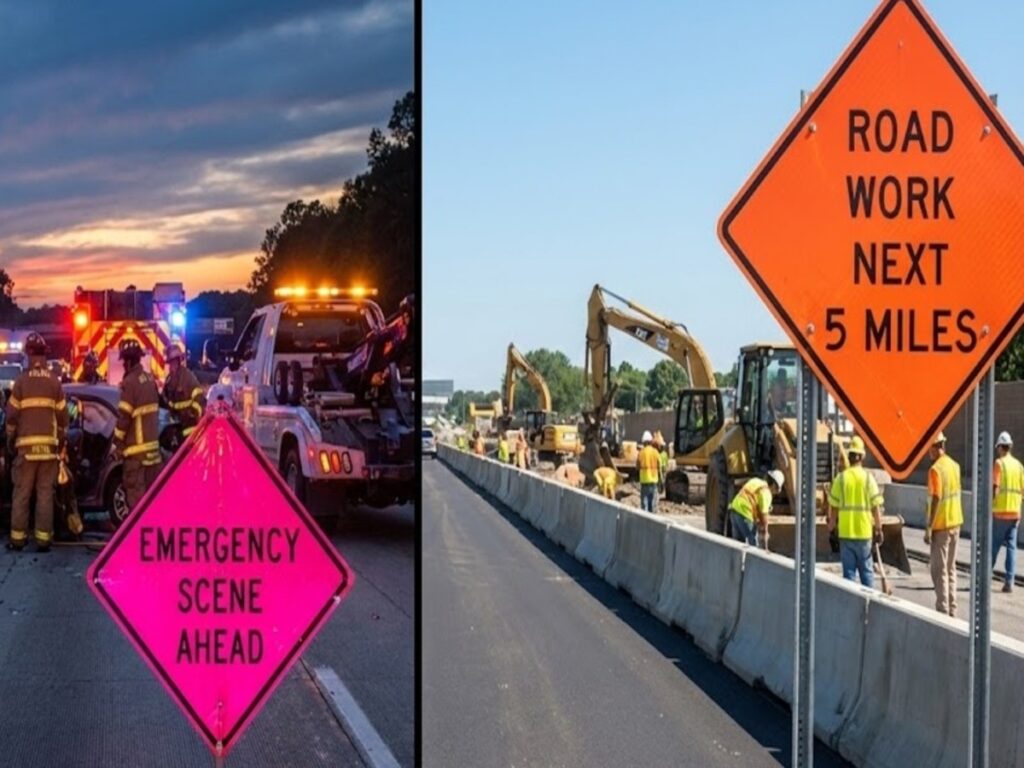
Parfois, warning signs need to be even easier to see. Dans ces cas, signs can have a yellow background. Yellow backgrounds are used in places like roadworks or accident spots. All safety warning signs must use reflective materials. These help drivers see the signs at night or when the weather is bad. The British Standard BS EN 12899-1 says how bright and strong the signs must be. Signs also need to last a long time and not fade or break in bad weather.
Note: Good reflective and strong materials help safety warning signs stay bright and last longer.
Règles de placement
Putting safety warning signs in the right place is very important. TSRGD Part 4 donne des règles claires pour savoir où mettre chaque signe. Signs must be far enough from the danger so drivers have time to slow down or turn. The distance depends on how fast cars go and what the danger is.
In places like roadworks or sharp bends, signs must be even easier to see. Signs must use special materials that shine in car lights and do not get ruined by rain. Drivers must be able to see the sign even if it is dark or raining. Workers sometimes use signs that light up, ruban réfléchissant, or glowing markers to help. Les panneaux ne doivent jamais être cachés par les arbres, voitures garées, ou autre chose.
- Extra warning signs and traffic control are needed in work zones.
- Workers must wear bright clothes to stay safe.
- Signs must be put at the best distance so drivers can react.
- Flashing lights or electronic boards may be used in dangerous places.
A good Traffic Control Plan helps make sure all safety warning signs are in the right spot and follow the law.
Problèmes de conformité
Suivant TSRGD Part 4 est très important pour la sécurité routière. Bad or wrongly placed safety warning signs can cause crashes and legal trouble. Signs that are not bright or strong enough can be hard to see at night or in bad weather. Cela rend les accidents plus probables, especially in risky or temporary places.
Checking safety warning signs often helps find ones that are broken or faded. Councils and workers must change any sign that does not meet the rules. Utiliser les mêmes couleurs, symboles, and words stops drivers from getting confused. Checking and fixing signs often keeps all safety warning signs working well and following the law.
| Problème de conformité | Impact on Safety and Legal Status |
|---|---|
| Poor reflectivity | Harder to see at night |
| Wrong placement | Drivers miss danger, Plus de plantages |
| Non-standard symbols or colours | Les conducteurs sont confus, breaks the law |
| Damaged or faded signs | Signs do not work, may get a penalty |
Conseil: Always use the traffic signs manual and check safety warning signs often to follow the rules and keep people safe.
Panneaux de circulation temporaires
Exigences
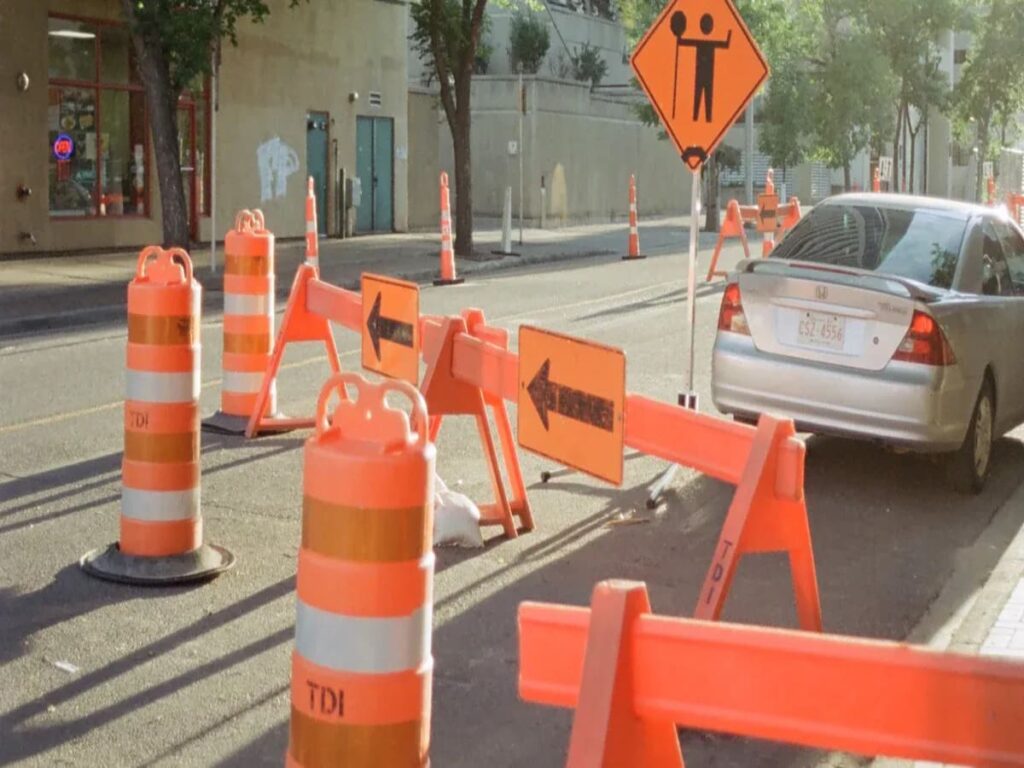
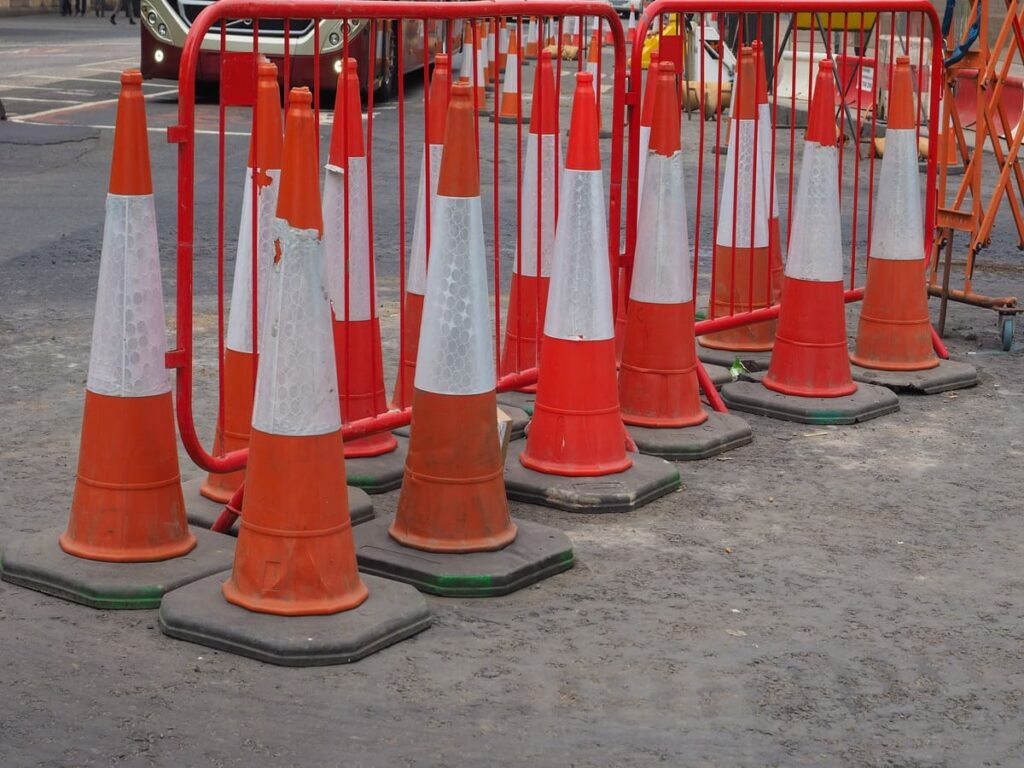
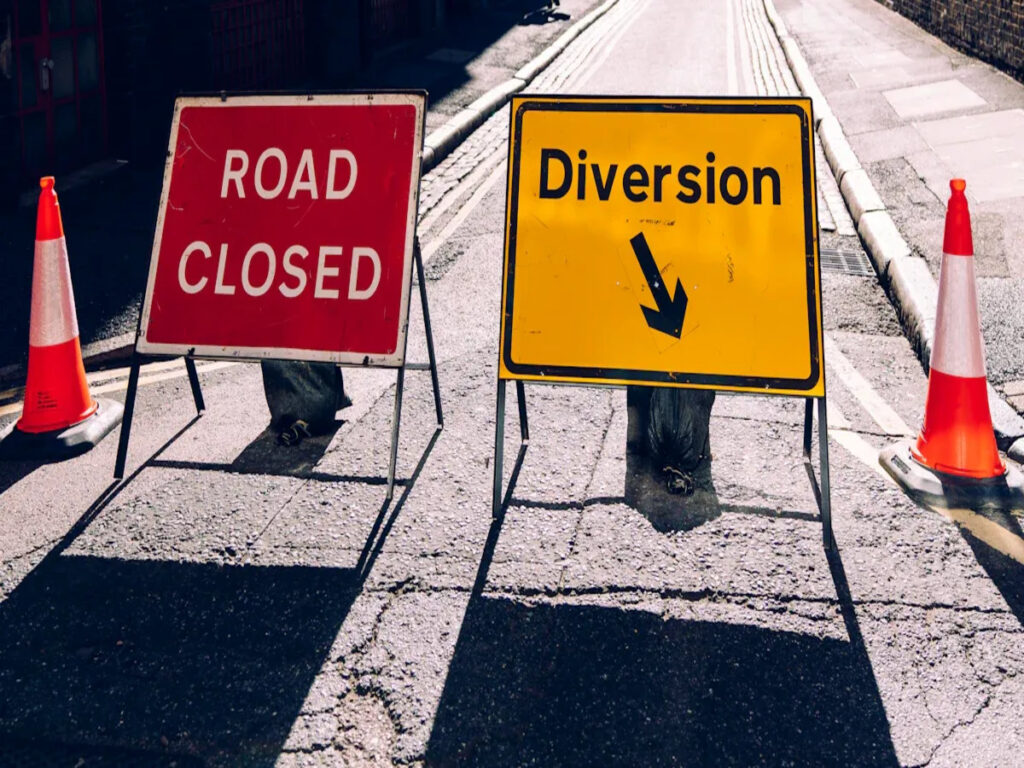
Temporary traffic signs are very important for safety during street works. Le manuel et le chapitre sur la signalisation routière 8 have strict rules for these signs. All temporary traffic signs must use reflective materials. This helps drivers see them at night or when it is foggy or raining. On dual carriageways, workers must put signs on both sides of the road. This makes sure every driver can see the signs. Temporary traffic management must follow the same rules as permanent signs. But workers must be extra careful so signs are easy to see and last longer.
Temporary traffic signs must be clear and easy to read. They should be put at the right distance before the work zone. Signs need to warn drivers early about changes like lane closures or new speed limits. Signs must not block footpaths or cycle lanes. Extra signs are often needed to help drivers go around dangers. Chapitre 8 compliant barriers keep workers safe and guide cars away from danger. Workers must check signs often to keep them in good shape and make sure they follow the rules.
Meilleure pratique
The traffic signs manual gives good advice for using temporary traffic signs. Workers should always follow chapter 8 Pour garder tout le monde en sécurité. Here are some best ways to manage temporary traffic:
- Put trailer signals at least 150 pieds avant la zone de travail. Do the same on the other side.
- Use simple and clear words on all temporary traffic signs.
- Make sure signs are high enough and use bright, matériaux réfléchissants. Cela aide les gens à les voir jour et nuit.
- Check batteries, clean the lights, and look at the wires often.
- Tell emergency services and the public before starting street works.
- Use flaggers or extra workers to help guide traffic if needed.
- Follow all safety rules for street works and change signs if things change.
Good planning and checking signs often keeps temporary traffic signs working well. The right design and using chapter 8 barriers helps protect workers and drivers.
Materials and Dimensions
Choix de matériaux
Picking the right material for traffic signs is very important. It helps signs last longer and follow the rules. Au Royaume-Uni, most signs use aluminium, acier, or polycarbonate. Each one has good points and bad points.
| Matériel | Points forts | Faiblesses |
|---|---|---|
| Aluminium | Léger, résistant à la corrosion, rentable | Less durable than steel |
| Acier | Fort, écurie, suitable for large signs | Plus lourd, prone to corrosion |
| Polycarbonate | Résistant aux chocs, flexible, résistant aux intempéries | Less durable than metal |
Aluminium is popular because it is light and does not rust. This makes it a cheap choice for many road signs. Steel is stronger and steadier, so it is used for big or heavy signs. Mais l'acier peut rouiller, so it needs a special cover. Polycarbonate is good for temporary signs. It bends easily and does not get ruined by rain, but it does not last as long as metal.
All sign materials get a shiny layer to meet UK rules like TSRGD and BS EN 12899-1. Special covers, like ones that stop sun damage or graffiti, help signs stay bright and last longer. New ways of making signs, like CNC cutting and special printing, make sure every sign is made well and fits its job.
Tailles standards
TSRGD gives clear rules for how big signs must be. The right size helps drivers see and understand signs fast. Cela rend les routes plus sûres. Signes réglementaires, comme les limites de vitesse ou l'interdiction d'entrée, come in set sizes: 450 mm, 600 mm, 750 mm, et 900 mm. Small signs are for slow or city roads. Big signs are for fast roads and motorways.
Warning signs also have strict size rules. The table below shows the smallest sizes for different roads:
| Road Environment | Speed Limit Range | Recommended Minimum Warning Sign Size |
|---|---|---|
| Rues urbaines | 20–30 mph | 600 mm |
| Routes B rurales | 40–50 mph | 750 mm |
| Routes rurales | 60 mph et plus | 900 mm |
Motorways sometimes need warning signs up to 1200 mm ou même 1800 mm in special places. Bigger signs on fast roads give drivers more time to see and react. This helps stop confusion and lowers the chance of crashes.

Considérations environnementales
The weather is important when picking sign materials. Engineers pick materials and covers that can handle rain, soleil, et les rayons UV. Special finishes stop signs from fading or getting damaged. Local weather, like lots of rain or strong sun, helps decide which material to use. Difficile, weather-proof signs do not need to be replaced as often. This helps the environment by making less waste. Some signs are made to deal with special weather problems. This helps keep roads safe for a long time.
Matériaux réfléchissants
Normes de réflectivité
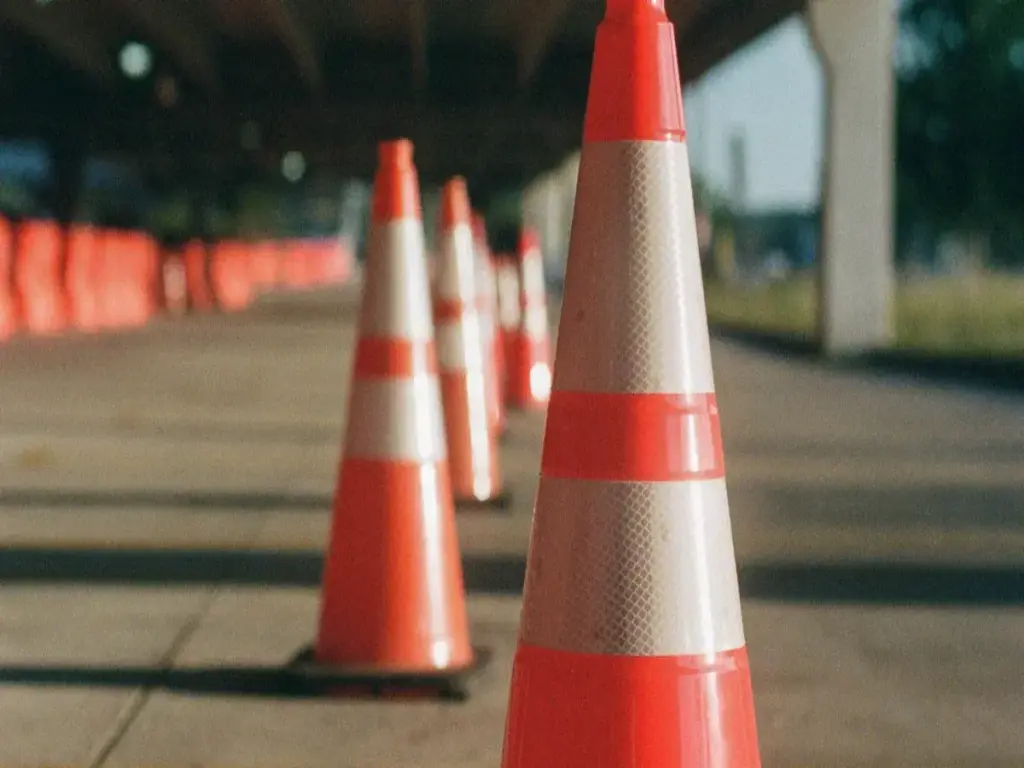
Reflective materials are very important for road safety. They help drivers see safety warning signs at night and in bad weather. The UK uses British Standard BS EN 12899-1 for these materials. This standard says how bright and strong the materials must be. Signs that follow this rule stay easy to see for many years. Cela aide à empêcher les accidents de se produire.
There are different types of reflective sheeting used on UK traffic signs:
| Type de feuille de réflexion | Caractéristiques de performances | Applications typiques | Durabilité / Durée de vie |
|---|---|---|---|
| Grade d'ingénieur (Perle de verre) | Basic retroreflectivity, moderate light return (ASTM D4956 Type I) | Signes non critiques, low traffic areas | 5-7 années |
| Prismatique à haute intensité (HANCHE) | Uses prismatic technology, ~ 16% de rendement léger, UV and weather resistant | Panneaux de circulation, zones de construction | Jusqu'à 10 années |
| Grade de diamant (Microprismatique) | Optique avancée du Cube-Courner, jusqu'à 60% retour léger, very bright and durable | Besoins à haute visibilité, routes très fréquentées, autoroutes | Durabilité supérieure, 7+ years warranty |
Signs with better reflective materials, comme le diamant, are much easier to see. These signs are very important on busy roads and in dangerous places.

Note: The right reflective materials help drivers see signs clearly, Même quand il fait sombre ou qu'il pleut.
Avancées technologiques
New reflective materials have made UK roads safer. Microprismatic and diamond-grade films use special prism shapes. These films send more light back to drivers. This makes signs easier to see from far away and from the side. Ils fonctionnent bien la nuit et par mauvais temps.
Maintenant, makers use strong acrylic and PMMA with UV protection. These films can last up to 10 years and stay bright. Certains produits, like 3M’s Diamond Grade™ DG³ Series, use new technology to be brighter and stronger. These films also let councils and workers print custom signs quickly.
Reflective materials have helped lower accidents by making signs and road lines easier to see. Flexible reflective road studs and markers help guide drivers, especially on highways and near roadworks. These new materials help everyone travel more safely and with more confidence.
Assurer la conformité
Liste de contrôle de conformité
A simple checklist helps councils and workers follow TSRGD Part 3 et partie 4. Checking safety signs often makes sure they meet the law and keep people safe at road works. Use this easy checklist:
- Look at all regulatory and warning signs for the right size, forme, et couleur.
- Make sure signs use approved reflective materials so drivers can see them in any weather.
- Check that temporary traffic signs follow the same rules as permanent ones.
- Put signs at the right height and angle so everyone can see them.
- Make sure all symbols and words match the traffic signs manual.
- Take away or swap any broken, délavé, or wrong signs.
- Check that temporary signs are on both sides of dual carriageways.
- Look at where temporary signs are before, pendant, and after road works.
- Train staff often on the latest traffic sign rules.
- Plan regular checks for both permanent and temporary traffic signs.
Conseil: Using a good checklist helps stop mistakes and keeps roads safer.
Entretien
Looking after signs keeps them working well and following the rules. Teams should clean signs with gentle cleaners to get rid of dirt. Cut back plants so they do not hide any sign. Special fasteners help stop people from stealing signs. Workers must check that poteaux de signalisation are straight and steady. Crashworthy supports help protect drivers if a car hits a sign. Move safety signs away from places where cars often hit them. Watch for soil washing away or trees growing near sign posts to keep signs steady. Temporary signs need extra care, especially for long jobs or when roads change. Check these signs often to make sure they are easy to see and not broken.
Erreurs courantes
Many councils and workers make the same mistakes with traffic signs. These mistakes can make roads unsafe and break the law. Certaines erreurs courantes sont:
- Picking the wrong sign size, which makes them hard to see.
- Putting signs at the wrong height or angle.
- Not using reflective materials, so signs are hard to see at night.
- Forgetting to check and replace broken or faded signs.
- Using symbols or colours that are not standard, qui confond les conducteurs.
- Not making good plans for temporary traffic signs.
- Not giving staff enough training on the latest rules.
- Missing regular checks of temporary traffic signs.
- Not working well with local councils, which causes problems with local rules.
- Not using the right advice for temporary signs, so setups are not the same.
Note: Stopping these mistakes helps both permanent and temporary traffic signs keep roads safe and legal.
To follow the Traffic Signs Regulations and General Directions, each authority should do these main things:
- Only use signs that are allowed or approved.
- Put warning signs in the right places and do not use too many.
- Make sure signs are the right size and shape.
- Signs must have lights or shine in car headlights.
- Pick materials that last long and do not rust.
- Put signs at the right height and angle so people can see them.
- Check and fix signs often to keep them in good shape.
- Change any sign that is broken or faded as soon as possible.
Looking at the Traffic Signs Manual often helps everyone follow the law and avoid problems. If a project is tricky, getting help from experts makes sure all signs are safe and follow the rules. You can share your stories or ask questions below.
FAQ
What does TSRGD stand for?
TSRGD means Traffic Signs Regulations and General Directions. Cette loi indique aux gens comment faire, faire des réserves, and look after road signs in the United Kingdom.
Why must road signs use reflective materials?
Les matériaux réfléchissants aident les conducteurs à voir les panneaux la nuit ou par mauvais temps. These materials make signs easier to spot from far away, which is very important on busy or fast roads.
How often should councils check road signs?
Councils need to check road signs often. Most experts say signs should be checked at least once every year. If a road is very busy or the weather is rough, checks should happen more often.
What happens if a sign does not meet TSRGD standards?
If a sign does not follow TSRGD rules, there could be fines or legal trouble. Il peut également rendre les accidents plus probables. Councils must fix or change any sign that does not meet the rules as soon as they can.
Can temporary signs use different materials from permanent signs?
Temporary signs are usually made from lighter materials like polycarbonate. But they still have to follow the same rules for being bright and easy to see, just like the TSRGD and the traffic signs manual say.