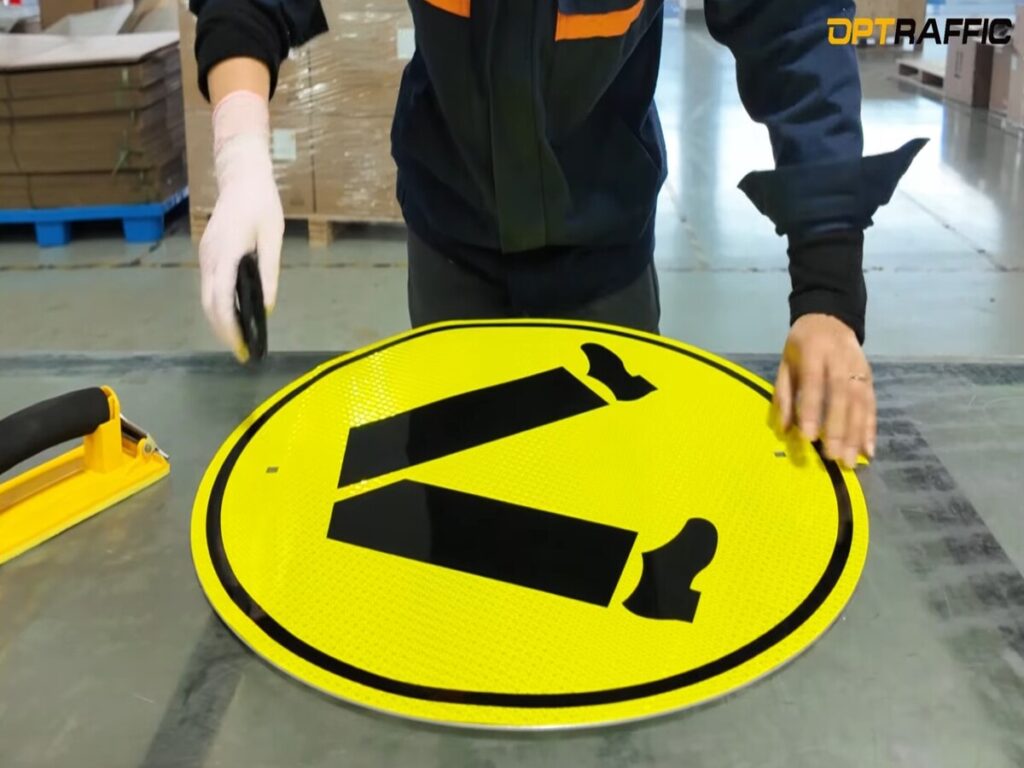
Rouille blanche sur aluminium apparaît souvent sur ébauches de panneaux en aluminium et panneaux. Cela peut se produire pendant le stockage, expédition, ou manipulation. Ce poudré, la substance crayeuse peut avoir un impact négatif sur l'adhérence des feuilles réfléchissantes et des graphiques en vinyle. Cela peut entraîner des problèmes importants dans la fabrication des enseignes. Si les matériaux n'adhèrent pas correctement sous une feuille réfléchissante ou un pelliculage, cela peut être coûteux à rectifier. En plus, cela peut entraîner des réclamations au titre de la garantie et des signes défaillants sur le terrain, en particulier pour les panneaux de signalisation et de sécurité en aluminium. Les magasins d'enseignes et les personnes impliquées dans la production d'enseignes ont besoin d'un plan solide. Ils doivent respecter les directives du fabricant pour éliminer efficacement la rouille blanche sur l'aluminium.. Cette pratique permet de maintenir l'intégrité des panneaux en aluminium lors de l'application du stratifié..
À OPTRAFIC, nous veillons à ce que notre panneaux de trafic en aluminium sont exempts de problèmes de rouille blanche, garantissant une adhérence supérieure pour les feuilles réfléchissantes et les graphiques en vinyle. Nos processus rigoureux de contrôle de qualité éliminent le risque de rouille blanche, veiller à ce que chaque panneau conserve sa durabilité et sa fonctionnalité. Pour voir comment nous gérons la production de panneaux en aluminium et garantissons une qualité irréprochable, regarde notre vidéo de fabrication d'enseignes pour un examen plus approfondi de notre processus.
Principaux à retenir
- Vous pouvez repérer la rouille blanche en voyant un, couche poudreuse sur les flans de panneaux en aluminium. La rouille blanche peut empêcher les choses de bien adhérer et entraîner des réparations coûteuses.
- Pour stopper la rouille blanche, conserver les panneaux en aluminium dans des endroits secs avec une bonne circulation d'air. Ne les empilez pas trop près les uns des autres pour que l'air puisse circuler..
- Nettoyez très bien les panneaux en aluminium avant de les plastifier.. Choisissez la bonne méthode de nettoyage en fonction de l'état de la rouille blanche.. Cela aide les choses à mieux tenir.
- Vérifiez souvent les panneaux en aluminium lors du stockage et avant le laminage.. Cela vous permet de détecter rapidement la rouille blanche et de conserver les panneaux en bon état..
- Notez ce que vous faites lorsque vous nettoyez et vérifiez les panneaux. Cela vous aide à contrôler la qualité et à éviter les problèmes de collage plus tard..
Qu'est-ce que la rouille blanche sur l'aluminium?
Identifier la rouille blanche sur les panneaux vierges
La rouille blanche ressemble à du blanc, film poudreux sur ébauches de panneaux en aluminium. Cela se manifeste souvent par des taches inégales ou des stries troubles sur le métal.. Ces zones peuvent paraître ternes et rugueuses au lieu d'être lisses et brillantes comme de l'aluminium neuf..
“Quand l'aluminium s'oxyde, une couche poudreuse et crayeuse blanche se développe à la surface du métal. Cette corrosion – parfois appelée tache d’eau, qui apparaît comme un blanc, substance crayeuse – se produit très rapidement et peut affecter considérablement l’apparence de la surface du métal.”
La rouille blanche n’est pas la même chose que la poussière, brume d'oxydation, ou de l'adhésif collant laissé derrière. La poussière s'efface facilement et n'altère pas le métal. La brume d'oxydation est une couche gris clair mais n'est pas épaisse ou poudreuse comme la rouille blanche. L'adhésif collant ne se trouve que là où du vinyle ou des feuilles réfléchissantes ont été utilisés auparavant.. Les taches d'eau font des marques annulaires mais ne couvrent pas toute la surface.
Causes de la formation de rouille blanche
La rouille blanche se forme lorsque ébauches de panneaux en aluminium se mouiller pendant le stockage, expédition, ou manipulation.
Les raisons les plus courantes sont:
- Humidité élevée dans les locaux de stockage
- Condensation due aux changements de température
- Des piles de panneaux en aluminium trop serrés
- Pas assez de circulation d’air dans les entrepôts ou les box
- L'eau reste longtemps sur l'aluminium
- Des endroits avec beaucoup de sel, comme près de l'océan ou des routes avec du sel de déneigement
- Rayures ou dommages sur les flans de signalisation en aluminium
Si panneaux de signalisation en aluminium restent mouillés et sont serrés les uns contre les autres, l'air ne peut pas atteindre le métal. Sans assez d'air, la rouille blanche se forme plus rapidement. L'eau détruit la couche naturelle qui protège l'aluminium, donc les taches apparaissent rapidement.
Pourquoi la rouille blanche est importante pour les panneaux en aluminium
Problèmes d'adhésion lors du laminage des panneaux en aluminium
Signes en aluminium besoin d'une surface propre pour bien travailler. Les feuilles réfléchissantes et les graphiques en vinyle adhèrent mieux au métal lisse. La rouille blanche forme une couche fragile sur les panneaux en aluminium. Cette couche empêche les adhésifs de coller fermement. Surfaces sales comme l'huile, graisse, poussière, ou l'eau peut causer des problèmes. Même les choses que tu ne peux pas voir, comme le silicone ou les empreintes digitales, aggraver les choses. Si la rouille blanche est sur le panneau, les adhésifs ne tiennent pas bien. Les panneaux peuvent ne pas durer longtemps ou ne pas fonctionner correctement.
Modes de défaillance courants de la rouille blanche
La rouille blanche peut causer de nombreux problèmes aux enseignes en aluminium.
- Des cloques ou des bulles peuvent se former si de l'eau reste emprisonnée sous la bâche..
- De petits trous ou des creux profonds peuvent apparaître et affaiblir le signe.
- Des taches peuvent apparaître à proximité des attaches métalliques.
- Le revêtement peut se décoller ou s'écailler, donner un aspect vieux au panneau.
- Des fissures ou des couches qui se détachent peuvent se produire à proximité des trous de montage.
Les alliages d'aluminium peuvent se corroder si leur couche protectrice se brise. Le sel de déneigement ou les intempéries accélèrent le processus.. Une rouille blanche importante peut creuser des trous profonds et endommager les panneaux de signalisation.
Importance d’enlever la rouille blanche avant le plastification
Les fabricants d’enseignes doivent nettoyer la rouille blanche avant d’ajouter du stratifié. Si la rouille blanche persiste, il empêche la colle de coller à l'aluminium. Même un peu de rouille blanche peut provoquer des bulles, relevage des bords, ou des couches se décollent. Ces problèmes coûtent de l'argent à résoudre et peuvent entraîner l'échec des panneaux.. Pour éviter de tels problèmes et assurer un bon déroulement, finition durable, il est essentiel de comprendre les meilleures pratiques pour panneaux de signalisation de stratification. Pour obtenir des conseils d'experts pour éviter les bulles et les plis pendant le processus de laminage., Consultez notre blog, “Éviter les bulles et les rides lors du plastification des panneaux de signalisation”.
Où la rouille blanche apparaît dans la chaîne d’approvisionnement des enseignes
Points d'inspection pour les flans de panneaux en aluminium
Vérification des fabricants d'enseignes ébauches de panneaux en aluminium à des moments différents. Ils examinent les nouvelles expéditions à la recherche de rouille blanche avant de ranger les panneaux. Les ouvriers recherchent des endroits poudreux, marques crayeuses, ou des endroits nuageux sur le métal. Ils utilisent leurs yeux pour noter et noter tout problème par numéro de lot.. Avant d'imprimer ou de plastifier, les équipes vérifient à nouveau chaque panneau vide. Ils se concentrent sur les virages, trous de montage, et les bords, car la rouille blanche commence souvent là.
Conseil: Essuyez l'aluminium avec un chiffon propre, chiffon sec. Si de la rouille blanche apparaît sur le tissu, le panneau doit être nettoyé avant d'ajouter une feuille réfléchissante ou des graphiques en vinyle.
Un tableau permet de suivre les étapes d'inspection:
| Étape d'inspection | Quoi vérifier | Action en cas de découverte de rouille blanche |
|---|---|---|
| Réception | Poudre de surface, brume | Écrire, séparé, faire le ménage |
| Pré-production | Bords, trous, coins | Faire le ménage, revérifier, enregistrer |
| Pré-laminage | Panneau complet, toutes surfaces | Assurez-vous d'être prêt, continuer |
Causes profondes dans les ateliers de signalétique et de fabrication
La rouille blanche apparaît panneaux de signalisation en aluminium à cause de l'eau, mauvais stockage, et mauvaise manipulation. Dans les enseignes, une humidité élevée et des changements de température entraînent la formation de gouttes d'eau sur l'aluminium. Le film de palette peut retenir l’eau contre le métal, accélère la formation de la rouille blanche. Parfois, les travailleurs utilisent des gants mouillés ou laissent de l’eau de nettoyage au bord du panneau., ce qui augmente le risque. Si les panneaux vierges sont nettoyés, attendez trop longtemps avant de les plastifier., la rouille blanche peut réapparaître.
L’environnement du magasin compte aussi. pH élevé, faible dureté de l'eau, et les ions forts comme les chlorures et les sulfates peuvent accélérer la corrosion de l'aluminium.. Une mauvaise passivation et le non-respect des règles aggravent les choses. Les magasins d’enseignes devraient maintenir un faible taux d’humidité, utiliser des supports propres, et empêche l'eau de s'accumuler pour protéger les panneaux de signalisation en aluminium de la rouille blanche.. Ils doivent suivre les règles du fabricant en matière de stockage et de manipulation afin que les feuilles réfléchissantes et les graphiques en vinyle adhèrent bien..
Méthodes pour éliminer l’oxydation de l’aluminium et la rouille blanche
Classification de la gravité sur les panneaux en aluminium
Les fabricants d’enseignes doivent vérifier l’état de la rouille blanche. Ils recherchent mince, taches poudrées pour cas légers. Les cas modérés sont plus épais, stries crayeuses sur de plus grandes zones. La rouille blanche épaisse semble croustillante ou présente des piqûres qui endommagent l'aluminium.
Conseil: Si l'oxyde est rugueux ou s'écaille, un nettoyage plus approfondi est nécessaire.
Une table aide les travailleurs à choisir la bonne étape de nettoyage:
| Niveau de gravité | Apparence | Action recommandée |
|---|---|---|
| Lumière | Mince, couche poudreuse | Nettoyage à sec ou humide doux |
| Modéré | Crayeux, couche striée | Nettoyage humide, produits chimiques doux |
| Lourd | Croustillant, couche dénoyautée | Nettoyage chimique, contribution du fournisseur |
Les panneaux présentant une forte rouille blanche devront peut-être être mis de côté. Les travailleurs peuvent demander de l'aide au fournisseur avant de partir. Cela maintient les panneaux en sécurité et évite les dommages supplémentaires..
Méthodes de nettoyage à sec et humide pour éliminer l'oxydation
Les enseignes utilisent différentes méthodes pour nettoyer l’oxydation de l’aluminium et la rouille blanche. Le nettoyage à sec consiste à essuyer avec un chiffon propre ou à utiliser des brosses douces. Ces étapes fonctionnent mieux pour les couches claires. Ils aident à empêcher la saleté de rester coincée dans le métal.
Le nettoyage humide utilise de l’eau, savon doux, ou nettoyants spéciaux. Pour les couches modérées, les travailleurs utilisent du bicarbonate de soude et de l'eau ou un rinçage à l'acide acétique faible. Ceux-ci décomposent l'oxyde mais n'endommagent pas le métal. Le nettoyage chimique peut éliminer l'oxyde tenace, mais les travailleurs doivent suivre les règles pour assurer la sécurité des revêtements.
D'autres méthodes de nettoyage incluent:
- Lavage sous pression: Nettoie les gros panneaux mais peut endommager la surface.
- Nettoyage à la vapeur: Détache la saleté sans utiliser de produits chimiques.
- Nettoyage au laser: Élimine l'oxyde mais nécessite des outils spéciaux.
- Abrasion mécanique: Le récurage ou le ponçage enlève l'oxyde mais peut rayer le métal.
Les magasins d'enseignes doivent choisir la méthode de nettoyage en fonction de la qualité de l'oxyde et des besoins de l'enseigne..
Flux de travail de suppression étape par étape
Un plan clair aide les travailleurs à nettoyer l'oxyde d'aluminium et à préparer les panneaux vierges:
- Inspecter et classer
Les travailleurs examinent chaque panneau vierge à la recherche de rouille blanche et d'oxyde. Ils utilisent la table pour décider à quel point c'est grave. - Nettoyage à sec
Pour les couches légères, ils essuyent doucement avec un chiffon propre, chiffon sec. Ils n'utilisent pas de tampons rugueux qui pourraient rayer le métal.. - Nettoyage humide
Pour les couches modérées, ils se lavent avec de l'eau et du savon doux. La pâte de bicarbonate de soude aide à lutter contre les endroits difficiles. Pour la rouille blanche importante, ils utilisent de l'acide acétique faible ou des nettoyants approuvés. Ils se rincent bien pour enlever tous les trucs de nettoyage. - Nettoyage chimique (Si nécessaire)
Pour l'oxyde difficile à éliminer, ils utilisent des nettoyants chimiques comme des solutions alcalines ou acides. Ils respectent les règles de sécurité et du fabricant. Ils ne laissent pas les produits chimiques reposer trop longtemps pour éviter tout dommage.. - Rincer et sécher
Les travailleurs se rincent à l'eau claire. Ils font attention aux bords, coins, et des trous. Ils sèchent le panneau avec des serviettes non pelucheuses ou le laissent sécher à l'air libre.. - Inspection finale
Ils vérifient les restes d’oxyde ou de saleté. Si le panneau est propre, ça va au laminage.
Note: Suivez toujours les étapes de nettoyage du fabricant de feuilles d'aluminium et réfléchissantes.. Cela permet à la garantie et au panneau de fonctionner correctement..
Assurer la préparation de la surface pour le laminage
Préparer la surface est important pour les panneaux forts. Après le nettoyage, les travailleurs s'assurent que le panneau vierge ne contient pas d'oxyde, rouille blanche, ou saleté. Le panneau doit être lisse au toucher, ni poudreux ni crayeux. Aucun oxyde ne doit déteindre sur un chiffon propre.
Les travailleurs doivent plastifier peu de temps après le nettoyage pour empêcher la formation de nouveaux oxydes ou saletés.. Ils doivent sécher tous les bords, coins, et des trous pour que l'eau ne provoque pas de nouvelle rouille blanche.
Une liste de contrôle finale pour la préparation:
- Aucune rouille blanche ou oxyde visible
- Pas de saleté ni de restes de produits de nettoyage
- Le panneau est totalement sec
- Prêt pour les feuilles réfléchissantes ou les graphiques en vinyle
En utilisant ces étapes de nettoyage, les enseignes aident les feuilles réfléchissantes et le pelliculage à bien adhérer. Cela permet aux panneaux en aluminium de durer plus longtemps et d'être beaux..
Contrôle qualité après élimination de la rouille blanche
Tests visuels et d'adhérence pour les panneaux en aluminium
Les fabricants d'enseignes utilisent des tests visuels et d'adhérence pour vérifier ébauches de panneaux en aluminium. Après le nettoyage, les travailleurs examinent chaque panneau à la recherche de rouille blanche. Ils recherchent des endroits poudreux, marques crayeuses, ou zones ternes. La surface doit être lisse et brillante, sans aucune trace de rouille. Les ouvriers essuyent l'aluminium avec un chiffon propre. Si de la rouille blanche apparaît sur le tissu, le panneau a besoin de plus de nettoyage.
Les tests d'adhérence montrent si les feuilles réfléchissantes ou les graphiques en vinyle adhèrent bien. Les ouvriers placent un petit morceau de bâche ou de vinyle sur le panneau en aluminium. Ils surveillent les bulles, relevage des bords, ou peler après un certain temps. Si l'adhésif reste fort et que les bords ne se soulèvent pas, le panneau réussit le test.
Tenue de registres et documentation des processus
Les magasins de signalisation tiennent des registres pour suivre le nettoyage et la vérification des ébauches de panneaux en aluminium. Les travailleurs notent la méthode de nettoyage, date, et combien de rouille blanche ils ont trouvé. Ils enregistrent les résultats des tests visuels et d'adhésion pour chaque lot. Cela permet de détecter les problèmes et d'éviter les futurs problèmes de collage..
Un enregistrement normal a:
- Numéro de lot et nom du fournisseur
- Étapes de nettoyage utilisées
- Résultats des contrôles visuels
- Résultats des tests d'adhésion
- Temps entre le nettoyage et le laminage
De bons dossiers facilitent les réclamations au titre de la garantie et réduisent le coût de correction des erreurs. Les fabricants de panneaux utilisent ces enregistrements pour améliorer leur travail et s'assurer que chaque panneau de signalisation en aluminium respecte les règles..
Prévenir la rouille blanche sur les panneaux vierges en aluminium
Contrôles de stockage et d’emballage
Les créateurs d’enseignes gardent ébauches de panneaux en aluminium en sécurité en surveillant comment ils les stockent. Ils placent les panneaux dans des pièces sèches avec un bon contrôle de la température. Les travailleurs n’empilent pas les panneaux trop près les uns des autres. Cela empêche l'eau de rester emprisonnée et de provoquer de la rouille blanche.. L’emballage laisse circuler l’air et empêche la formation de gouttes d’eau. Les entreprises utilisent des emballages qui absorbent l’humidité ou des barrières spéciales lors de l’expédition des panneaux. Ils vérifient souvent l'humidité et protègent les panneaux des fuites ou des changements de température importants.. Un bon stockage permet de garder la surface prête pour les feuilles réfléchissantes et les graphiques en vinyle.
Gérer les meilleures pratiques dans les magasins de signalétique
Les magasins d'enseignes prennent des mesures prudentes pour réduire le risque de rouille blanche.
- Les travailleurs examinent les panneaux en aluminium à la recherche de taches avant de les utiliser.
- Ils nettoient les copeaux de métal après le perçage afin d'éviter la formation de rouille..
- Les équipes maintiennent les panneaux à l'écart de l'eau provenant du cuivre ou du plomb.
- Les employés portent des gants propres et utilisent des outils propres pour empêcher l'humidité ou la saleté de se propager..
- Le personnel sèche complètement les panneaux après le nettoyage, surtout au niveau des bords et des trous.
Conseil: Vérifier souvent les panneaux et les nettoyer immédiatement aide à empêcher la rouille blanche de se développer sur les panneaux de signalisation en aluminium..
Considérations relatives aux fournisseurs et aux achats
Les fabricants d'enseignes choisissent des fournisseurs soucieux de la qualité de la surface. Ils demandent des papiers montrant comment les panneaux sont emballés et stockés. Les entreprises veulent savoir comment les fournisseurs gardent les panneaux au sec pendant le transport. Les acheteurs notent dans leurs commandes ce dont ils ont besoin en matière de surface et d'emballage.. Ils discutent avec les fournisseurs pour s'assurer que les panneaux et les systèmes de film correspondent, spécialement pour les panneaux réfléchissants en aluminium. Ces étapes aident les panneaux à arriver prêts à être plastifiés et réduisent les risques de problèmes de collage..
Dépannage des problèmes de laminage des panneaux en aluminium
Diagnostic des échecs de stratification
Les fabricants d'enseignes ont parfois des problèmes après avoir appliqué des feuilles réfléchissantes ou des graphiques en vinyle. ébauches de panneaux en aluminium. Ils doivent découvrir rapidement ce qui n'a pas fonctionné pour éviter de dépenser de l'argent supplémentaire.. Certains signes de problèmes sont des bulles, bords à venir, et les couches se décollent tôt. Les travailleurs devraient rechercher des substances poudreuses sur la surface du panneau., taches crayeuses, ou des endroits ennuyeux. Ces signes signifient souvent la présence de rouille blanche, mais d'autres choses peuvent aussi causer des problèmes.
Un plan simple aide les équipes à comprendre ce qui ne va pas:
- Inspection visuelle
Les ouvriers recherchent la saleté, eau, ou de la rouille en surface. - Test d'adhérence
Ils collent un petit morceau de feuille réfléchissante ou de vinyle et surveillent les bulles ou les soulèvements.. - Examiner les dossiers de nettoyage
Les équipes vérifient les notes de nettoyage et de séchage pour s'assurer que la surface était prête. - Contrôle environnemental
Le personnel regarde l'humidité, température, et comment les panneaux sont stockés dans le magasin.
Conseil: Panneaux de signalisation en aluminium laminé juste après le nettoyage. Cela aide à empêcher la formation de nouvelles oxydations ou de saletés..
Autres causes au-delà de la rouille blanche
Tous les problèmes de laminage ne proviennent pas de la rouille blanche. De nombreux autres défauts peuvent nuire panneaux de signalisation en aluminium et font que les adhésifs ne collent pas bien. Les travailleurs doivent apprendre à repérer ces problèmes afin de pouvoir les résoudre correctement..
Le tableau ci-dessous présente les types de défauts courants dans la fabrication de panneaux en aluminium.:
| Type de défaut | Description |
|---|---|
| Superposition | Longues fentes au milieu de la plaque d'aluminium, courir de la même manière que rouler. |
| Délaminage | Fentes aux extrémités avant et arrière de la plaque, souvent trouvé dans les alliages Al-Mg. |
| Stratification | Fentes sur les bords de la plaque, on le voit généralement en roulant. |
D'autres causes sont les restes de silicone, restes de doublure antiadhésive, nettoyants qui ne correspondent pas, et la poussière du magasin. Utiliser une mauvaise pression ou attendre trop longtemps pour plastifier peut également faire soulever les bords ou faire apparaître des bulles.. Les travailleurs doivent vérifier ces éléments si le nettoyage et la préparation de la surface ne résolvent pas les problèmes de collage..
Note: Écrire chaque problème aide les magasins d'enseignes à s'améliorer et à avoir moins de problèmes de laminage la prochaine fois..
Conseils aux acheteurs pour le contrôle de la rouille blanche dans les projets de panneaux en aluminium
Que spécifier pour les panneaux en aluminium entrants
Les acheteurs doivent définir des règles claires concernant la qualité de la surface lors de la commande ébauches de panneaux en aluminium ou panneaux. Ils doivent dire aux fournisseurs d'envoyer des panneaux propres, sec, et je n'ai pas de rouille blanche. L'équipe qui reçoit l'envoi doit vérifier chaque panneau pour détecter les taches poudreuses., marques de chaly, ou zones nuageuses. S'ils trouvent des problèmes, ils devraient les noter et garder ces panneaux séparés pour le nettoyage. Les acheteurs peuvent demander aux fournisseurs des documents montrant comment les panneaux ont été stockés et emballés.. Cela aide à empêcher l'humidité de pénétrer sur les panneaux pendant le transport.. Les équipes doivent également demander des moyens de contrôler l’humidité et des emballages qui permettent à l’air de circuler..
Conseil: Dites aux fournisseurs que tous les panneaux vierges en aluminium doivent passer un contrôle visuel pour détecter la rouille blanche avant de les accepter.. Cette étape permet aux feuilles réfléchissantes et aux graphiques en vinyle de fonctionner correctement plus tard..
Une liste de contrôle pour vérifier les nouveaux panneaux:
- La surface n'a pas de rouille blanche ni d'oxyde
- Pas de taches d'eau ni de traces restantes
- L’emballage laisse circuler l’air
- Le fournisseur remet les papiers de stockage et de manutention
Trouver et nettoyer la rouille blanche sur ébauches de panneaux en aluminium garde les signes forts. Il évite les problèmes qui font que la colle ne colle pas bien. Les magasins d'enseignes et les personnes qui fabriquent des enseignes doivent nettoyer les panneaux en douceur. Ils devraient vérifier les panneaux souvent et les stocker correctement.. Cela aide l'aluminium à rester prêt pour les feuilles réfléchissantes ou les graphiques en vinyle.. Vérifier tous les quelques mois est une bonne idée. Utilisez des chiffons doux avec du savon doux ou de l'alcool isopropylique pour nettoyer. Cela maintient la surface en bon état. Recycler les vieux panneaux et noter les étapes de nettoyage permet aux panneaux de durer plus longtemps et d'avoir une meilleure apparence..
FAQ
Qu'est-ce que la rouille blanche sur les panneaux en aluminium?
La rouille blanche est une matière poudreuse et crayeuse. Il se forme sur les panneaux en aluminium lorsque l'eau touche le métal.. Cette réaction rend la surface plus faible. Cela rend également difficile le collage des feuilles réfléchissantes ou des graphiques en vinyle..
Peut signer des magasins laminés sur une légère rouille blanche?
Les magasins d'enseignes ne devraient jamais poser de stratifié sur de la rouille blanche.. Même un peu de rouille blanche crée une couche fragile. Cette couche faible empêche la colle de bien adhérer. Le nettoyage des panneaux aide d’abord les panneaux à durer plus longtemps.
Combien de temps les panneaux de signalisation en aluminium nettoyés peuvent-ils attendre avant d'être plastifiés?
Les panneaux doivent être laminés juste après le nettoyage. Si tu attends trop longtemps, une nouvelle rouille ou de la saleté peut apparaître. Cela peut empêcher la colle de fonctionner avec des feuilles réfléchissantes ou un pelliculage..
La rouille blanche affecte-t-elle les panneaux imprimés en aluminium de la même manière que les panneaux réfléchissants?
La rouille blanche endommage les panneaux en aluminium imprimés et réfléchissants. Cela gêne l'encre, vinyle, et colle qui colle. Cela peut provoquer une desquamation, bulles, ou les panneaux se brisent trop tôt.
Quand un atelier d'enseignes doit-il rejeter les feuilles d'aluminium au lieu de les nettoyer ??
Les magasins d'enseignes devraient dire non aux panneaux présentant de la rouille blanche importante ou piquée. Ils devraient également dire non si la rouille continue de revenir. Ces problèmes affaiblissent les panneaux et le nettoyage ne les résoudra pas. Demandez au fournisseur de nouveaux panneaux.