Introduction: The Complexity of International Safety
Construction projects span multiple continents today. Procurement managers face complex regulatory environments worldwide. A simple warning command requires precise visual execution. Local laws dictate the design of slow road signs. A compliant sign in one country fails in another.
This guide compares major international traffic control standards. We will explore the visual and technical differences across borders. Optrafic manufactures compliant safety equipment for global engineering projects. We understand that accurate signage prevents catastrophic site shutdowns.
Engineers calculate sign placement based on strict physics. Proper spacing ensures fast-moving vehicles stop safely. Read our detailed analysis on this crucial concept here: La physique du temps de réaction: Pourquoi un signe lent représente la distance.
The Universal Need for Slow Down Signs
Every work zone requires effective speed reduction strategies. Site foremen use slow down signs to protect vulnerable workers. These signs manage vehicle kinetic energy before hazards appear. Different regions use entirely different shapes to convey this message.
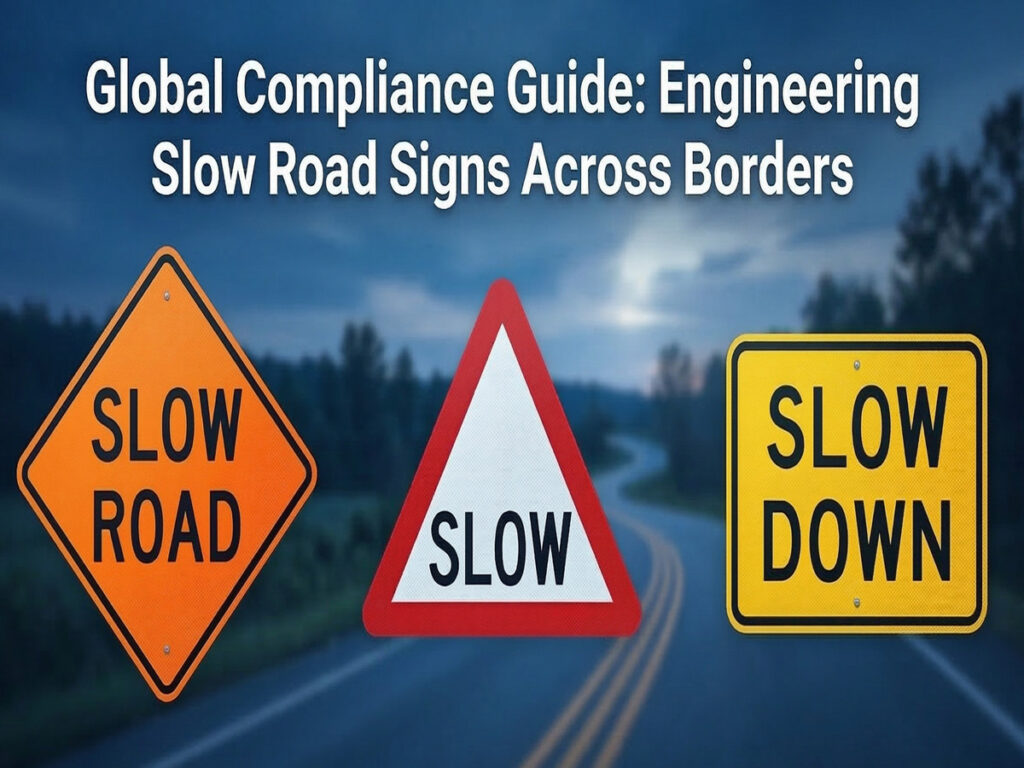
Visual shapes trigger immediate cognitive recognition in drivers. A diamond shape signals a warning in the Americas. Cependant, a red triangle serves this purpose across Europe. Procurement teams must understand these structural differences before ordering. Incorrect inventory creates immense legal liability for contractors.
Amérique du Nord: MUTCD Standards for Slow Down Signs for Street Use
The United States strictly follows the MUTCD. This comprehensive manual standardizes all traffic control devices nationwide.
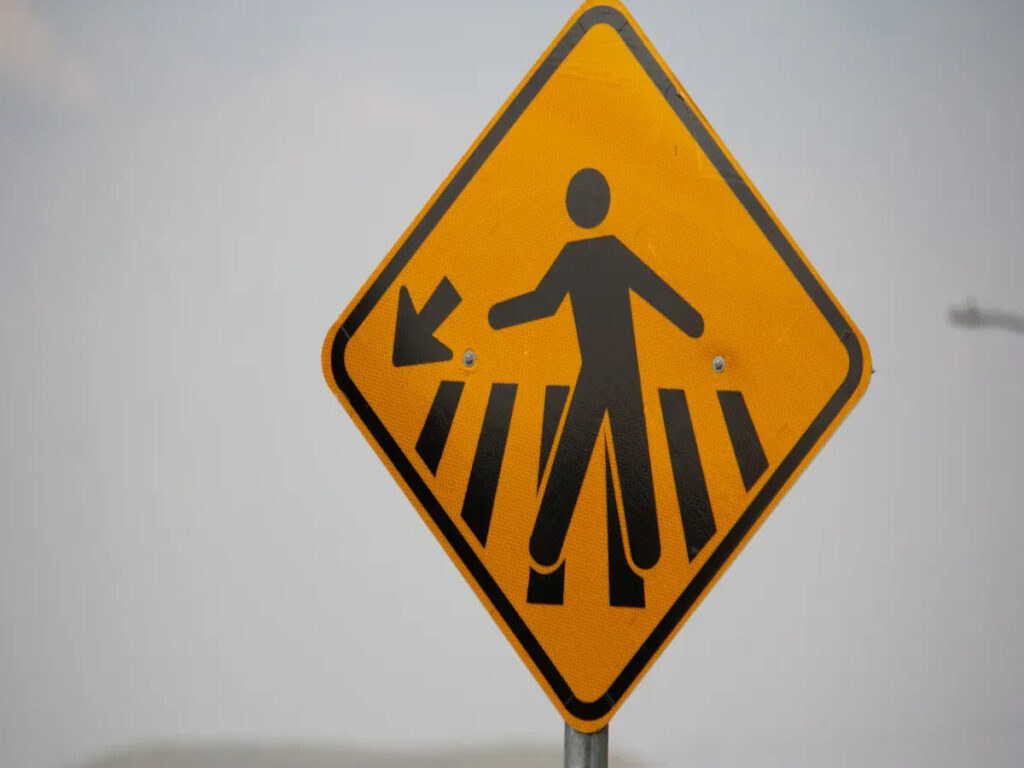
American engineers prefer the diamond-shaped warning sign. This specific shape provides a large, visible surface area. It catches driver attention effectively on wide interstate highways.
Color Logic and the Slow Down Road Sign
The MUTCD dictates fluorescent orange for temporary traffic control. This specific color manipulates UV light to increase daytime visibility. The material absorbs invisible ultraviolet radiation. The sign then re-emits this energy as visible light. This spectral shift maximizes conspicuity during twilight hours. Twilight represents the most dangerous period for roadside workers.
Inversement, engineers deploy fluorescent yellow-green for school zones. This specific wavelength targets the peak sensitivity of the human eye. Drivers process this precise color faster than standard yellow.
En outre, American highway designs prioritize typography over abstract symbols. A standard American slow down road sign utilizes engineered fonts like Highway Gothic. This specific typography maximizes the sign’s legibility index. Drivers can read the explicit text from significantly greater distances. This zero-ambiguity approach provides crucial positive guidance. Foremen rely on this precise communication to eliminate driver hesitation instantly.
UK and Europe: Chapitre 8 and Slow Signs for Traffic
The United Kingdom relies on Chapter 8 lignes directrices. European standards dictate a completely different visual language. Continental engineers prioritize the red-bordered triangle for warnings. This triangle indicates a universal hazard ahead.
UK authorities minimize text on their road safety signs. They favor universally recognized pictograms instead of English words. This symbolic dominance overcomes language barriers effectively.
Reflectivity Rules for a Slow Down Road Sign
British atmospheric conditions severely degrade highway optical transmission. Dense fog and heavy rain scatter standard vehicle headlight beams. Chapitre 8 regulations combat this severe optical scattering directly. Regulators mandate BS EN 12899-1 Class R3B retroreflective materials.
A UK-spec triangular slow down road sign requires maximum edge contrast. The critical red border must remain optically distinct from the center. Advanced micro-prismatic sheeting utilizes total internal reflection principles.
Thousands of microscopic prisms capture and redirect the incoming light cone. This precise engineering minimizes light dispersion across wet road surfaces. The sheeting maintains high luminance levels even under continuous rainfall. Drivers perceive the geometric warning triangle at maximum highway speeds.
Australie: COMME 1742.3 and Hybrid Slow Road Signs
Australia combines different global traffic control philosophies. They utilize a hybrid visual approach for highway safety. Le comme 1742.3 standard governs all temporary work zone deployments. This strict standard demands high durability under extreme conditions.
Visual Logic of Slow Down Signs in Australia
Australian engineers utilize multi-phase warning systems effectively. They prepare drivers long before the actual hazard appears. Le “Se préparer à s'arrêter” sequence dictates rural traffic control. This progressive method calms high-speed traffic safely and efficiently. Foremen deploy these sequential warnings to prevent sudden braking.
Material Rigidity for a Slow Down Road Sign
The Australian outback presents severe environmental challenges. Intense ultraviolet radiation degrades standard reflective sheeting quickly. High temperatures warp inferior aluminum sign substrates easily. Donc, Australian specifications demand exceptional structural integrity. Regulators require extreme UV resistance for every warning device.
Material Science for Slow Signs for Traffic
A warning device only works if drivers see it. Nighttime visibility relies entirely on retroreflective material technology. Different countries mandate specific performance classes for this sheeting. Procurement teams must understand these distinct material science requirements.
ASTM vs. BS One 12899 for Slow Down Signs for Street Use
The United States relies heavily on ASTM D4956 standards. Inversement, the UK enforces BS EN 12899 compliance strictly. Procurement managers must verify these specific material certifications before purchasing. High-intensity micro-prismatic sheeting dominates modern global infrastructure projects.
Global Comparison of the Slow Down Road Sign
The table below summarizes regional compliance mandates clearly. Buyers use this data to avoid costly procurement errors.
| Région | Governing Standard | Primary Shape | Key Material Requirement | Application typique |
| USA | Mutcd | Diamant | ASTM D4956 (Orange fluorescent) | Highway Work Zones |
| ROYAUME-UNI | Chapitre 8 (BS One 12899) | Triangle (Bordure rouge) | High-Grade Micro-Prismatic | Low-Visibility Routes |
| AUS | COMME 1742.3 | Hybride (Diamond/Circle) | Extreme UV-Resistant Coating | Rural & Outback Roads |
Micro-prisms bounce vehicle headlights directly back to the driver. This focused light return extends the critical detection distance. It gives the human brain more time to process hazards. Better materials directly reduce high-speed work zone fatalities.
Procurement Logistics: Sourcing Slow Road Signs Globally
International contractors face massive supply chain and compliance risks. Mixing regional standards on one site invites absolute disaster. A US-spec diamond sign fails UK site audits instantly. Safety inspectors shut down non-compliant construction zones immediately. Site shutdowns cost major contractors thousands of dollars daily.
Verifying Certification for Slow Down Signs
Buyers must demand independent laboratory test reports from manufacturers. Visual similarities do not guarantee legal regulatory compliance. A valid test report protects the contractor during civil litigation. It proves the construction company prioritized public highway safety.
Customization and the Slow Down Road Sign
Standard templates do not always fit local council requirements. Many regional authorities mandate specific text sizes or symbols. Engineering teams must adapt standard designs to meet variations. Accurate customization prevents costly delays during initial site inspections.
Conclusion: Delivering Compliant Slow Signs for Traffic
Global safety requires strict adherence to local engineering regulations. Understanding these regional differences prevents catastrophic accidents and lawsuits. Engineering precision defines effective and legal traffic control strategies.
Optrafic engineers every product to match exact regional specifications. We deliver legally compliant solutions de sécurité routière to global infrastructure projects. Protect your workers by sourcing certified, standard-specific equipment today. Every accurate warning sign provides a crucial physical safety buffer.
FAQ
Local governments base traffic safety regulations on unique regional factors. Ceux-ci incluent la météo, géométrie de la route, and historical driver behavior. Donc, un slow down road sign looks different across borders. Compliance requires matching the sign to specific national standards.
Non, American and British standards utilize completely different visual languages. The US prefers diamond shapes with fluorescent orange backgrounds. The UK mandates red-bordered triangles for all slow signs for traffic. Using incorrect signs results in immediate site shutdowns.
Oui, local councils often require specific text sizes or symbols. Our team adapts standard templates to meet these unique local variations. We produce custom road signs that satisfy both federal and local mandates. Proper customization prevents costly delays during site inspections.
The Australian outback exposes safety equipment to intense ultraviolet radiation. Engineers combat this by applying extreme UV-resistant coatings. They also utilize thicker aluminum substrates to prevent heat warping. These upgrades ensure the slow down signs survive harsh conditions.