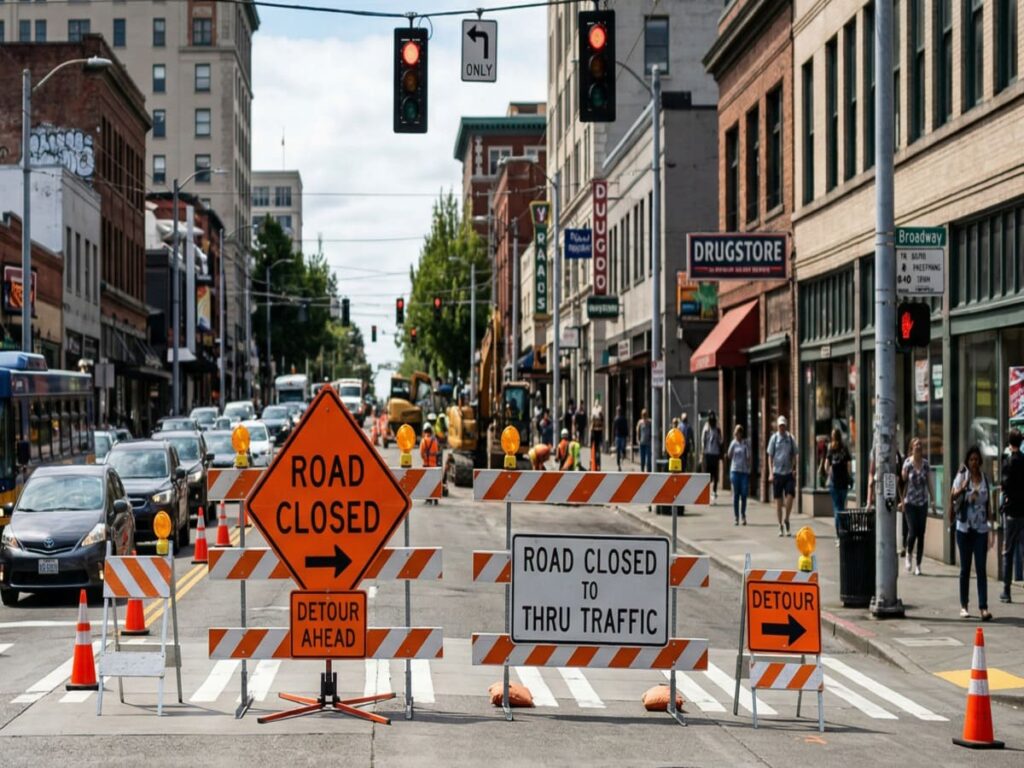
Am häufigsten Verkehrszeichendicke für individuelle Verkehrsschilder aus Aluminium ist .080 Zoll. Viele staatliche DOTs, wie MaineDOT, sich an diesen Standard halten. Dickere Optionen wie .100″ oder .125″ bieten eine höhere Festigkeit und werden typischerweise für größere Schilder oder in Gebieten mit starkem Wind verwendet. Zum Beispiel, A 24″ Stoppschild verwendet .080″ Material, während ein 48″ Stoppschild erfordert .100″ oder .125″ um widrigen Wetterbedingungen standzuhalten. DOTs bestimmen Verkehrszeichendicke basierend auf der Größe oder Fläche des Schildes. Überprüfen Sie immer Ihre örtlichen Vorschriften, bevor Sie eine Bestellung aufgeben.
| Zeichengröße | Dickenoptionen |
|---|---|
| 48″ Stoppschild | .100″ oder .125″ |
| 24″ Stoppschild | .080″ |
Bei OPTRAFFIC, Wir bieten Sonderanfertigungen an Aluminiumverkehrszeichen in verschiedenen Größen und Stärken, einschließlich der Standarddicke von 0,080 Zoll für Schilder wie das 24-Zoll-Verkehrsschild und 0,100 Zoll oder 0,125 Zoll für größere Schilder wie das 48-Zoll-Verkehrsschild. Ganz gleich, ob Sie ein 24-Zoll-Verkehrsschild für Wohngebiete oder ein 48-Zoll-Verkehrsschild für Autobahnen oder Standorte benötigen, die rauem Wetter ausgesetzt sind, OPTRAFFIC stellt sicher, dass alle Ihre Schilder den örtlichen Vorschriften entsprechen und für den Einsatz unter schwierigen Bedingungen ausgelegt sind.
Gängige Optionen für die Dicke von Verkehrszeichen
Aluminium-Schilderrohlinge: Standardstärken
Schilderrohlinge aus Aluminium sind die Basis für die meisten Straßen- und Verkehrsschilder in den USA. Diese Rohlinge gibt es in unterschiedlichen Stärken. Jede Stärke eignet sich am besten für bestimmte Orte und Verwendungszwecke. Dickere Rohlinge sind stärker und halten länger.
- .040 Zoll-Aluminium-Schilderrohlinge eignen sich gut für Schilder, die nur für kurze Zeit verwendet werden. Diese eignen sich am besten für Orte mit wenig Wind.
- .063 Zoll-Aluminium-Schilderrohlinge sind stärker als .040 Zoll. Menschen nutzen diese in der Nachbarschaft für weniger wichtige Schilder.
- .080 Zoll-Aluminium-Schilderrohlinge sind die erste Wahl für wichtige Schilder. Städte und Bundesstaaten verwenden diese Dicke für Stoppschilder und Vorfahrtsschilder.
- .100 Zoll-Aluminium-Schilderrohlinge sind noch stärker. Größere Schilder oder Schilder an belebten Orten benötigen diese Dicke.
- .125 Zoll-Aluminium-Schilderrohlinge sind am härtesten. Diese werden auf Autobahnen und in Baustellen eingesetzt, vor allem dort, wo das Wetter schlecht ist.
Tipp: Wählen Sie die richtigen Rohlinge für Aluminiumschilder aus, indem Sie darüber nachdenken, wo das Schild angebracht werden soll, wie lange es haltbar sein muss, und wenn es Wind oder Beschädigungen ausgesetzt sein könnte.
Dickenvergleichstabelle
Die folgende Tabelle zeigt, wie unterschiedlich Schilderrohlinge aus Aluminium vergleichen. Es listet die Dicke auf, wofür sie verwendet werden, gute Punkte, schlechte Punkte, und wie man sie montiert. Dies hilft Ihnen, das Richtige für Ihre Bedürfnisse auszuwählen.
| Dicke (In) | Dicke (mil) | Dicke (mm) | Dienstart | Typische Anwendungsfälle | Profis | Nachteile | Montagehinweise |
|---|---|---|---|---|---|---|---|
| 0.040 | 40 | 1.02 | Leichte Beanspruchung | Vorübergehende Zeichen, Veranstaltungsparkplatz, kurzfristige Mitteilungen | Leicht, leicht zu handhaben | Nicht geeignet für windige oder stark frequentierte Bereiche | Zur Verwendung mit leichten Pfosten oder Rahmen |
| 0.063 | 63 | 1.60 | Leichte Beanspruchung | Wohnstraßenschilder, Privateigentumsschilder | Haltbarer als 0.040 | Weniger steif als dickere Optionen | Funktioniert mit Standard-Montagezubehör |
| 0.080 | 80 | 2.03 | Standardzoll | Stoppschilder, Ertragszeichen, vorschriftsmäßige Straßenschilder | Industry standard, balances strength/weight | May flex on very large signs | Compatible with most sign posts |
| 0.100 | 100 | 2.54 | Medium Duty | Übergroße Zeichen, Hochverkehrskreuzungen | Increased rigidity, widersteht dem Biegen | Schwerer, may require stronger supports | Use with reinforced mounting systems |
| 0.125 | 125 | 3.18 | Robust | Autobahnschilder, Bauzonen, windy locations | Maximum durability, widersteht rauem Wetter | Heaviest, höhere Kosten | Needs robust mounting and supports |
Most regulatory signs use .080 inch aluminum sign blanks. Thicker blanks like .100 oder .125 inch are better for bigger signs or signs in windy places.
Thickness Terminology: Zoll, Mils, Millimeters
Knowing how thickness is measured helps you pick the right Schilderrohlinge aus Aluminium. Makers use inches, Mils, and millimeters to show how thick a blank is.
- Zoll show thickness as a fraction or decimal, wie 0.080 Zoll.
- Mils mean thousandths of an inch, Also 80 mil is 0.080 Zoll.
- Millimeters are the metric way to measure, wie 2.03 mm für 0.080 Zoll.
Here is a table with the usual conversions for aluminum sign blanks:
| Dicke (In) | Dicke (mil) | Dicke (mm) |
|---|---|---|
| 0.040 | 40 | 1.02 |
| 0.063 | 63 | 1.60 |
| 0.080 | 80 | 2.03 |
| 0.100 | 100 | 2.54 |
| 0.125 | 125 | 3.18 |
Notiz: 1 mil is 0.001 Zoll, Und 1 millimeter is 0.0394 Zoll. Most aluminum sign blanks use these units in their product details.
Durch die Auswahl der richtigen Verkehrszeichenstärke kann das Schild dort, wo es angebracht ist, gut funktionieren. Aluminium-Schilderrohlinge gibt es in vielen Stärken für alle Arten von Schildern, von kurzfristigen Hinweisen bis hin zu permanenten Autobahnschildern.
Flache vs. extrudierte Straßenschilder
Flachbildschirme und Steifigkeit
Bekanntlich, Flache Aluminiumplatten sind das am häufigsten verwendete Material für Straßenschilder. Durch die Dicke bleibt das Schild stabil und verbiegt sich nicht. Dickere Paneele sorgen dafür, dass das Schild auch bei schlechtem Wetter flach bleibt. Ein dickes Schild hält reflektierende Schichten besser. Dies erleichtert die Sicht bei Nacht oder bei Sturm. Städte wählen dickere Paneele für windige oder belebte Orte. Diese Schilder halten länger und müssen weniger repariert werden.
Die folgende Tabelle zeigt, wie die Dicke die Stärke und Verwendung flacher Straßenschilder verändert:
| Dicke (Zoll) | Vorteile |
|---|---|
| 0.080 | Stark genug für den täglichen Gebrauch. Es hilft dem Schild, flach und leicht zu lesen bleibt. |
| 0.125 | Verhindert Verbiegen und Schäden durch starken Wind und stark befahrene Straßen. Dadurch hält das Schild länger. |
| Dickere Schilder | Reflektierende Schichten halten besser. Sie halten länger und bieten eine starke Basis für Sicherheit. |
Durch die Auswahl der richtigen Dicke kann das Schild den Sicherheitsvorschriften entsprechen. Dickere Platten machen das Schild stabiler. Das bedeutet weniger Bücken und bessere Sicht.
Extrudierte Platten und Kantensteifigkeit
Extrudierte Straßenschilder haben ein anderes Design. Diese Schilder haben spezielle Kanten, die für mehr Stabilität sorgen. Die Kanten wirken wie ein Rahmen und machen das Schild steifer. Dieses Design verhindert, dass sich das Schild verbiegt, auch wenn die Mitte nicht dick ist. Städte verwenden extrudierte Platten für große Schilder oder windige Orte. Die starken Kanten helfen dem Schild, schwere Lasten zu bewältigen und an Ort und Stelle zu bleiben.
Extrudierte Platten sind in zweierlei Hinsicht stark. Die Form der Kante verhindert ein Verbiegen. Die dicken Kanten schützen das Schild vor Beschädigungen, wenn es angebracht wird oder von Autos angefahren wird. Dadurch eignen sich extrudierte Schilder für schwierige Einsatzbereiche.
Notiz: Bei Flachbildschirmen wird die Dicke aus Festigkeitsgründen genutzt. Extrudierte Platten nutzen sowohl Dicke als auch Kantendesign für maximale Steifigkeit.
Anforderungen und Richtlinien für die Dicke des US-amerikanischen DOT
Das Verkehrsministerium der Vereinigten Staaten (PUNKT) und staatliche Behörden haben Regeln für die Auswahl des Richtigen Verkehrszeichendicke für Straßen. Diese Regeln tragen dazu bei, dass Schilder den MUTCD-Standards entsprechen, um Sicherheit zu gewährleisten und gut sichtbar zu sein. Jeder Staat kann seine eigenen Regeln festlegen, Die meisten Staaten verwenden jedoch ähnliche Ideen, je nachdem, wie groß das Schild ist. Hier sind drei Beispiele aus Iowa, Georgia, und Texas. Weitere Informationen dazu Dicke des Verkehrszeichens aus Aluminium stellt die MUTCD-Konformität sicher, Schauen Sie sich unseren Blog an, Aluminiumverkehrszeichen Dicke und ihre Rolle bei der Einhaltung der MUTCD -Konformität.
Größenbasierte Schwellenwerte (Iowa Dot)
Das Iowa DOT untersucht die längste Seite eines Schildes, um die minimale Aluminiumdicke festzulegen. Dies macht die Dinge einfach und leicht zu merken. Wenn die längste Seite ist 36 Zoll oder weniger, Das Zeichen muss mindestens sein 0.080 Zoll dick. Wenn die längste Seite mehr als ist 36 Zoll, Das Zeichen muss mindestens sein 0.125 Zoll dick. Iowa DOT verwendet außerdem ASTM B209, um zu überprüfen, ob die Dicke korrekt ist und den nationalen Standards entspricht.
| Längste Seite des Schildes | Mindestdicke (Zoll) | Typische Anwendung |
|---|---|---|
| ≤ 36″ | 0.080 | Standard-Stopp-/Vorfahrtsschilder |
| > 36″ | 0.125 | Große Hinweis- oder Warnschilder |
Der Weg des Iowa DOT hilft Städten und Landkreisen, das Richtige zu wählen Verkehrszeichendicke für kleine und große Schilder. Diese Methode entspricht den Mutcd-Standards und schützt Schilder bei jedem Wetter.
Flächenbasierte Schwellenwerte (Georgia DOT)
Georgia DOT verwendet die Gesamtfläche des Schildes, um die Aluminiumdicke auszuwählen. Dies eignet sich gut für Schilder mit ungewöhnlichen Formen oder großen Flächen. Wenn das Zeichen ist 9 Quadratmeter oder weniger, es muss mindestens sein 0.08 Zoll dick (Plus oder Minus 0.005 Zoll). Wenn das Zeichen größer ist als 9 Quadratfuß, es muss mindestens sein 0.10 Zoll dick (Plus oder Minus 0.006 Zoll). Georgia DOT sagt außerdem, dass Schilder aus 6061-T6- oder 5052-H38-Aluminium bestehen und den ASTM B209-Standards entsprechen müssen.
| Schilderbereich (Quadratfuß) | Mindestdicke (Zoll) | Legierungsanforderung |
|---|---|---|
| ≤ 9 | 0.08 | 6061-T6 oder 5052-H38 |
| > 9 | 0.10 | 6061-T6 oder 5052-H38 |
Die Flächenmethode des Georgia DOT stellt sicher, dass große Schilder stark und gut sichtbar bleiben. Auf diese Weise entsprechen sie den Mutcd-Standards und tragen dazu bei, dass die Schilder im Außenbereich länger halten.
Bereichsabstufung (Txdot)
Das Texas DOT (Txdot) verwendet ein System, bei dem die Aluminiumdicke auf die Fläche des Schilds abgestimmt wird, um eine bessere Festigkeit zu gewährleisten. Für Schilder kleiner als 7.5 Quadratfuß, Die Dicke muss mindestens betragen 0.080 Zoll. Für Zeichen dazwischen 7.5 Und 15 Quadratfuß, eine Mindestdicke von 0.100 Zoll ist erforderlich. Schilder größer als 15 Quadratfuß müssen eine Dicke von mindestens haben 0.125 Zoll.
| Schilderbereich (Quadratfuß) | Mindestdicke (Zoll) |
|---|---|
| < 7.5 | 0.080 |
| 7.5 - - 15 | 0.100 |
| > 15 | 0.125 |
Das Stufensystem von TxDOT hilft Ingenieuren und Schilderherstellern, die richtige Wahl zu treffen Verkehrszeichendicke für jeden Job. Auf diese Weise bleiben die Schilder sicher und entsprechen den Mutcd-Standards.
Notiz: DOT-Regeln können sich je nach Bundesstaat oder Projekt ändern. Informieren Sie sich immer über die örtlichen Vorschriften, bevor Sie Aluminiumschilder für Straßen bestellen.
Unabhängig von den regionalen Anforderungen, OPTRAFFIC, als erfahrener Hersteller von Verkehrsschildern, ist in der Lage, konforme Schilder für öffentliche Bauämter bereitzustellen, Verkehrsmanagementunternehmen, und Verleih von Verkehrssicherheitsausrüstung. Wir stellen sicher, dass alle Schilder die notwendigen Standards für Haltbarkeit erfüllen, Sichtweite, und Einhaltung gesetzlicher Vorschriften.
Aluminiumlegierungen und Oberflächenvorbereitung
6061-T6 vs. 5052-H38-Legierungen
Die Art der Aluminiumlegierung beeinflusst die Lebensdauer von Straßenschildern. Ingenieure wählen bei Verkehrszeichen normalerweise zwischen 6061-T6 und 5052-H38. Jeder funktioniert an verschiedenen Orten am besten.
- 6061-T6 ist stabil und passt auf die meisten Stadt- und Autobahnschilder. Es verbiegt sich nicht so leicht und hält dem täglichen Gebrauch stand.
- 5052-H38 wird als Marinealuminium bezeichnet. Es bekämpft Rost besser als 6061-T6. Städte in der Nähe des Ozeans oder bei schlechtem Wetter verwenden diese Legierung häufiger. Es hält salziger Luft und nassem Wetter stand, Also dauert es länger.
- Beide Legierungen bilden nach außen eine Abschirmung. Dieser Schutz verhindert, dass das Metall rostet, und sorgt dafür, dass das Schild lange hält.
- Einige Schilder werden für mehr Schutz mit einer Pulverbeschichtung versehen. Diese Beschichtung macht das Schild widerstandsfähiger und schützt es vor der Sonne, Regen, und Dreck.
Hier ist eine Tabelle, die die Unterschiede zeigt:
| Legierung | Stärke | Korrosionsbeständigkeit | Typische Anwendungsfälle |
|---|---|---|---|
| 6061-T6 | Hoch | Mäßig | Urban, Autobahn, Standard |
| 5052-H38 | Mäßig | Hoch | Küste, industriell, harsch |
Erfahren Sie mehr über die Vorteile der Verwendung von 5052-H38-Aluminium für Verkehrskontrollschilder, Schauen Sie sich unbedingt unseren Blog an, “Entdecken Sie die Vorteile von 5052-H38-Aluminium für Verkehrssteuerungszeichen”, wo wir seine Haltbarkeit erkunden, Korrosionsbeständigkeit, und Eignung für verschiedene Umgebungen.
Konversionsbeschichtung und Haftung
Bei stabilen Straßenschildern aus Aluminium ist es wichtig, die Oberfläche vorzubereiten. Die Konversionsbeschichtung ist ein Schritt vor dem Anbringen einer reflektierenden Folie. Durch diesen Schritt haftet die Folie besser und das Schild bleibt lange leuchtend.
Eine gute Oberflächenvorbereitung bedeutet, das Aluminium zu reinigen und zu glätten. Sauberes Aluminium lässt die Folie gut haften. Glattes Aluminium hilft den Arbeitern, die Folie gleichmäßig anzubringen, wodurch das Schild länger hält. Gut vorbereitete Schilder können Schmutz und Sonnenlicht abwehren, damit sie glänzend bleiben.
Die Konversionsbeschichtung trägt dazu bei, dass die reflektierende Folie gut haftet. Dies ist wichtig, damit das Schild lange hält und gut sichtbar ist.
Städte und Bundesstaaten nutzen diese Schritte, um Schilder herzustellen, die bei jedem Wetter gut funktionieren und halten.
Windlast, Vibration, und unterstützt
Windlast und Feldleistung
Straßenschilder können durch den Wind stark verschoben werden, insbesondere in offenen oder windigen Gebieten. Nach Angaben des Iowa DOT, Verkehrszeichen müssen standhalten 30 Pfund pro Quadratfuß Winddruck. Diese Anforderung stellt sicher, dass die Schilder auch bei Sturm und starkem Wind sicher bleiben.
Die Windschwingungen sind an jedem Standort unterschiedlich. Es ist schwer abzuschätzen, wann es passieren wird. Ständiger Wind und plötzliche Böen können einen Mast auf viele Arten erschüttern. Wenn das häufig passiert, es kann die Stange beschädigen. Wenn das Zittern stark ist, Es kann dazu führen, dass das Metall oder die Schweißnähte schwach werden. Sie könnten brechen, selbst wenn die Stange stark gebaut wäre.
Windvibrationen zerstören Schilder nicht immer sofort. Aber wenn es weiterhin passiert, es kann Zeichen oder Stützen schwächen. Ingenieure prüfen, ob Probleme wie kleine Risse oder lockere Schrauben vorliegen. Dies geschieht im Rahmen regelmäßiger Kontrollen. Durch die Auswahl der richtigen Dicke und Stütze können diese Probleme vermieden werden. Es sorgt dafür, dass Schilder für fahrende oder gehende Personen sicher bleiben.
Erfahren Sie mehr darüber, wie Sie je nach Windlast und Größe die richtige Aluminiumstärke für Ihre Verkehrsschilder auswählen, Schauen Sie sich unseren Blog an, “So wählen Sie die Aluminiumdicke für Verkehrsschilder basierend auf Windlast und Größe aus”, Hier gehen wir tiefer auf die Faktoren ein, die für langlebige und langlebige Schilder zu berücksichtigen sind.
Montagemethoden und Unterstützungssysteme
Bei Straßenschildern aus Aluminium ist eine gute Montage und Unterstützung wichtig. Große Schilder oder Schilder an windigen Orten erfordern mehr als dickes Aluminium. Sie brauchen starken Halt, damit sie sich nicht verbiegen oder brechen.
- Dicke Aluminiumplatten mögen 2.0 mm oder 3.0 mm machen große Schilder stärker.
- Zusätzliche Verstrebungen oder ein stabiler Rahmen sorgen dafür, dass die Schilder auch im Wind stabil bleiben.
- Stahlkanäle oder andere Streben sorgen dafür, dass dünne Platten gerade bleiben.
- Mehr Beiträge bieten eine bessere Unterstützung für große Schilder.
- Bei sehr großen oder schweren Schildern helfen spezielle Schilderstützsysteme.
- Überprüfen Sie immer die Regeln des Herstellers, um den richtigen Beitrag oder Support auszuwählen.
An windigen Orten, Unterstützungssysteme verwenden häufig eine Schwingungsisolierung. Dies bedeutet die Verwendung von Halterungen oder flexiblen Teilen, die Erschütterungen absorbieren. Diese stoppen nicht alle Vibrationen, aber sie machen es weniger stark. Es funktioniert wie ein Sitz, der Stöße in einem Zug absorbiert. Durch die Verwendung der richtigen Dicke und guter Stützen, Städte tragen dazu bei, dass Schilder gut sichtbar und sicher bleiben, Auch bei schlechtem Wetter.
Reflektierende Folientypen und Schilderrohlinge
ASTM D4956 Folientypen
Die FHWA legt Regeln für reflektierende Verkehrszeichen fest. Diese Regeln verwenden ASTM D4956-Planentypen. Diese Typen helfen Autofahrern, Schilder nachts oder bei schlechtem Wetter zu erkennen. Die folgende Tabelle zeigt die gängigsten Blechtypen für Aluminium-Schilderzuschnitte:
| Art der reflektierenden Folie | Sichtweite | Beschreibung | Haltbarkeit | Anwendungen |
|---|---|---|---|---|
| Ingenieurqualität (Typ I) | ~500 Fuß | Verwendet Glasperlen oder prismatische Technologie; für unkritische Zeichen | 5–7 Jahre | Unkritische Straßenschilder, Parkschilder |
| Hochintensität Prismatisch (Typ III & Iv) | ~1000 Fuß | Mikroprismatische Linse; stark reflektierend | ~10 Jahre | Verkehrszeichen, Barrikaden, Bauzonengeräte |
| Diamantqualität (Typ XI) | ~1500 Fuß | Voller Würfel prismatisch; kehrt ungefähr zurück 60% Licht | Lang anhaltende | Wichtige Verkehrskontrollschilder wie Stopp- und Geschwindigkeitsbegrenzungsschilder |
Diamantfolien sind sehr hell. It reflects much more light than high intensity prismatic sheeting. This helps people see traffic signs from far away. Diamond grade lasts longer and fights off bad weather, Schmutz, und Rost. Cities use diamond grade for important signs to follow safety rules and keep roads safe.
Using strong sheeting like ASTM D4956 Type XI makes roads safer at night. Signs with better reflection help drivers see and follow rules.
Identifying Reflective Sheeting
Picking the right sheeting for traffic signs is important for safety and cost. The FHWA allows different types, like Engineering Grade, Super Engineering Grade, and High Intensity Beaded sheeting. Agencies should think about more than just price. They need to check how long the sheeting stays bright and how well it reflects light.
To find out what sheeting is on a sign, Suchen Sie nach diesen Dingen:
- Etiketten oder Markierungen auf der Rückseite des Schildrohlings
- Spezielle Muster oder Texturen auf der Oberfläche des Schildes
- Farbe und Helligkeit, wenn nachts Scheinwerfer darauf leuchten
Einige Vorschriften besagen, dass bestimmte Folientypen nicht für weiße Buchstaben auf Leitschildern an der Decke oder für gelbe Hintergründe auf Warnschildern verwendet werden dürfen. Überprüfen Sie immer die örtlichen und bundesstaatlichen Vorschriften, bevor Sie Materialien für Verkehrsschilder auswählen.
Tipp: Bei der Wahl der Folie, Überlegen Sie, wohin das Schild führen soll, wie lange es dauern soll, und wie leicht es zu sehen sein sollte. Gute reflektierende Verkehrsschilder helfen Autofahrern, schnell zu reagieren und sorgen für die Sicherheit aller.
Auswahl der richtigen Verkehrszeichenstärke
Praktische Checkliste zur Auswahl
Die Wahl der richtigen Dicke für ein Straßenschild aus Aluminium gewährleistet die Sicherheit der Menschen. Dadurch hält das Schild auch länger und hält sich an die Regeln. Eine einfache Checkliste hilft Arbeitern dabei, die beste Dicke für jeden Auftrag auszuwählen. Die folgende Tabelle zeigt gängige Dicken, wofür sie verwendet werden, und wie viel Wind sie vertragen:
| Messgerät | Häufiger Anwendungsfall | Windlasttoleranz |
|---|---|---|
| 0.040″ | Leichte Grundstücke, Innengaragen | Bis zu 30 Meilen pro Stunde |
| 0.063″ | Standard-Außenparkplatz, Vorstadtstraßen | 30–50 Meilen pro Stunde |
| 0.080″ | LKW-Routen, Küsten- oder Starkwindgebiete | 50 Meilen pro Stunde+ |
Beim Setzen eines Zeichens, Denken Sie über diese Dinge nach:
- Wie groß das Schild ist und welche Fläche es hat
- Wie viel Wind wird auf das Schild treffen?
- Wie das Schild montiert wird
- Wie hoch ist der Pfosten?, vor allem, wenn es vorbei ist 7 Füße
- Ob das Schild nur für kurze Zeit oder dauerhaft verwendet wird
- Wenn Sie das Schild bewegen oder tragen, könnte es beschädigt werden
- Wie lange soll das Schild halten und wie oft muss es repariert werden
Für Verkehrsschilder im Außenbereich, 16–18 Gauge (1.2–1,5 mm) ist normalerweise am besten. Wenn Sie einen hohen U-Profil-Pfosten verwenden, Ein dickeres Schild verhindert, dass man sich verbiegt.
Tipp: Wählen Sie immer die Aluminiumstärke, die zu der Stelle passt, an der das Schild angebracht werden soll, und wie es montiert werden soll.
Häufige Fehler zu vermeiden
Die Wahl der falschen Dicke für Straßenschilder kann zu Sicherheitsproblemen führen oder mehr Geld kosten. Die häufigsten Fehler sind:
- Verwenden Sie dünnes Aluminium für große oder windige Schilder, Dadurch können sie sich verbiegen oder abfallen
- Machen Sie das Schild nicht dicker .040″ Zu .063″ oder .080″ für Orte im Freien oder an belebten Orten
- Vergessen Sie, dickeres Aluminium für größere Schilder zu verwenden, die mehr Halt benötigen
- Überprüfen Sie nicht die richtige Dicke für die Größe des Schildes und den Ort, an dem es angebracht werden soll
- Wählen Sie eine Dicke, die nicht den Anforderungen des Schilds entspricht
Notiz: Wenn Sie gleich zu Beginn die richtige Dicke wählen, vermeiden Sie Probleme und sorgen dafür, dass das Schild lange Zeit gut funktioniert.
Die meisten Straßenschilder verwenden .080″ Aluminium, weil es stark ist. Diese Dicke trägt dazu bei, dass das Schild lange hält. Größere Schilder oder Schilder an windigen Orten benötigen dickeres Aluminium. Diese Zeichen verwenden .100″ oder .125″ um sicher zu bleiben. Die folgende Tabelle zeigt, welche Dicke für jede Stelle am besten geeignet ist:
| Anwendungstyp | Empfohlene Dicke |
|---|---|
| Autobahnen, geschäftige Kreuzungen | 0.080″ oder 0,125″ |
| Bauzonen | Dicker, extrudierte Schilder |
| Wohnstraßen, Parkplätze | 0.040″ oder 0,063″ |
| Temporäre oder Veranstaltungsschilder | Dünnere Optionen |
Schauen Sie sich immer die örtlichen DOT-Regeln an. Diese Regeln tragen dazu bei, dass die Schilder sicher und gut sichtbar bleiben. Verwenden Sie die Checkliste und Tabellen oben, um die richtige Dicke für Ihr Projekt auszuwählen.
FAQ
Was ist die Standarddicke für Straßenschilder??
Die meisten Straßenschilder bestehen aus 0,080 Zoll dickem Aluminium. Diese Dicke sorgt für ein ausgewogenes Verhältnis von Festigkeit und Gewicht. Städte und Bundesstaaten wählen diese Größe für Haltestellen, Ertrag, und Ordnungszeichen.
Ist 80 mil das gleiche wie 0.080 Zoll?
Ja, 80 mil entspricht 0.080 Zoll. Hersteller verwenden oft “mil” um die Dicke zu beschreiben. Ein Mil bedeutet ein Tausendstel Zoll.
Sollte jemand wählen 0.063 oder 0.080 für Parkplatzschilder?
Für Parkplätze, 0.080-Zoll Aluminium funktioniert am besten. Es ist biegefest und hält im Freien länger. Verwenden Sie 0,063 Zoll nur für Schilder mit geringem Verkehrsaufkommen oder für temporäre Schilder.
Wann benötigen Schilder 0,125-Zoll-Aluminium??
Schilder größer als 36 Zoll oder starkem Wind ausgesetzt sind, benötigen Sie 0,125-Zoll-Aluminium. Diese Dicke verhindert ein Verbiegen und erhöht die Haltbarkeit.
Erfordern unterschiedliche Bundesstaaten unterschiedliche Dickenregeln??
Jeder Staat legt seine eigenen Regeln für die Dicke von Verkehrszeichen fest. Überprüfen Sie immer die örtlichen DOT- oder Projektanforderungen, bevor Sie Schilder bestellen.