Die Sicherheit von Fußgängerüberwegen ist ein entscheidender Aspekt der öffentlichen Infrastruktur, der die Sicherheit und das Wohlbefinden aller Fußgänger gewährleistet, insbesondere in Schulbereichen und öffentlichen Bereichen mit hohem Fußgängerverkehr. Um die anhaltenden Bedenken im Zusammenhang mit der Sicherheit von Fußgängern auszuräumen, Es ist für Kommunen und Verkehrsbehörden zwingend erforderlich, eine klare Installation durchzuführen, sichtbar, und konforme Verkehrsschilder für Fußgängerüberwege. Dieser Blog beschreibt die Spitze 10 Verkehrszeichen für Fußgängerüberwege, inklusive Vorwarnschildern, Schulübergangsschilder, und blinkende LED-Schilder, unter anderem. Einhaltung der MUTCD-Richtlinien für Fußgängerübergangszeichen erhöht die Verkehrssicherheit und erleichtert die Einhaltung gesetzlicher Vorschriften.
Für Kommunen und Verkehrsbehörden, die langlebige und konforme Fußgängerschutzlösungen suchen, OPTRAFFIC bietet eine große Auswahl an MUTCD-kompatiblen Fußgängerübergangszeichen. Als vertrauenswürdiger Hersteller von Beschilderungen, OPTRAFFIC ist auf die Herstellung hochwertiger Vorwarnschilder spezialisiert, Schulübergangsschilder, und Fußgängerüberwegschilder, die auf maximale Sichtbarkeit und Haltbarkeit ausgelegt sind. Diese Zeichen, Ideal für Schulbereiche und stark frequentierte Bereiche, Tragen Sie dazu bei, die Sicherheit von Fußgängern zu gewährleisten und gleichzeitig die vollständige Einhaltung gesetzlicher Vorschriften zu gewährleisten. Das Engagement von OPTRAFFIC für die Bereitstellung zuverlässiger und effektiver Verkehrsbeschilderung macht es zu einem bevorzugten Partner für Kommunalverwaltungen und Verkehrsbehörden, die sich auf die Verbesserung der Fußgängersicherheit konzentrieren.
Key Takeaways
- Verwendung von gut sichtbaren Verkehrsschildern wie dem Fußgängerübergangsschild (W11-2) Hilft bei der klaren Kommunikation mit den Fahrern und fördert die Fußgängersicherheit.
- Richtige Platzierung und Pflege dieser Schilder, insbesondere in Schulzonen und öffentlichen Räumen, kann Unfälle deutlich reduzieren.
- Regelmäßige Inspektionen und die Einhaltung der MUTCD-Konformitätsstandards gewährleisten optimale Funktionalität und Sichtbarkeit von Fußgängerüberwegschildern.
Fußgängerübergangszeichen (W11-2)
Zeichendesign und Symbol
Das Fußgängerübergangsschild (W11-2) zeigt ein einfaches Bild. Es zeigt den Menschen an, wo sie die Straße überqueren können. Das Schild hat die schwarze Form einer gehenden Person. Der Hintergrund ist eine gelbe Raute. Diese Farbe und Form helfen Autofahrern, das Schild schnell zu erkennen. Autofahrer wissen sofort, was es bedeutet. Das leuchtende Gelb und das kräftige Bild machen es leicht zu erkennen. Die Leute können es schon von weitem sehen. Das Schild ist an belebten Orten leicht zu erkennen. Dies ist in der Nähe von Schulen und öffentlichen Plätzen sehr wichtig. Diese Schilder tragen zur Sicherheit der Menschen bei. Weitere Informationen darüber, wie Sicherheitsschilder für Fußgänger in die Stadtplanung integriert werden können, um gefährdete Benutzer zu schützen, Lesen Sie unseren neuesten Blog auf Wie Fußgängersicherheitsschilder die Verkehrssicherheit für gefährdete Benutzer verbessern können.
| MUTCD-Code | Zweck |
|---|---|
| W11-2 | Warnt Verkehrsteilnehmer vor Stellen, an denen Fußgänger wahrscheinlich die Fahrbahn betreten oder mit Fußgängeraktivität zu rechnen sind. |
Platzierung und Sichtbarkeit
Die strategische Platzierung dieser Schilder in der Nähe von Zebrastreifen und Kreuzungen ist von entscheidender Bedeutung, um den Fahrern ausreichend Zeit zum Verringern der Geschwindigkeit zu geben. Es wird empfohlen, das Schild auf Augenhöhe und in Bereichen ohne Hindernisse wie Bäume oder Strommasten anzubringen. In Städten wie San Francisco, Die Installation gut positionierter Fußgängerüberwegschilder hat zu einer bemerkenswerten Reduzierung der Fußgängerunfälle geführt, Demonstration der Wirksamkeit einer ordnungsgemäßen Beschilderungsplatzierung.
Compliance -Standards
Das W11-2-Zeichen bleibt erhalten MUTCD Standards, Gewährleistung der Einheitlichkeit und Anerkennung in allen Gerichtsbarkeiten. Durch diese Konformität wird sichergestellt, dass Autofahrer eine einheitliche Verkehrsbeschilderung vorfinden, Verringerung der Verwirrung und Verbesserung der Verkehrssicherheit.
Schulübergangsschild (S1-1)
Aussehen und Bedeutung
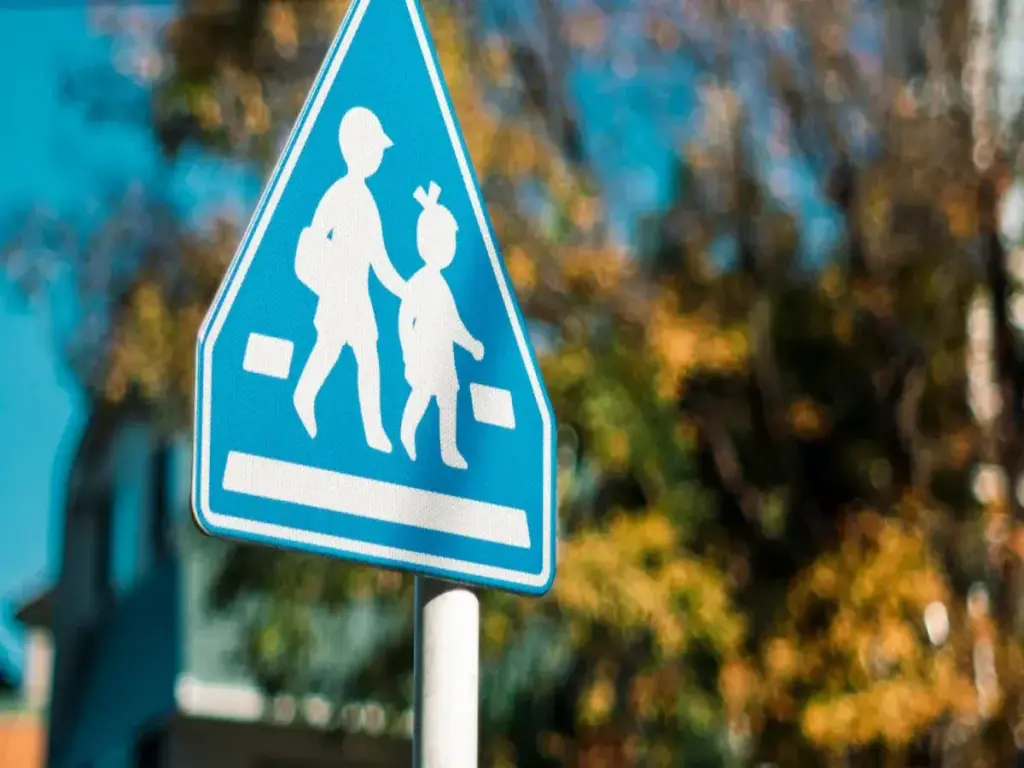
Das Schulkreuzungsschild (S1-1) ist ein gut sichtbares Verkehrskontrollschild, das Autofahrer vor Fußgängerüberwegen in der Nähe von Schulgeländen warnt. Es ist fluoreszierender gelbgrüner Hintergrund und die Darstellung zweier gehender Figuren sollen Autofahrer darauf aufmerksam machen, die Geschwindigkeit zu reduzieren, wenn sie sich Schulbereichen nähern. Das Schild verfügt über retroreflektierende Materialien, um sicherzustellen, dass es sowohl tagsüber als auch nachts sichtbar ist.
| Standardbeschreibung | Details |
|---|---|
| Hintergrundfarbe | Fluoreszierendes Gelbgrün |
| Legende und Grenze | Schwarz |
| Retroreflektorisierung | Für die Sichtbarkeit erforderlich |
| Installation | An der Schulkreuzung mit nach unten zeigender Pfeiltafel |
Verwendungszweck
Städte stellen das Schulkreuzungsschild auf (S1-1) in der Nähe von Schulen und Parks. Sie nutzen es auch auf stark befahrenen Straßen, an denen sich Kinder kreuzen. Diese Schilder zeigen Autofahrern, wo sich Zebrastreifen und Schulübergänge befinden. Die Schilder tragen dazu bei, Schüler und Familien während der Stoßzeiten zu schützen. Studien besagen, dass Fußgängerschilder auf der Straße und Verkehrsberuhigung langsame Autos eindämmen 0.94 km/h. Langsamere Autos in der Nähe von Zebrastreifen machen den Schulweg für Kinder sicherer.
Installationstipps
- Platzieren Sie das Schild genau dort, wo sich der Schulübergang befindet.
- Fügen Sie ein diagonales Pfeilzeichen hinzu, um auf die Kreuzung hinzuweisen.
- Verwenden Sie leuchtende oder leuchtende Schilder, damit Autofahrer sie sehen können. Tipp: Suchen Sie nach Bäumen oder Autos, die das Schild blockieren. Stellen Sie sicher, dass die Fahrer das Schild von weitem sehen können.
Straßenschild für Fußgängerüberweg (R1-6)
Merkmale und Wirksamkeit
Die Warnschilder für Fußgänger auf der Straße (R1-6) Besonderheiten haben. Diese Schilder helfen Autofahrern, Zebrastreifen besser zu erkennen und erinnern sie daran, anzuhalten, um auf Menschen zu warten. Städte bringen diese Schilder an belebten Ecken und in der Nähe von Schulen an. In der folgenden Tabelle sind wichtige Merkmale aufgeführt, die die Schilder gut sichtbar und sicher machen:
| Besonderheit | Beschreibung |
|---|---|
| Platzierung auf Fußgängerinseln | Wird an der Spitze von Fußgängerinseln angebracht, um Verkehrsteilnehmer an die Vorfahrtsregeln zu erinnern. |
| Einhaltung der Breakaway-Anforderungen | Entspricht den AASHTO-Richtlinien, um die Sicherheit im Falle eines Aufpralls zu gewährleisten. |
| Saisonale Nutzungsmöglichkeit | Kann saisonal eingesetzt werden, um Schäden durch Winterpflügen zu vermeiden. |
| Verwendung von Mastarmen | Zur besseren Sichtbarkeit sind die Schilder über den Fahrspuren erhöht. |
| Gut sichtbare Zebrastreifen | Enthält Zebrastreifen, die so gestaltet sind, dass sie für Autofahrer besser sichtbar sind. |
| Aktive Warnbaken | Enthält Beacons, die Fahrer aktiv auf die Anwesenheit von Fußgängern aufmerksam machen. |
Untersuchungen zeigen, dass diese Zebrastreifenschilder dazu beitragen, dass mehr Autofahrer anhalten.
- Ohne R1-6-Schilder, nur 7% der Fahrer angehalten.
- Mit R1-6 Torschildern, 79% der Fahrer angehalten.
- Als die Städte die Schilder wegnahmen, nur 52% der Fahrer angehalten.
- Mittellinie mit geraden Randschildern 36% der Autofahrer halten an.
- Das R1-6-Gateway ist eine kostengünstige Möglichkeit, mehr Fahrer dazu zu bringen, für Menschen anzuhalten.
Platzierungsrichtlinien
Städte platzieren das Verkehrszeichen für Fußgängerüberwege in der Mitte der Straße oder an der Seite von Zebrastreifen. Arbeiter stellen diese Schilder dort auf, wo viele Menschen gehen. Die Schilder dürfen nicht die Sicht von Autofahrern oder Menschen versperren. Wenn Sie sie vor Fußgängerinseln platzieren, können sich Autofahrer besser an die Vorfahrtsregeln erinnern. Einige Städte verwenden Mastarme, um die Schilder hoch anzuheben, damit Autofahrer sie besser sehen können. Wenn Sie die Schilder nur zu bestimmten Jahreszeiten verwenden, sind Sie vor Schneepflügen geschützt.
Tipp: Stellen Sie immer sicher, dass nichts die Sicht blockiert, bevor Sie Zebrastreifenschilder anbringen. Autofahrer sollten die Schilder schon von weitem erkennen.
Wartung
Arbeiter überprüfen häufig die Warnschilder für Fußgänger auf der Straße, um sicherzustellen, dass sie ordnungsgemäß funktionieren. Sie suchen nach Schäden nach Unwettern oder starkem Verkehr. Städte ersetzen alte oder kaputte Schilder schnell. Durch das Abnehmen der Schilder im Winter sind sie vor Schneepflügen geschützt. Das Reinigen der Schilder und das Überprüfen der Warnbaken hilft den Menschen, sie besser zu erkennen. Eine gute Pflege sorgt dafür, dass jeder Fußgängerüberweg für alle sicher bleibt.
Schulvorwarnungsschild
Design und Farbe
Schulwarnschilder verwenden leuchtende Farben. Das Schild hat einen gelbgrünen Hintergrund. Es hat einen dicken schwarzen Rand und schwarze Buchstaben. Diese Farbe ist im Sonnenlicht und in der Nacht gut zu erkennen. Das Schild ist aus starkem Aluminium gefertigt. Es rostet nicht und bricht nicht. Für die Grafiken werden spezielle Tinten verwendet, Vinyl, oder Film. Dadurch ist die Nachricht leicht lesbar. Das Zeichen kann haben reflektierende Bleche. Einige Typen halten 10 Jahre. Andere dauern 12 Jahre. Diese Funktionen helfen Fahrern, das Schild auch aus weiter Entfernung zu erkennen. Autofahrer können schnell reagieren, wenn sie es sehen.
| Spezifikationstyp | Details |
|---|---|
| Material | .080 Aluminium |
| Optionen für reflektierende Folien | Gelbes hochintensives Prisma-Reflektorlicht (10 Jahr Garantie), Fluoreszierendes Gelbgrün (12 Jahr Garantie) |
| Zeichengrafiken | Durchscheinende Tinten, Vinyl, oder durchscheinender Film |
| Wetterwiderstand | Witterungsbeständiges Aluminium in Verkehrsqualität, das weder rostet noch reißt |
| Montage | Vorgestanzt 3/8″ Löcher zur Montage am Pfosten, Wand, oder Zaun |
| Einhaltung | Erfüllt die MUTCD-Spezifikationen für die Nutzung auf Bundesstraßen |
Platzierung in der Nähe von Schulen
Städte stellen Schulwarnschilder vor Schulzonen auf. Sie platzieren sie auch in der Nähe von Zebrastreifen. Das Schild fordert Autofahrer auf, langsamer zu fahren. Es warnt sie, auf Kinder zu achten. Arbeiter bringen das Schild dort an, wo Schüler gehen oder belebte Straßen überqueren. Alle Fußgängerschilder in einer Zone verwenden dieselbe Farbe. Dadurch wissen Fahrer, dass sie sich in der Nähe einer Schule befinden. Schilder können zusätzliche Plaketten haben. Auf ihnen steht „AHEAD“ oder „XXX FEET“. Eine gute Platzierung gewährleistet die Sicherheit aller Menschen in der Nähe von Schulen.
Tipp: Bringen Sie das Schild dort an, wo Autofahrer vor Zebrastreifen langsamer fahren können.
Einhaltung
Schulwarnschilder folgen den MUTCD-Regeln. Die Schilder entsprechen den Bundesstandards für Größe und Farbe. Sie erfüllen auch die Regeln für das Reflexionsvermögen. Städte verwenden vorgestanzte Löcher, um Schilder einfach anzubringen. Die Zeichen halten viele Jahre. Bei schlechtem Wetter gehen sie nicht kaputt. Die Verwendung derselben Farbe für alle Schulzonenschilder erleichtert den Fahrern die Orientierung in der Gegend. Durch die Einhaltung der Regeln ist jeder Übergang sicher und gut sichtbar.
Halten Sie für Fußgänger am Zebrastreifen an (R1-6a)
Zeichenzweck
Die Haltestelle für Fußgänger am Zebrastreifen (R1-6a) Ein Schild weist die Fahrer an, auf dem Zebrastreifen anzuhalten, um auf Menschen zu warten. Die Worte auf dem Schild sind klar und leicht zu lesen. Das Design ist mutig, so fällt es auf. Städte nutzen diese Schilder, um Autofahrer auf das Gesetz aufmerksam zu machen. Die Schilder tragen dazu bei, die Sicherheit der Menschen beim Gehen zu gewährleisten. Diese Schilder funktionieren gut an belebten Orten wie Schulen und Parks. Wenn Städte die Schilder in einem Gateway-Setup anbringen, Immer mehr Fahrer bremsen ab und halten an. Studien zeigen, dass dieses Setup dazu führt, dass mehr Autofahrer anhalten. Es bringt auch Autos dazu, höher zu fahren 10 mph langsamer an einigen Zebrastreifen. Das Gateway-Setup funktioniert genauso gut wie teure Systeme. Es sorgt nicht dafür, dass Autos plötzlich anhalten.
Gesetzliche Anforderungen
Städte können Fußgängerstopps nur am Zebrastreifen einrichten (R1-6a) Schilder in Schulzonen, wenn das Landesgesetz vorschreibt, dass Autofahrer auf Fußgängerüberwegen anhalten müssen.
Jeder Bundesstaat hat seine eigenen Regeln für diese mutcd-konformen Schilder. Städte müssen die Gesetze prüfen, bevor sie die Schilder anbringen. Einige Bundesstaaten schreiben vor, dass Autofahrer auf Fußgängerüberwegen anhalten müssen. Andere Bundesstaaten verlangen von den Fahrern lediglich Vorfahrt. Die Kenntnis der Gesetze hilft Städten dabei, das richtige Schild für ihre Schulzonen auszuwählen.
Installation
Arbeiter brachten das R1-6a-Schild am Rand oder in der Mitte von Zebrastreifen an. Sie verwenden starke Pfosten oder Sockel, die sich verbiegen, wenn sie getroffen werden. Das Schild sollte dem Verkehr zugewandt sein, damit Autofahrer es von weitem erkennen können. Städte platzieren diese Schilder an belebten Ecken oder in der Nähe von Schulen. Gute Stellen helfen Autofahrern, das Schild frühzeitig zu erkennen und sicher anzuhalten. Die Arbeiter überprüfen die Schilder häufig, um sie sauber und gut sichtbar zu halten. Städte reparieren oder ersetzen defekte Schilder schnell, um die Sicherheit aller zu gewährleisten.
| Installationsschritt | Details |
|---|---|
| Standort | Rand oder Mitte von Zebrastreifen |
| Montage | Stabiler Pfosten oder flexible Basis |
| Sichtweite | Stellen Sie sich dem Gegenverkehr |
| Wartung | Regelmäßige Reinigung und Kontrollen |
Schild „Vorbehalt vor Fußgängern“. (R1-5)
Zeichenfunktion
Das Schild „Vorfahrt für Fußgänger“. (R1-5) hilft Autofahrern zu wissen, wann sie Menschen am Zebrastreifen Vorfahrt gewähren müssen. Dieses Zeichen spielt eine Schlüsselrolle für die Sicherheit aller. Das Handbuch auf einheitlichen Verkehrssteuerungsvorrichtungen (MUTCD) erklärt, dass dieses Schild Fahrzeuge anweist, den Personen, die die Kreuzung benutzen, Vorfahrt zu gewähren. Städte verwenden dieses Schild sowohl auf Straßen als auch auf Parkplätzen. Das Schild verdeutlicht die Regeln für Autofahrer und hilft, Unfälle zu vermeiden. Wenn Autofahrer das Schild sehen, Sie wissen, dass sie langsamer fahren und auf laufende Menschen achten müssen.
Platzierung
Städte platzieren hier das Fußgängervorkehrungsschild (R1-5) vor Zebrastreifen. Dadurch haben die Fahrer genügend Zeit, das Schild zu erkennen und zu reagieren. Das Schild funktioniert gut in belebten öffentlichen Bereichen und in der Nähe von Schulen. Wenn Sie das Schild im Voraus anbringen, können Autofahrer schneller nachgeben. Studien belegen, dass Vorabmarkierungen Autofahrer dazu veranlassen, früher und häufiger anzuhalten. Die folgende Tabelle zeigt, wie diese Zeichen die Sicherheit in verschiedenen Situationen verbessern:
| Studienreferenz | Ergebnisse |
|---|---|
| Huybers und Van Houten, 2004 | Vorab-Vorfahrtsmarkierungen ermutigen Autofahrer, auf Zebrastreifen in der Mitte des Blocks früher und häufiger auszuweichen. |
| Van Houten et al., 2001 | Treiber’ Das Verhalten verbessert sich durch vorgezogene Ertragsmarkierungen in Szenarien mit eingeschränkter Sicht. |
| Garay-Vega et al., 2008 | Bei vorgezogenen Ertragsmarkierungen ist im Vergleich zu Standardmarkierungen eine erhöhte Ertragswahrscheinlichkeit zu beobachten. |
Tipp: Platzieren Sie das Schild so, dass Autofahrer es sehen können, bevor Sie den Zebrastreifen erreichen. Dies hilft ihnen, sicher anzuhalten.
Einhaltung
Das Schild „Vorfahrt für Fußgänger“. (R1-5) Erfüllt alle Mutcd-konformen Schilderstandards. Städte müssen diese Regeln befolgen, um sicherzustellen, dass jedes Schild gleich aussieht. This helps drivers understand what to do, Egal wo sie fahren. Das Schild passt auch gut zu anderen Fußgänger- und Zebrastreifenschildern. Durch regelmäßige Kontrollen bleibt das Schild sauber und gut sichtbar. Eine gute Wartung trägt dazu bei, dass Zebrastreifen für alle sicher bleiben.
Kein Parken/Halten in der Nähe des Zebrastreifens
Bedeutung für die Sicherheit
Schilder mit Park-/Halteverbot in der Nähe von Zebrastreifen tragen zur Sicherheit der Menschen bei. Diese Schilder verhindern, dass Autos in der Nähe von Zebrastreifen parken. Wenn Autos wegbleiben, Fahrer und Spaziergänger können sich gegenseitig sehen. Wenn Autos zu nah parken, es ist schwer zu sehen. Dies kann für Kinder und Erwachsene gefährlich sein. Menschen könnten auf die Straße gehen, ohne gesehen zu werden. Drivers may not have enough time to stop. Städte nutzen diese Schilder, um das Unfallrisiko zu senken. Freiraum rund um Zebrastreifen sorgt dafür, dass sich jeder sicherer fühlt. Studien zeigen, dass es weniger Unfälle gibt, wenn Autos zurückbleiben.
Notiz: Indem man Autos von Zebrastreifen fernhält, hilft es Autofahrern, die überquerenden Personen besser zu erkennen.
Platzierungsregeln
Städte haben Regeln dafür, wo Schilder mit Parkverbot/Halteverbot in der Nähe von Fußgängerüberwegen angebracht werden dürfen. Workers put these signs at least 20 Meter vom Zebrastreifen entfernt. This gives drivers a clear view of the street. Signs must face the cars coming toward them. Sie sollten sich auf Augenhöhe befinden, damit der Fahrer sie sehen kann. Arbeiter suchen nach Bäumen oder Pfosten, die das Schild blockieren könnten. Signs go on both sides of the street. Hier entlang, drivers see them from every direction. Cities use these signs near schools, Parks, und belebte Orte.
| Platzierungsregel | Beschreibung |
|---|---|
| Mindestabstand | 20 Meter vom Zebrastreifen entfernt |
| Sichtweite | Keine Hindernisse; Installation auf Augenhöhe |
| Richtung | Stellen Sie sich dem Gegenverkehr |
| Standort | Both sides of street near pedestrian signs |
Anpassung
Städte können die Schilder „Parken/Halten in der Nähe von Zebrastreifen verboten“ an ihre Bedürfnisse anpassen. Auf einigen Schildern stehen zusätzliche Wörter wie „Abschleppzone“ oder „Nur an Schultagen“. Arbeiter können Pfeile oder Symbole anbringen, um anzuzeigen, wo das Parken nicht gestattet ist. Schilder können aus glänzenden Materialien bestehen, damit die Leute sie nachts sehen können. Städte wählen größere Schilder für stark befahrene Straßen und kleinere für ruhige Straßen. Benutzerdefinierte Schilder helfen den Fahrern, die Regeln zu kennen. Dadurch bleiben Zebrastreifen für alle frei.
Tipp: Benutzerdefinierte Schilder mit klaren Worten und Bildern helfen Autofahrern, die Regeln einzuhalten und die Sicherheit der Menschen an Zebrastreifen zu gewährleisten.
Zebrastreifenmarkierungen und -linien
Arten von Markierungen
Städte verwenden Muster, um den Menschen das Erkennen von Zebrastreifen zu erleichtern. Die besten Markierungen sind Balkenpaare, kontinental, und Leiterkonstruktionen. Diese Muster helfen Autofahrern und Fußgängern, Kreuzungen schon aus der Ferne zu erkennen. Kontinentale Zebrastreifen haben breite Streifen, die entlang des Bordsteins verlaufen. Leiterüberwege haben Seitenstreifen und breite Sprossen. Zebrastreifen verwenden schräge Streifen, aber sie sind nicht so leicht zu erkennen wie kontinentale. Die folgende Tabelle zeigt jeden Typ:
| Art der Zebrastreifenmarkierung | Beschreibung |
|---|---|
| Kontinentales Muster | Über die gesamte Überfahrt verlaufen breite Streifen neben dem Bordstein, wodurch es einfacher zu sehen ist. |
| Leiter-Zebrastreifen | Seitenstreifen mit breiten Sprossen, nicht so gut wie kontinental. |
| Zebrastreifen | Schräge Streifen, nicht so leicht zu erkennen wie kontinental. |
Städte bringen diese Markierungen an Kreuzungen in der Blockmitte und an Stellen ohne Stoppschilder an. Durch das Hinzufügen glänzender Materialien wie speziellem Klebeband werden die Linien nachts heller.
Sichtbarkeit und Wartung
Eine gute Sicht trägt zur Sicherheit von Zebrastreifen bei. Städte nutzen Lichter, Zebrastreifenschilder, und blinkende Lichter auf der Straße, um den Fahrern die Sicht zu erleichtern. Arbeiter kontrollieren jedes Jahr vor Schulbeginn Zebrastreifen. Neue Farbe sorgt für leuchtende Linien. In der folgenden Tabelle sind Möglichkeiten zur Pflege von Markierungen aufgeführt:
| Wartungsstrategie | Beschreibung |
|---|---|
| Verwendung von Thermoplast | Hält länger, kostet zunächst mehr. |
| Einbaumarkierungen | Schützt vor Schneepflügen, kostet aber mehr. |
| Lage der Markierungen | Das Ausfahren von Wendestellen hilft ihnen, lange zu halten. |
| Oberflächenpflege | Benötigt besondere Sorgfalt für die Sicherheit der Menschen. |
Tipp: Städte sollten Zebrastreifen neu streichen, wenn die Linien schwer zu erkennen sind, damit die Kreuzungen sicher bleiben.
Einhaltung
Städte müssen die MUTCD-Regeln für Zebrastreifenmarkierungen befolgen. Diese Regeln stellen sicher, dass alle Übergänge gleich aussehen und sicher sind. Durch die Verwendung zugelassener Materialien und Muster können Autofahrer erkennen, wo sich Menschen kreuzen. Regelmäßige Kontrollen und Fixierungen sorgen dafür, dass Zebrastreifen für alle sicher sind.
Blinkendes LED-Fußgängerübergangsschild
Technologie und Wirksamkeit
Blinkende LED-Fußgängerübergangsschilder nutzen eine neue Technologie, um Autofahrern dabei zu helfen, Menschen auf Zebrastreifen zu erkennen. Rechteckige schnelle Blinkerlaken, oder RRFBs, haben zwei gelbe Lichter mit LED-Arrays. Diese Lichter blinken schnell und erregen schnell die Aufmerksamkeit des Fahrers. RRFBs sind heller als normale Beacons und verwenden spezielle Blitzmuster. Die Baken schalten sich nur ein, wenn jemand die Straße überqueren will. Dadurch funktionieren sie besser. Autofahrer bemerken die Lichter und fahren langsamer. Dies hilft, alle zu schützen. RRFBs helfen Fahrern, aufmerksamer zu sein und Unfälle an stark befahrenen Zebrastreifen zu verhindern.
- RRFBs erleichtern die Sichtbarkeit von Menschen auf Zebrastreifen.
- Das Blinkmuster hilft dem Autofahrer, das Schild sofort zu erkennen.
- Die Beacons schalten sich nur ein, wenn jemand da ist, damit sie besser funktionieren.
Studien zeigen, dass blinkende Fußgängersysteme die Unfallhäufigkeit verringern und mehr Autofahrer zum Anhalten bewegen. Die folgende Tabelle zeigt, wie verschiedene Zeichen funktionieren und wann sie am besten funktionieren:
| Behandlungstyp | Wirksamkeit | Bedingungen |
|---|---|---|
| Fußgänger-Hybrid-Leuchtfeuer (PHB) | Funktioniert Tag und Nacht gut | Keine große Veränderung beim Anhalten des Fahrers zwischen Tag und Nacht |
| Rechteckige Schnellblinkleuchte (RRFB) | Funktioniert nachts besser | Nachts halten immer mehr Autofahrer an |
| LED-eingebettetes Kreuzungsschild (LED-Ein) | Funktioniert tagsüber besser | Bei bestimmten Fahrspurgrößen halten mehr Autofahrer in Bereichen mit langsamer Geschwindigkeit an |
Platzierungs- und Energieoptionen
Städte stellen in der Nähe von Schulen blinkende LED-Fußgängerschilder auf, Parks, und belebte Orte. Arbeiter stellten diese Schilder an beiden Enden von Zebrastreifen auf. Hier entlang, Autofahrer, die von beiden Seiten kommen, können sie sehen. Oft werden die Leuchtfeuer durch Sonnenkollektoren mit Strom versorgt, Sie arbeiten also dort, wo es keinen Strom gibt. Einige Schilder verwenden Batterien oder sind an die Stadtstromversorgung angeschlossen. Solarbetriebene Schilder funktionieren am besten an sonnigen Orten. Städte wählen für jeden Ort und jedes Wetter die beste Energieart aus.
Tipp: Platzieren Sie blinkende LED-Schilder so, dass Autofahrer sie frühzeitig erkennen können. Dadurch haben Fahrer mehr Zeit zum Abbremsen und Anhalten.
MUTCD Compliance
Blinkende LED-Fußgängerüberwegschilder müssen den MUTCD-Regeln entsprechen. Diese Regeln legen fest, wie groß das Schild sein soll, Welche Farbe hat es, und wie die Lichter blinken. Städte befolgen diese Regeln, sodass alle Schilder gleich aussehen und gleich funktionieren. Die MUTCD-Regeln helfen Autofahrern dabei, zu wissen, was sie auf Zebrastreifen tun sollen. Städte überprüfen die Schilder häufig, um sicherzustellen, dass sie funktionieren und gut erkennbar sind. Arbeiter reparieren kaputte Lichter und reinigen die Schilder häufig. Durch die Einhaltung dieser Regeln sind Zebrastreifen für alle sicher.
Fußgängerüberweg voraus
Zweck der Vorwarnung
Das Schild „Fußgängerübergang voraus“ weist Autofahrer darauf hin, dass bald ein Zebrastreifen bevorsteht. Dieses Schild warnt Autofahrer frühzeitig, So können sie nach Menschen Ausschau halten, die die Straße überqueren. Autofahrer sehen diese Schilder an Stellen, an denen Zebrastreifen schwer zu erkennen sind oder an denen Menschen überqueren könnten, wenn die Fahrer dies nicht erwarten. Das Schild hilft Autofahrern, aufmerksamer zu sein und langsamer zu fahren. Dies schützt alle, insbesondere in der Nähe von Schulen oder belebten Orten.
Platzierung
Um die Sicherheit der Menschen zu gewährleisten, stellen Städte an vielen Stellen Fußgängerüberwegschilder auf. Arbeiter platzieren diese Schilder dort, wo viele Menschen gehen und die Straße überqueren. Einige häufige Orte sind:
- Zebrastreifen mitten in Häuserblocks ohne Ampeln, wie in der Innenstadt oder in Einkaufsvierteln
- Belebte Fußgängerzonen in der Nähe von Geschäften, Restaurants, oder Orte zum Spaß
- Bushaltestellen oder Bahnhöfe, an denen Menschen häufig die Straße überqueren
- Krankenhausbereiche, in denen Patienten und Besucher häufig die Straße kreuzen
- Parks, in denen Familien Spielplätze besuchen, Sportplätze, oder Wanderwege
- Seniorenheime, in denen ältere Menschen die Straße langsam überqueren dürfen
Diese Schilder passen gut zu anderen Zebrastreifen- und Fußgängerschildern. Wenn Sie sie an guten Stellen anbringen, können Autofahrer das Schild besser erkennen, bevor sie an der Kreuzung ankommen.
Sichtweite
Es ist wichtig, dass jedes Fußgängerüberweg-Schild gut sichtbar ist. Städte verwenden leuchtende Farben und glänzende Materialien, damit Autofahrer das Schild tagsüber und nachts sehen können. Arbeiter stellen sicher, dass nichts das Schild blockiert, wie Bäume, Stangen, oder geparkte Autos. Die Schilder sollten sich auf Augenhöhe befinden und auch aus weiter Entfernung gut erkennbar sein. Klare Schilder helfen Autofahrern dabei, langsamer zu fahren und den Zebrastreifen für alle sicher zu halten.
Vergleichstabelle von Top 10 Zeichen
Übersicht über die wichtigsten Funktionen
Die folgende Tabelle listet die Hauptmerkmale des Oberteils auf 10 Fußgängerübergangszeichen. Jedes Zeichen hat seinen eigenen Code, Hauptverwendung, Compliance-Informationen, und Sichtbarkeitsfunktionen. Dies erleichtert den Lesern den schnellen Vergleich der Zeichen.
| Zeichenname | Code | Hauptverwendung | MUTCD Compliance | Sichtbarkeitsfunktionen |
|---|---|---|---|---|
| Fußgängerübergangszeichen | W11-2 | Öffentliche Bereiche, Schulen | Ja | Leuchtendes Gelb, fettes Symbol |
| Schulübergangsschild | S1-1 | Schulzonen | Ja | Fluoreszierende Farbe, reflektierend |
| In-Street-Fußgängerüberweg-Schild | R1-6 | Belebte Zebrastreifen | Ja | Zentrale Platzierung, abtrünnige Basis |
| Schulvorwarnungsschild | S1-1a | In der Nähe von Schulen | Ja | Fluoreszierend, große Buchstaben |
| Halten Sie für Fußgänger am Zebrastreifen an | R1-6a | Schule/öffentliche Bereiche | Ja | Fettgedruckter Text, flexible Montage |
| Schild „Vorbehalt vor Fußgängern“. | R1-5 | Öffentliche Bereiche | Ja | Vorabplatzierung, klare Formulierung |
| Kein Parken/Halten in der Nähe des Zebrastreifens | N / A | Alle Zebrastreifen | Ja | Benutzerdefinierte Formulierung, reflektierend |
| Zebrastreifenmarkierungen und -linien | N / A | Alle Zebrastreifen | Ja | Breite Streifen, Thermoplast |
| Blinkendes LED-Fußgängerübergangsschild | N / A | Zonen mit hohem Verkehrsaufkommen | Ja | LED -Leuchten, Solarenergie |
| Fußgängerüberweg voraus | W11-2a | Vorwarnung | Ja | Helle Farbe, reflektierend |
Schnelle Referenz
- Schilder mit leuchtenden Farben und glänzenden Materialien sind am besten in der Nähe von Schulen angebracht.
- Straßenschilder und blinkende LED-Schilder sind an belebten Orten am hilfreichsten.
- Zusätzliche Lichter und Lichter auf der Straße sorgen dafür, dass es weniger zu Unfällen kommt und die Fahrer langsamer fahren.
- Zebrastreifen und “Kein Parken” Schilder tragen dazu bei, die Sicherheit der Menschen an öffentlichen Orten zu gewährleisten.
Tipp: Städte sollten an stark befahrenen Orten blinkende LED-Schilder und Lichter auf der Straße verwenden. Diese Funktionen können Autos zum Laufen bringen 25% langsamer fahren und mehr Fahrer dazu bringen, für Leute anzuhalten, aus 30% Zu 62%. Durch spezielle Fußgängersignale und eine bessere Beleuchtung kommt es zudem nur halb so oft zu nächtlichen Unfällen.
Städte können Schilder basierend auf den Anforderungen der einzelnen Gebiete auswählen. Schulzonen brauchen helle und glänzende Schilder. Belebte Straßen sind mit Warnlichtern und klaren Linien besser zu erreichen. Durch gut sichtbare Schilder und offene Fußgängerüberwege bleiben öffentliche Orte sicherer.
Auswahl und Installation von Verkehrsschildern für Fußgängerüberwege
Bedarfsermittlung
Planer bewerten verschiedene Faktoren, wenn sie die Notwendigkeit von Fußgängerüberwegen bestimmen. Sie untersuchen sowohl den aktuellen als auch den prognostizierten Fußgängerverkehr, um die zukünftige Nachfrage vorherzusagen. Zusätzlich, Die Art der umliegenden Gebäude und Parks spielt eine wesentliche Rolle bei der Platzierung von Kreuzungen. Es ist auch wichtig zu berücksichtigen, wie häufig Fußgänger bestehende Kreuzungen nutzen. Wenn Fahrzeuge in der Umgebung mit hoher Geschwindigkeit unterwegs sind, Es werden erhöhte Sicherheitsmaßnahmen erforderlich, um potenzielle Risiken zu mindern. Historical crash data is another critical factor, da es Bereiche mit einer höheren Unfallhäufigkeit hervorhebt, prompting the need for improved signage. Außerdem, Durch die Bewertung der Wirksamkeit aktueller Sicherheitsmaßnahmen lässt sich feststellen, ob eine zusätzliche Beschilderung erforderlich ist. In einer Studie, in der die Vorschriften verschiedener Städte verglichen wurden, wurde betont, dass Fußgängerüberwege so gestaltet sein sollten, dass sie allen Menschen gerecht werden, regardless of their needs or abilities.
In der folgenden Tabelle sind die wichtigsten Faktoren aufgeführt, die Planer bei der Planung von Fußgängerüberwegen berücksichtigen:
| Kriterien | Beschreibung |
|---|---|
| Existing and Projected Demand | Die Planer berücksichtigen sowohl die aktuelle als auch die erwartete Nachfrage nach Fußgängerüberwegen. |
| Landnutzungen | Die Art der Landnutzung im Gebiet beeinflusst den Bedarf an Fußgängerüberwegen. |
| Fußgänger-Compliance | Für die Beurteilung ist es von entscheidender Bedeutung, zu verstehen, wie oft Fußgänger bestehende Kreuzungen nutzen. |
| Geschwindigkeit | Die Geschwindigkeit der Fahrzeuge im Gebiet beeinflusst die Sicherheit und Notwendigkeit von Kreuzungen. |
| Sicherheitsmaßnahmen | Bestehende Sicherheitsmaßnahmen sollten bewertet werden, um festzustellen, ob zusätzliche Beschilderung erforderlich ist. |
| Absturzverlauf | Historische Daten zu Unfällen können Aufschluss über die Notwendigkeit verbesserter Fußgängerüberwegschilder geben. |
Beispiel für einen Unfallverlauf, der sich auf die Beschilderungsplanung auswirkt:
In 2021, Nahezu sind die tödlichen Fußgängertodesfälle 48% der Verkehrstoten in San Francisco. Ein tragisches Beispiel ist der Tod eines 78-jährigen Fußgängers in der Sixth Street und der Howard Street im August 2025. Diese Kreuzung ist Teil der Stadt “Netzwerk für hohe Verletzungen,” was sieht 68% schwerer Unfälle trotz alleiniger Abdeckung 12% der Straßen. Im Anschluss daran, Die Stadt legte Wert auf eine verbesserte Beschilderung von Fußgängerüberwegen, inklusive blinkender LED-Signale, um die Sicherheit zu verbessern und künftige Todesfälle zu reduzieren.
Einhaltung von Standards
Städte müssen die MUTCD-Regeln befolgen, wenn sie Schilder auswählen. Jedes Schild muss die richtige Form und Farbe haben. Schilder müssen an der richtigen Stelle stehen. Schilder bestehen aus glänzenden Materialien, sodass Autofahrer sie schon von weitem erkennen können. Autofahrer sollten das Schild mindestens sehen 200 Füße entfernt. Dies ist besonders wichtig auf stark befahrenen Straßen. Designer wählen Schilder aus, die sich bei Stößen verbiegen und wieder hochspringen. Dies verhindert, dass sie endgültig kaputt gehen. Schilder sollten niemals den Weg von Menschen versperren.
Best Practices für Installation
Eine gute Installation trägt zur Sicherheit der Menschen an Kreuzungen bei. Arbeiter stellen Schilder auf, die nicht höher sind als 4 Füße. Signs must face the cars coming toward them. Sie sollten keine Gehwege oder Wege blockieren. Städte müssen Schilder häufig überprüfen und reinigen. Untersuchungen zeigen, dass Warnschilder und Lichter auf der Straße dazu beitragen, Unfälle zu verhindern. Diese Tools erhöhen die Aufmerksamkeit der Fahrer, Auch wenn es schwer zu sehen ist.
| Evidenztyp | Beschreibung |
|---|---|
| Warnzeichen | Warnschilder reduzieren die Fahrzeuggeschwindigkeit und Konflikte zwischen Fußgängern und Autofahrern. |
| Warnleuchten auf der Fahrbahn | Diese Lichter erhöhen die Sicherheit und verändern das Fahrerverhalten, insbesondere bei schlechter Sicht. |
Städte sollten Zebrastreifen schnell neu streichen und kaputte Lichter reparieren. Regelmäßige Kontrollen sorgen dafür, dass die Überfahrten für alle sicher sind.
Wenn Städte MUTCD-konforme Fußgängerüberwegschilder verwenden, Die Sicherheit wird besser. Autofahrer nehmen diese Zeichen stärker wahr und achten besser darauf. Gute Schilder und Warnsysteme helfen allen in der Gemeinde.
- Fragen Sie immer Experten vor Ort, wo Sie Schilder anbringen und wie Sie sie pflegen müssen.
- Schauen Sie sich Programme wie „Safe Routes to School“ und „Complete Streets“ an, um weitere Möglichkeiten zu finden, Übergänge sicherer zu machen.
| Platzierungstipp | Standardanforderung |
|---|---|
| Zeichenhöhe | 7 Füße in Städten, 5 Füße in ländlichen Gebieten |
| Sichtweite | Mindestens 200 Füße entfernt |
FAQ
Was bedeutet MUTCD für Fußgängerüberwegschilder??
MUTCD steht für Manual on Uniform -Verkehrssteuerungsgeräte. Es legt die Regeln für Verkehrszeichen fest. Städte wenden diese Regeln an, um die Beschilderung klar und sicher zu halten.
Wie oft sollten Städte Fußgängerüberwegschilder überprüfen??
Städte sollten die Schilder mindestens einmal im Jahr überprüfen. Sie suchen nach Schaden, Fading, oder blockierte Ansichten. Schnelle Reparaturen tragen zur Sicherheit aller bei.
Können Städte Fußgängerüberwegschilder anpassen??
Ja, Städte können benutzerdefinierte Nachrichten oder Symbole hinzufügen. Sie müssen die MUTCD-Regeln für die Farbe befolgen, Größe, und Platzierung, um die Wirksamkeit der Schilder zu gewährleisten.