Einführung: Das Universelle “Start-Taste” zur Sicherheit
Jedes Straßenbauprojekt beginnt mit einem einzigen, kritische Entscheidung: die Platzierung des ersten Vorwarnzeichens. Bevor ein Autofahrer einen Verkehrskegel sieht, ein Flagger, oder ein Bagger, Sie müssen den Diamanten sehen.
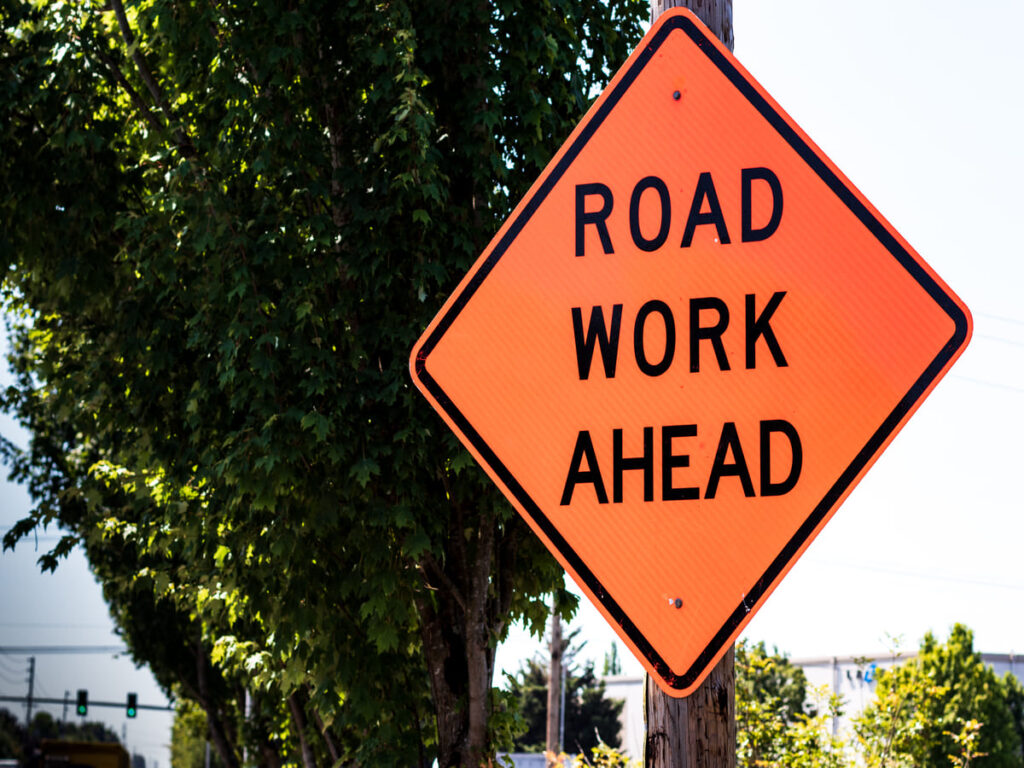
Der Schild „Straßenarbeiten voraus“. (MUTCD-Code W20-1) ist das Universelle “Start-Taste” zur vorübergehenden Verkehrskontrolle (TTC). Es erfüllt eine spezifische rechtliche und psychologische Funktion. Es verändert den mentalen Zustand des Fahrers “Fahrten auf offener Straße” Zu “Achtung.”
Wenn Sie dieses Schild falsch platzieren, oder wenn ihm die richtige Retroreflexion fehlt, Ihr gesamter Arbeitsbereich ist nicht konform. Ein Vermisster Schild „Straßenarbeiten voraus“. ist das Erste, worauf ein Anwalt nach einem Arbeitsunfall achtet. Die Haftung hängt oft von diesem einzelnen Stück orangefarbenem Aluminium ab.
Dieser Leitfaden bietet eine umfassende Aufschlüsselung des W20-1-Standards. Wir werden den Wandel vom Erbe abdecken Schild „Männer bei der Arbeit“., die spezifischen Platzierungsabstände für urban vs. ländliche Straßen, und wie man das Richtige wählt Schild „Straßenarbeiten voraus“ mit Ständer für Ihre Crew.
Verwandte Ressource: Die Platzierung Ihres W20-1 bestimmt die “A-Dimension” für Ihre gesamte Zone. Für eine vollständige Abstandstabelle, Verweisen Sie auf unsere Leitfaden zur Platzierung von Straßenschildern im Bauwesen.
Die Evolution: “Männer bei der Arbeit” vs. “Straßenarbeit voraus”
Seit Jahrzehnten, Der Industriestandard war die textbasierte Schild „Männer bei der Arbeit“.. Dieser Begriff wird immer noch in lockeren Gesprächen und in älteren Vertragsspezifikationen verwendet. Jedoch, Bundesstandards und Best Practices haben sich erheblich weiterentwickelt.
1. Warum “Männer bei der Arbeit” ist veraltet
Die Abkehr von Schilder „Männer bei der Arbeit“. Dabei geht es nicht nur um politische Korrektheit; es geht um Genauigkeit und Sicherheit.
- Inklusivität: Die Arbeitskräfte im modernen Baugewerbe sind vielfältig. Die Verwendung einer geschlechtsspezifischen Sprache ist im heutigen Compliance-Umfeld unprofessionell.
- Umfang der Gefahr: Der Begriff “Männer bei der Arbeit” impliziert, dass die nur Gefahr ist ein Mensch. Das ist gefährlich. Ein Arbeitsbereich birgt oft Gefahren, auch wenn keine Arbeiter anwesend sind, wie zum Beispiel:
- Unebene Fahrspuren oder Stahlplatten.
- Verengte Breiten aufgrund von Betonbarrieren.
- Schlamm oder Kies auf der Fahrbahn.
- Die Lösung: Der Schild „Straßenarbeiten voraus“. Abdeckungen alle Bedingungen. Es warnt Fahrer, dass die Straße selbst geändert wird, unabhängig davon, ob ein Mensch darauf steht.
2. Der moderne MUTCD-Standard (S20-1 & S21-1)
Der Handbuch zu einheitlichen Verkehrskontrollgeräten (MUTCD) Abschnitt 6F.18 legt die W20-1 fest Schild „Straßenarbeiten voraus“. als primäres allgemeines Warnzeichen.
Für Szenarien, in denen Sie speziell vor der Anwesenheit von Menschen warnen müssen (Z.B., eine kurzfristige Spot-Reparatur), Die MUTCD empfiehlt das Symbolzeichen (S21-1). Auf diesem Schild ist ein Arbeiter abgebildet, der eine Schaufel hält.
- Warum Symbole gewinnen: Ein Fahrer fährt vorbei 65 MPH verarbeitet ein Grafiksymbol 2x schneller als das Lesen von Text “Männer bei der Arbeit.”
- Lesbarkeit: Textzeichen erfordern Lese- und Schreibkenntnisse. Symbole sind universell.
Schlüssel zum Mitnehmen: Wenn Ihr Vertrag Folgendes vorsieht: Schild „Männer bei der Arbeit“., mit dem Ingenieur klären. In 99% von Fällen, Sie benötigen tatsächlich einen W20-1 Schild „Straßenarbeiten voraus“. oder ein W21-1-Symbolzeichen.
Die Physik der Sichtbarkeit: Warum Orange wichtig ist
Sie können nicht einfach irgendein orangefarbenes Schild verwenden. Die Wirksamkeit von a Straßenschild „Bau voraus“. hängt von zwei Faktoren ab: Fluoreszenz und Retroreflexion.
1. Fluoreszierorange (Der Tagesheld)
Standardorange Farbe verblasst. Modern Bauarbeiten voraus Zeichen Verwenden Sie fluoreszierende orange Folie.
- Die Wissenschaft: Fluoreszenz absorbiert UV-Licht der Sonne (was unsichtbar ist) und gibt es als sichtbares orangefarbenes Licht wieder ab.
- Das Ergebnis: Das Zeichen scheint zu sein “glühen” tagsüber, besonders in der Morgen- und Abenddämmerung. Dadurch erhöht sich der Erfassungsabstand um bis zu 40%.
2. Retrorefektivität (Der Held der Nacht)
Nachts, Das Schild muss von den Scheinwerfern auf den Fahrer zurückgeworfen werden.
- Ingenieurnote (Typ I): Verwenden Sie dies nicht. Es ist veraltet für Straßenbau voraus Zeichen. Es reflektiert nur einen Bruchteil des Lichts.
- Hochintensität Prismatisch (Typ IV): Der Mindeststandard für die meisten temporären Schilder.
- Diamantqualität (Typ XI): Der Goldstandard. Für Hochgeschwindigkeitsautobahnen (55+ Mph), Sie benötigen eine Folie vom Typ XI. Es reflektiert Licht auch bei großen Eintrittswinkeln (Z.B., wenn das Schild verdreht ist oder sich das Auto auf der Gegenspur befindet).
Für die Spitze: A Schild „Straßenarbeiten voraus“. mit Blechen vom Typ XI ist von hier aus sichtbar 1,500 Füße nachts weg. Dies ergibt einen Treiber 15 zusätzliche Reaktionssekunden im Vergleich zu billigeren Materialien.
Der “A-Dimension”: Präzisionsplatzierungsregeln
Der häufigste Verstoß bei Inspektionen von Arbeitsbereichen ist der falsche Abstand. Sie können nicht einfach a platzieren Schild „Straßenarbeiten voraus“. “irgendwo vor den Zapfen.”
Der MUTCD definiert diesen Abstand als “A-Dimension.” Sie wird auf der Grundlage der Geschwindigkeitsbegrenzung und der Komplexität der Straßenumgebung berechnet. Diese Distanz verschafft dem Fahrer Wahrnehmungs-Reaktionszeit (PRT).
1. Städtische niedrige Geschwindigkeit (≤ 35 Mph)
- Die Regel: Platzieren Sie das Schild 100 Füße (30 Meter) vor der Wechselzone.
- Die Logik: In städtischen Umgebungen, Blöcke sind kurz (oft 300-400 Füße). Wenn Sie das Schild zu weit hinten platzieren (Z.B., 500 Füße), es könnte enden:
- Vor der vorherigen Kreuzung (Dies führt dazu, dass der abbiegende Verkehr es übersieht).
- Versteckt hinter einem geparkten Lieferwagen.
- Verwirrende Fahrer, die abbiegen aus der Straße, bevor Sie Ihren Arbeitsbereich erreichen.
- Szenario: Ein Team zur Schlaglochreparatur in einer Wohnstraße.
2. Urbane Hochgeschwindigkeit (≥ 40 Mph)
- Die Regel: Platzieren Sie das Schild 350 Füße (100 Meter) im voraus.
- Die Logik: Bei 40 Mph, ein Fahrzeug fährt unruhig 60 Fuß pro Sekunde. Eine Lücke von 350 Fuß gibt dem Fahrer ungefähr 6 Sekunden, um das zu sehen Schild „Bau voraus“., lies es, und den Fuß vom Gas nehmen, bevor sie auf die Verjüngung stoßen.
- Szenario: Versorgungsarbeiten an einer 4-spurigen Hauptverkehrsader.
3. Ländlich & Autobahn (≥ 50 Mph)
- Die Regel: Platzieren Sie das Schild 500 Füße zu 1,000 Füße (150-300 Meter) im voraus.
- Die Logik: Auf Autobahnen, Geschwindigkeit ist der Feind. Autofahrer sind oft da “Autobahnhypnose.” Sie brauchen eine riesige Pufferzone. An 70 MPH-Autobahnen, Dieses Zeichen ist oft das erste einer Reihe von drei Zeichen (Straßenarbeiten stehen bevor -> Linke Spur vorn gesperrt -> Flaggen voraus), beabstandet 1,000 Füße auseinander.
- Szenario: Reparatur des Fahrbahnbelags einer Interstate-Brücke oder Fahrbahnerneuerung.
Kritische Warnung: Platzieren Sie niemals einen Schild „Straßenbau voraus“. wo es bestehenden dauerhaften Zeichen widerspricht. Zum Beispiel, Platzieren Sie es nicht unmittelbar nach einem “Geschwindigkeitsbegrenzung 65” Zeichen. Decken Sie das permanente Schild bei Bedarf ab.
Den Text auswählen: Varianten & Rechtliche Nuancen
Während W20-1 “Straßenarbeit voraus” ist die Standardeinstellung, Spezifische Projekte erfordern eine spezifische Sprache. Die Verwendung des falschen Textes kann Fahrer darüber verwirren Natur der Gefahr oder schränken Sie Ihren Rechtsschutz ein.
Hier erfahren Sie, wie Sie zwischen den gängigen Varianten wählen können:
1. Der “Schweres Zivil” Standard: Schild „Straßenbau voraus“.
Für große Infrastrukturprojekte mit Aushubarbeiten, Pflasterung, oder Brückenreparatur, Ingenieure spezifizieren oft die Schild „Straßenbau voraus“. (W20-1-Variante).
- Die Implikation: Das Wort “Konstruktion” impliziert ein langfristiges Projekt (länger haltbar als 3 Tage) mit schweren Maschinen, Spurwechsel, und mögliche Unterbrechungen.
- Verwendung: Dies ist die bevorzugte Straßenschild „Bau voraus“. für Kapitalverbesserungsprojekte. Es signalisiert Truckern und Einheimischen, dass es sich nicht nur um eine Schlaglochreparatur handelt, sondern um eine große Baustelle.
- Distanz: Weil “Konstruktion” impliziert Komplexität, Diese Zeichen werden typischerweise weiter hinten platziert (1,500+ Füße) auf Autobahnen, damit schwere Lkw frühzeitig einfädeln können.
2. Der Rechtsschutzschild: Schild „Arbeitsbereich voraus“.
Einige Bundesstaaten und Kommunen schreiben den Text vor Schild „Arbeitsbereich voraus“. (G20-5aP) oder kombinieren Sie es mit einem “Fines Doppel” Plakette.
- Die juristische Falle: In vielen Gerichtsbarkeiten, die rechtliche Definition von a “Arbeitsbereich” führt zu erhöhten Strafen für Geschwindigkeitsüberschreitungen oder rücksichtsloses Fahren.
- Warum es verwenden?? Wenn Ihr Hauptanliegen darin besteht, Arbeitnehmer vor zu schnell fahrenden Autos zu schützen, spezifisch verwenden “Arbeitsbereich” Die Nomenklatur legt die gesetzliche Grenze für doppelte Geldstrafen fest. Es hat mehr Autorität als eine allgemeine Warnung.
3. Der Versorgungsspezialist: Versorgungsarbeiten stehen bevor
Wenn Ihr Team an Stromleitungen arbeitet, Gasnetz, oder Telekommunikation, Verwenden Sie kein Generikum Schild „Bauarbeiten voraus“..
- Die Regel: Verwenden “Versorgungsarbeiten stehen bevor” (W21-7).
- Die Fahrererwartung: Wenn ein Fahrer sieht “Dienstprogramm,” Sie erwarten eine Blockierung des Seitenstreifens oder einen Kübelwagen, der eine einzelne Fahrspur blockiert. Sie erwarten keinen ausgehobenen Straßenbelag.
- Genauigkeit: Verwendung “Konstruktion” für eine Kabelinstallation ist irreführend. Verwendung “Dienstprogramm” sagt dem Fahrer genau, worauf er achten muss (Oberleitungen oder Schulterarbeiten).
4. Der “Männer bei der Arbeit” Vermächtnis
Wie in der Einleitung erwähnt, der Text Schild „Männer bei der Arbeit“. wird auslaufen. Jedoch, wenn Sie in einer privaten Einrichtung arbeiten (wie ein Fabrikkomplex oder ein privater Parkplatz) wo ältere Standards bestehen bleiben, Möglicherweise werden Ihnen weiterhin Anfragen dazu angezeigt.
- Empfehlung: Upgraden Sie immer auf das Symbolzeichen (S21-1). Es kommuniziert “Menschliche Präsenz” sofort und ohne Sprachbarrieren.
Auswahl des richtigen Schildes „Straßenarbeiten voraus“ mit Ständer: Starr vs. Aufrollen
Ein Schild ist nutzlos, wenn es flach im Dreck liegt. Zur vorübergehenden Verkehrskontrolle, Das Montagesystem ist ebenso wichtig wie die retroreflektierende Fläche. Beim Kauf haben Sie im Allgemeinen zwei Materialoptionen zur Auswahl Schild „Straßenarbeiten voraus“ mit Ständer.
1. Starre Bau-Ahead-Schilder (Aluminium/Dibond)
- Am besten für: Langfristige Projekte (länger haltbar als 3 Tage) oder semipermanente Installationen.
- Profis: Extrem langlebig, windbeständig, und behält die Retroreflexion länger bei.
- Nachteile: Schwer, schwierig in einem Pickup zu verstauen, und gefährlich, wenn sie bei einem Unfall zu einem Projektil werden.
- Montage: Normalerweise sind robuste quadratische Stahlpfosten oder große A-Rahmen-Barrikaden erforderlich.
2. Aufrollbare Schilder „Straßenarbeiten voraus“. (Vinyl/Mesh)
- Am besten für: Täglicher Betrieb, Wartungsteams, und Nutzfahrzeuge.
- Profis: Leicht, Wird in unten bereitgestellt 60 Sekunden, und nimmt nur minimalen Speicherplatz ein.
- Nachteile: Kann “flattern” bei starkem Wind, wenn nicht richtig gespannt.
- Der Industriestandard: Für die meisten mobilen Besatzungen, Ein aufrollbares Warnschild „Baustellenwarnung“ mit Ständer ist die ideale Ausrüstung. Es ermöglicht einem einzelnen Arbeiter, in wenigen Minuten einen konformen Vorwarnbereich einzurichten.
Um zu vermeiden, dass Sie das falsche Setup für die tägliche Realität Ihrer Crew kaufen, Den vollständigen Vergleich finden Sie hier: Roll-up vs. Starre Aluminiumkonstruktion voranzeichen: Das ist richtig für Ihr Bauprojekt?
Sicherheitsstandards für Schilderständer „Straßenarbeiten voraus“. (MAISCHE & NCHRP-350)
Sie können a nicht unterstützen Straßenschild „Bau voraus“. B. gegen einen Baum oder montieren Sie es auf einem selbstgebauten Holzrahmen. Der Ständer selbst ist eine geregelte Sicherheitseinrichtung.
1. Crashwortlichkeit: Warum Ihr Stand einstürzen muss
Wenn ein abgelenkter Fahrer Ihr Schild anfährt 60 Mph, was geschieht?
- Nicht konform: Ein schwerer, Der starre Ständer könnte durch die Windschutzscheibe brechen, den Fahrer verletzen oder töten.
- Konform: Ein MASH-konformer Ständer ist so konzipiert, dass er beim Aufprall flach zusammenfällt oder zerbricht, unter dem Fahrzeug hindurchfahren.
- Haftung: Die Verwendung eines nicht konformen Standes setzt Ihr Unternehmen im Falle eines Unfalls massiven Haftungsklagen aus.
2. Windwiderstand für tragbare Schilder
Für den Einsatz auf der Autobahn oder auf offenen Landstraßen, Wind ist der Feind. Ein Standardstativ wird umfallen, wenn ein Sattelschlepper vorbeifährt 70 Mph.
- Die Lösung: Suchen Sie nach einem Schild „Straßenarbeiten voraus“ mit Ständer mit robusten Doppelfedern.
- Mechanismus: Durch die Federn kann sich die Vorderseite des Schilds mit der Windböe biegen und biegen, Dann schnappen Sie wieder in eine aufrechte Position, anstatt die gesamte Basis umzukippen.
Regeln für die Montagehöhe von „Construction Ahead“-Schildern
Wie hoch sollte die Unterseite des Schildes über dem Boden sein?? Die MUTCD hat zwei unterschiedliche Regeln, die auf der Umgebung basieren.
1. Ländlich & Autobahn (Der “1-Fußregel”)
- Höhe: Der Boden des Schild „Straßenarbeiten voraus“. muss mindestens sein 1 Fuß (12 Zoll) oberhalb der Fahrbahn.
- Warum? Auf offener Straße, Das Hauptanliegen ist die Stabilität. Ein niedrigerer Schwerpunkt verhindert, dass das Schild umfällt. Da weder parkende Autos noch Fußgänger die Sicht versperren, 1 Der Fuß reicht für die Scheinwerferausleuchtung aus.
2. Urban & Geschäftsviertel (Der “7-Fußregel”)
- Höhe: Der Boden des Zeichens muss mindestens sein 7 Füße über dem Boden.
- Warum?
- Sichtweite: In Städten, Autos werden oft am Straßenrand geparkt. Ein 1-Fuß-Schild wäre hinter einer geparkten Limousine unsichtbar.
- Fußgänger: Ein niedriges Schild birgt die Gefahr von Kopfverletzungen für Fußgänger, die auf dem Gehweg gehen.
- Hardware-Auswirkungen: Um diese 7-Fuß-Anforderung zu erreichen, benötigen Sie einen Ständer mit verstellbaren Beinen oder eine Mastverlängerung.
Für die Spitze: Wenn Sie auf einem Gehweg arbeiten, Möglicherweise benötigen Sie auch eine “Gehweg geschlossen” Zeichen. Schauen Sie sich unsere an Leitfaden für geschlossene Straßenschilder für ADA-Besonderheiten.
Den Kreislauf schließen: Das Schild „Ende der Straßenarbeiten“. (G20-2)
Der Schild „Straßenarbeiten voraus“. startet die gesetzliche Haftungszone, aber womit endet es??
Verlassen eines Arbeitsbereichs “ergebnisoffen” stellt ein großes Sicherheitsrisiko dar. Wenn Fahrer den letzten Kegel passieren, aber kein Beendigungsschild sehen, Sie sind sich nicht sicher, ob die Geschwindigkeitsbegrenzung wieder normal ist. Im Laufe der Zeit, dies verursacht “Zeichen Blindheit,” bei dem Autofahrer künftige Warnschilder ignorieren, weil sie davon ausgehen, dass die Zone inaktiv ist.
1. Die 500-Fuß-Regel für Straßenendschilder
- Der Standard: Gemäß MUTCD Abschnitt 6F.59, Die Schild „Ende der Straßenarbeiten“. (G20-2) platziert werden sollte 500 Füße über das Ende des Arbeitsbereichs hinaus (der letzte Kegel oder das letzte Fass).
- Die Funktion: Dieses Schild beendet offiziell die vorübergehende Verkehrskontrollzone. Es stellt die ursprüngliche Geschwindigkeitsbegrenzung wieder her und teilt dies dem Fahrer mit, “Sie können sich jetzt entspannen.”
2. Warum “Straßenarbeiten beenden” ist von entscheidender Bedeutung für Schilder mit der Bezeichnung „Bau voraus“.
Wenn Sie a verwenden Straßenschild „Bau voraus“. am Anfang, Sie sind es dem Fahrer schuldig, ihm mitzuteilen, wann die Bauarbeiten beendet sind.
- Vertrauen: Durch strikte Definition des Zonenendes, Du baust Vertrauen auf. Autofahrer gehorchen Ihnen eher Schild „Arbeitsbereich voraus“. Nächstes Mal, weil sie wissen, dass Ihre Beschilderung korrekt und auf dem neuesten Stand ist.
Abschluss: Beschaffung konformer Straßenbau-Ahead-Schilder
Der Schild „Straßenarbeiten voraus“. (S20-1) ist der wichtigste Diamant auf der Straße. Es definiert die “A-Dimension,” legt die gesetzliche Grenze für den Arbeitsbereich fest, und dient als erste Verteidigungslinie für Ihre Crew.
Ob Sie es ein nennen Männer bei der Arbeit unterzeichnen, A Schild „Bauarbeiten voraus“., oder einfach W20-1, die Anforderung ist die gleiche: es muss retroreflektierend sein, Es muss in der richtigen Höhe montiert werden, und es muss stabil sein.
Optraffic stellt das komplette Sortiment an MUTCD-konformen Vorwarngeräten her:
- Hochintensive Prismatik & Diamond -Grade -Blatt: Sicherstellung Ihrer Schild „Straßenarbeiten voraus“. ist sichtbar von 1,500 Füße in der Nacht.
- MASH-konforme Ständer: Hochleistungs, Doppelfederständer, die dem Straßenwind standhalten.
- Benutzerdefinierte Legenden: Brauchen “Versorgungsarbeiten stehen bevor” oder “Vermessungsteam”? Wir drucken nach Maß.
Riskieren Sie nicht den Zeitplan Ihres Projekts durch nicht konforme Ausrüstung. Kontaktieren Sie Optraffic Rüsten Sie Ihren Fuhrpark noch heute mit dem branchenüblichen Vorwarnschutz aus.
FAQ: Häufige Fragen zu Verkehrsschildern
Ist ein “Schild „Männer bei der Arbeit“.” immer noch legal?
Technisch, Ja, aber es ist veraltet. Die MUTCD bevorzugt die Schild „Straßenarbeiten voraus“. (S20-1) oder die Arbeiter-Symbol-Zeichen (S21-1) weil sie geschlechtsneutral sind und von Autofahrern schneller erkannt werden. Die meisten staatlichen DOT-Verträge erfordern jetzt unbedingt W20-1.
In welchem Abstand sollten Bauwarnungsschilder angebracht werden??
Es kommt auf die Geschwindigkeitsbegrenzung an.
- Städtische niedrige Geschwindigkeit: 100 Füße.
- Urbane Hochgeschwindigkeit: 350 Füße.
- Autobahnen: 500 Zu 1,000 Füße.
Kann ich ein verwenden? “Schild „Arbeitsbereich voraus“.” stattdessen?
Ja. Der Schild „Arbeitsbereich voraus“. wird häufig verwendet, wenn doppelte Bußgelder gelten. Es hat erhebliche rechtliche Bedeutung und wird häufig mit einem Schild zur Reduzierung der Geschwindigkeitsbegrenzung kombiniert.