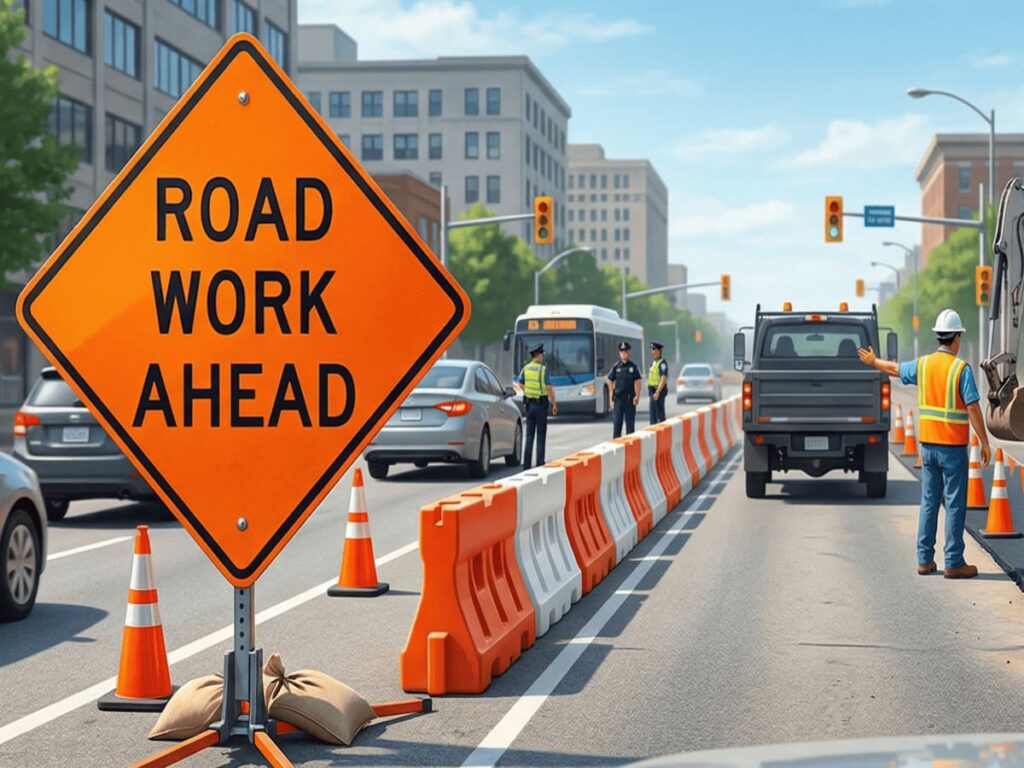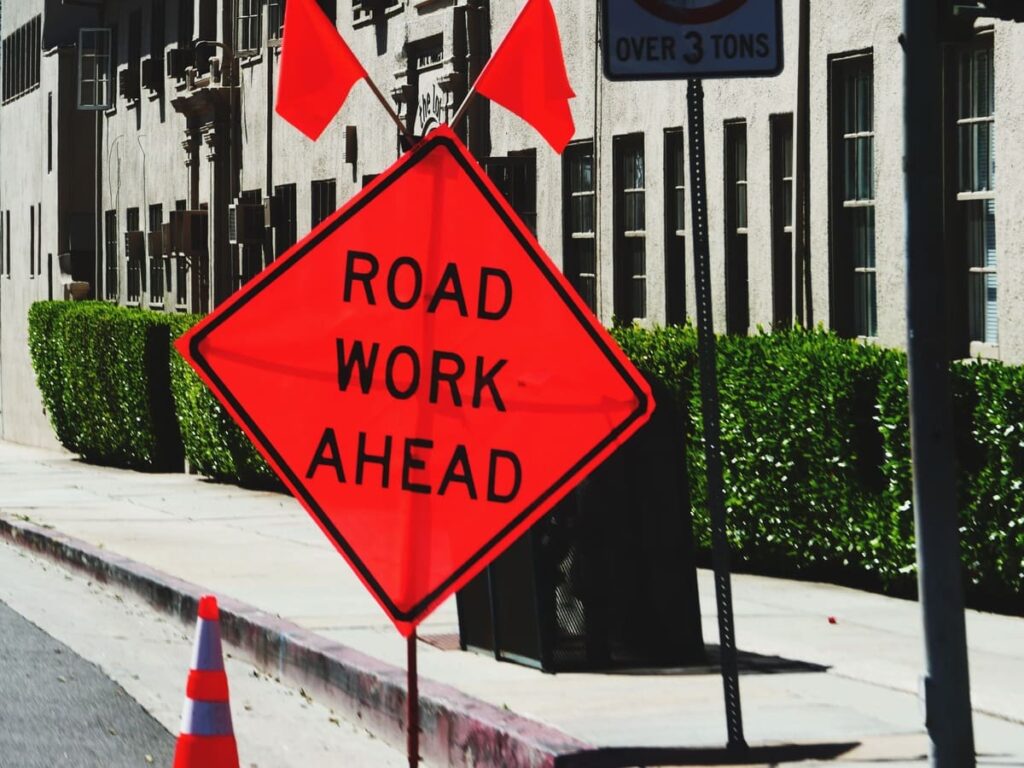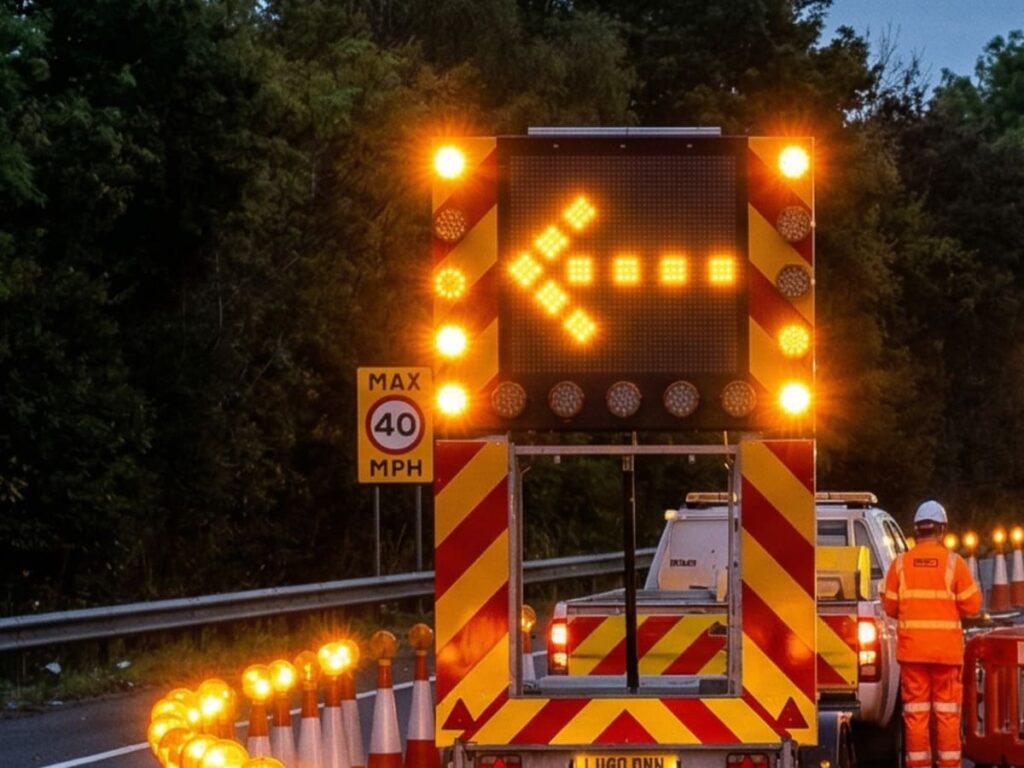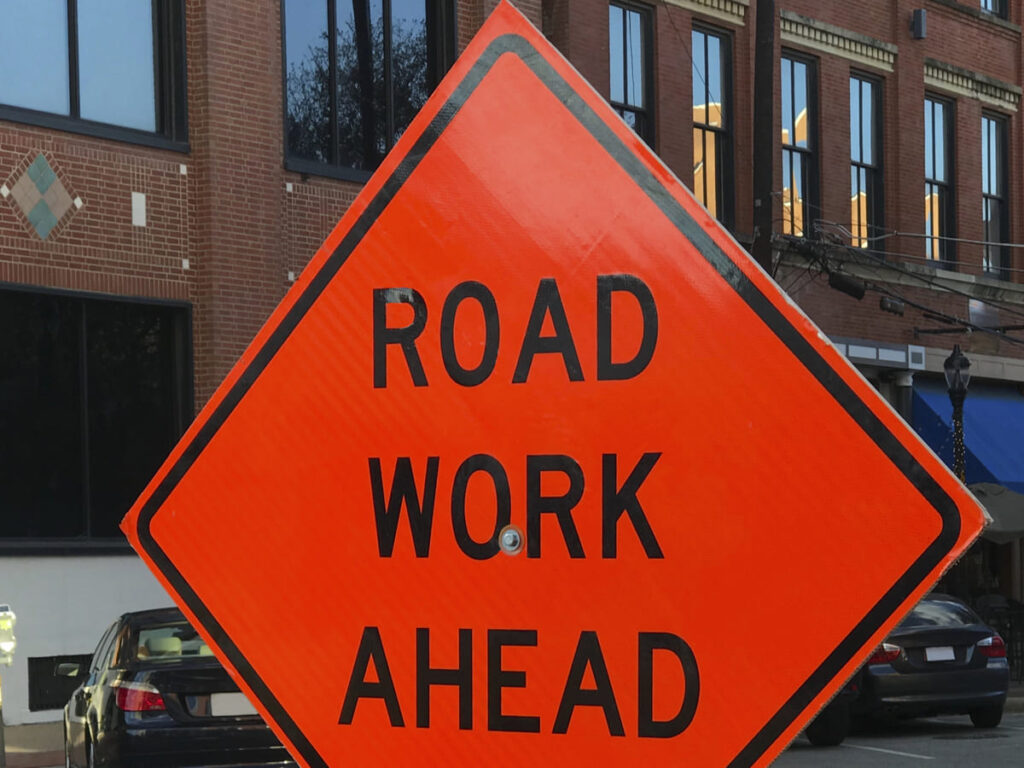
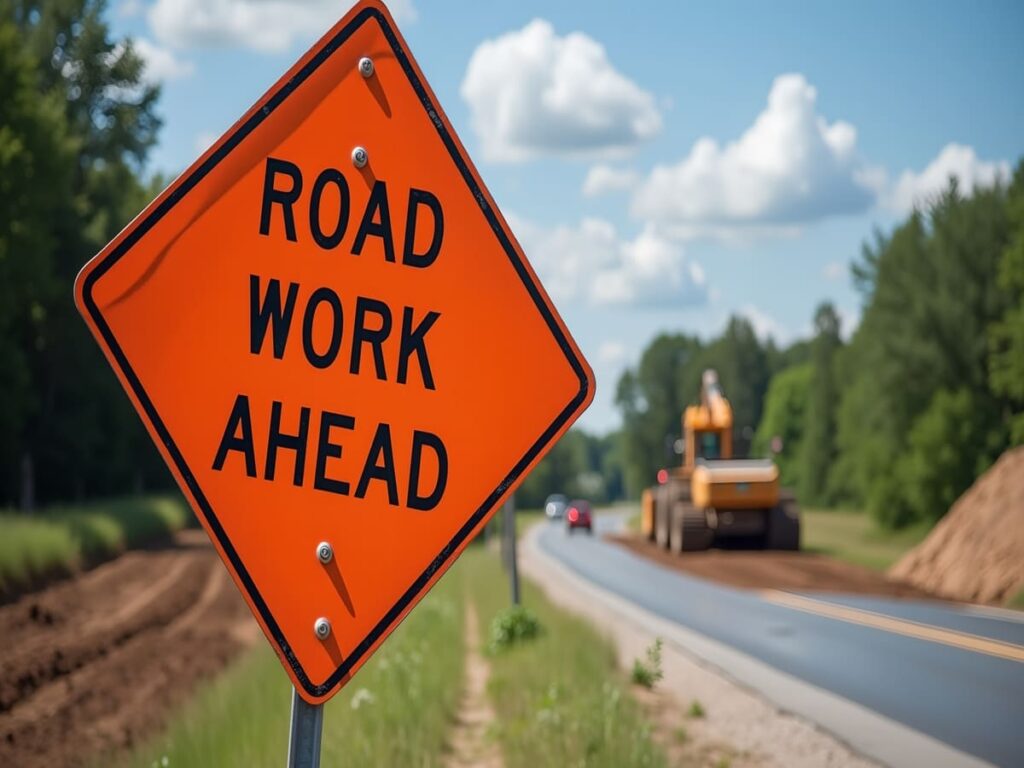
Road Construction Signs serve as a critical communication bridge between site engineers and the motoring public. These markers are typically a diamond-shaped orange construction sign. They feature bold black text or symbols to provide clear direction. A Road Construction Sign acts as a mandatory directive to warn drivers of hazards. These may include ongoing maintenance or sudden lane closures. By signaling changes in traffic patterns, they force a reduction in speed. This ensures heightened caution and maximum site safety.
Jedoch, A Straßenbauschild requires more than just a standard orange color. True effectiveness depends on optical precision and material quality. Visibility shifts from simple color to advanced retroreflective engineering during night projects. This technology is vital during adverse weather conditions. It protects road workers and minimizes contractor liability. Understanding these technical details is the first step toward superior work zone management.
Effective work zone management involves more than just selecting a single sign. A strategic layout is essential for site safety and operational flow. For a complete tactical overview, Lesen Sie unsere Umfassender Leitfaden zur Baubeschilderung. This resource covers everything from planning to regulatory enforcement. Use this guide to ensure your entire project site remains safe and fully compliant.
The Physics of Retroreflection in Modern Road Construction Signage
To understand why a Straßenbauschild remains visible under heavy-duty headlights, look beyond the surface paint. The core technology powering every Straßenbauschild is retroreflection. This sophisticated optical process returns light directly to its source with minimal scattering. Standard mirrors or white paper reflect light differently. Im Gegensatz, rorefektiv Baubeschilderung directs maximum light back to the driver’s eyes. This ensures light is not lost to the environment.
This optical precision is achieved through advanced micro-prismatic engineering. Eine hochwertige orange construction sign features thousands of microscopic “corner cube” prisms. Light enters these prisms and reflects off three internal surfaces. It then returns in the exact direction it arrived. A Straßenbauschild might be at a merging point or high-speed zone. This technology allows drivers to recognize hazards from hundreds of meters away. It provides the necessary time to adjust speed and change lanes safely. High-performance materials ensure your Straßenbeschilderung performs consistently in all light levels.
Technical Standards: Navigating ASTM D4956 Grades for Your Orange Construction Sign
In traffic safety, not all materials are created equal. Internationale Standards wie ASTM D4956 govern the performance of every orange construction sign. This grading system categorizes reflective sheeting based on brightness and durability. These grades dictate where you must deploy a Straßenbauschild to meet regulations. Selecting the right grade is essential for maintaining safety compliance. It ensures your Baubeschilderung remains effective throughout the entire project.
Meeting these standards requires a clear understanding of material performance. Different roadway environments demand specific levels of luminosity. To find the ideal match, Sehen Sie sich unseren Leitfaden an ASTM D4956-Vergleich: Auswahl des besten reflektierenden Beschilderungsmaterials. This comparison helps you balance safety requirements with project budget needs. Use this technical data to optimize your procurement process effectively.
The Distinction Between Grade Types
Type IV sheeting is often the standard for urban or low-speed zones. It provides reliable retroreflection for Straßenbauschilder near ambient city lighting. Jedoch, high-speed motorways require Type XI sheeting instead. Ein orange construction sign with Type XI sheeting uses the most efficient technology available. It returns a much higher percentage of light to the driver. This luminosity is vital for Straßenbeschilderung in high-stakes environments. It allows early detection of lane shifts and prevents catastrophic errors.
Operational Longevity and Compliance
Material choice directly impacts the lifecycle of your Straßenbauschild. High-grade materials resist weathering from UV exposure and extreme temperatures. A lower-grade orange construction sign might initially appear bright. Jedoch, its reflective properties can degrade rapidly under harsh sunlight. This causes the sign to fall below mandatory safety thresholds. By choosing high-spec Construction Warning Signs, project leads ensure constant compliance. Your site will pass safety audits from installation to the final wrap-up.
The Science of Angles: Maximizing the Reach of an Orange Construction Sign
Ein orange construction sign must stay visible as vehicles move. Its effectiveness depends on where the driver is looking. Engineers focus on two main factors to keep Straßenbeschilderung klar. These are the Entrance Angle and the Observation Angle.
1. Beobachtungswinkel: The Truck Driver’s Perspective
The Observation Angle is the gap between the vehicle’s headlights and the driver’s eyes. This is a critical consideration for Baubeschilderung because:
- Heavy Vehicle Safety: Truck drivers sit much higher above their headlights than drivers in passenger cars.
- Lichtrückkehr: A narrow “cone of reflectivity” on an orange construction sign may miss the driver’s eyes.
- Die Lösung: Hochwertig Road Construction Signs feature a wide observation angle to ensure visibility for all vehicles.
This optical gap creates significant risks for fleet operators and site managers. Standard reflective technology often fails to reach the elevated cabin of a heavy vehicle. To solve this specific safety issue, explore our deep dive on Warum die Sichtbarkeit von Verkehrsschildern für Lkw-Fahrer eine größere Herausforderung darstellt als für Pkw-Fahrer. This guide explains the geometry of light return for large trucks. Use these insights to choose a Road Construction Sign that protects every motorist on the road.
2. Eingangswinkel: Navigating Curves and Inclines
The Entrance Angle refers to the angle at which the headlights’ beam strikes the Straßenbauschild.
- Curved Roadways: Light hits a Straßenbauschild at an oblique angle on sharp bends.
- Luminosity Retention: Standard Construction Warning Signs can lose 70% of their brightness at steep angles.
- Optical Precision: Optraffic uses advanced prismatic sheeting to maintain high luminosity at extreme angles. This ensures the orange construction sign “pops” from any direction.
Maintaining the correct angle is critical for long-range visibility. Improper placement can render even the best materials ineffective. For technical mounting details, Sehen Sie sich unseren Leitfaden an Traffic Sign Height and Angle Best Practices. These steps ensure your Road Construction Sign performs perfectly in every environment.
3. Strategische Platzierung für maximale Sichtbarkeit
To optimize the visual reach of your Straßenbauschild, the following tactical points should be followed:
- Offset Alignment: Tilt the sign slightly away from the road to reduce glare and maximize retroreflection.
- Height Consistency: Maintaining standard mounting heights to ensure the sign stays within the primary beam of the vehicle’s headlights.
- Sequential Placement: Use a series of orange construction signs to step down traffic speed. This allows the driver’s eyes to adjust to the work zone safely.
Fluorescent vs. Standard: Choosing the Best Orange Construction Sign
A standard orange construction sign works well in clear midday conditions. Jedoch, its performance drops during “transitional light” periods. Hier ist fluorescence becomes critical for Roadwork Signage selection.
The Science of Fluorescence in Roadwork Signs
Fluorescence uses “wavelength conversion” um die Sichtbarkeit zu verbessern.
- Light Conversion: A fluorescent orange construction sign absorbs invisible UV rays. It then re-emits them as visible light.
- Enhanced Luminance: This causes the sign to appear as if it is “glowing.” It provides higher contrast against grey concrete or autumn foliage.
Visibility During “The Grey Hour” and Adverse Weather
Dawn, Dämmerung, and bad weather are dangerous for road workers. A Road Construction Sign with fluorescent technology offers distinct advantages:
- Overcast and Foggy Conditions: Fluoreszierend Baubeschilderung Ist 300% more visible than standard versions in fog.
- Early Detection: Drivers detect a fluorescent orange construction sign before they can read the text. This provides an essential “pre-warning” für Arbeitsbereiche.
- Inattentional Blindness Mitigation: The intense color breaks through driver fatigue. It demands immediate cognitive attention from distracted drivers.
When to Deploy Premium Reflective Construction Signs
Deciding between standard and fluorescent orange construction signs should be based on the project’s specific risk profile:
- High-Speed Corridors: Mandatory for any Straßenbauschilder on highways where stopping distances are greater.
- Long-Term Projects: Essential for projects spanning multiple seasons where winter fog or early sunsets are expected.
- High-Conflict Zones: Areas where Construction Warning Signs must compete with bright commercial neon lights or heavy traffic congestion.
Haltbarkeit und Wartung: Protecting Your Road Construction Sign Assets
A Straßenbauschild is a significant investment in site safety. Its lifespan depends on material quality and proper care. Baubeschilderung must endure constant exposure in harsh environments. This includes intense UV radiation and freezing winters. The sign must not lose its life-saving reflective properties.
1. Weathering the Elements: UV and Corrosion Resistance
Leistungsstark orange construction signs feature specific engineering to survive weathering.
- Edge Sealing: Advanced Reflective Construction Signs feature sealed edges. This prevents moisture from delaminating the reflective prismatic layers.
- UV-Stabilized Coatings: Qualität Straßenbauschilder use specialized overlays. These prevent the orange pigment from fading into a non-compliant pale yellow.
- Substratintegrität: The base of the Straßenbauschild must resist warping. It should not become brittle in sub-zero temperatures.
2. Maintenance for Optical Longevity
The micro-prisms on a Straßenbauschild are precision-engineered. Follow these protocols to maintain their visual “Pop”:
- Non-Abrasive Cleaning: Road grime and salt can dull a Straßenbauschild. Use only mild detergents and soft cloths for cleaning.
- Solvent Caution: Never use harsh chemicals on an orange construction sign. These can dissolve protective coatings and destroy reflective intensity.
- Storage Best Practices: Speichern Construction Warning Signs vertically with protective spacers. This prevents heavy Montagesätze from crushing the reflective sheeting.
3. Compliance-Audits: When to Retire a Sign
Retroreflectivity is not permanent. Im Laufe der Zeit, the internal prisms degrade. Site managers should perform regular “night-drive” audits or use handheld retroreflectometers to ensure every Straßenbeschilderung asset still meets mandatory minimum brightness levels. Wenn ein Straßenbauschild appears “grey” oder “dead” under a flashlight, it is time for a replacement to mitigate safety risks and legal liability.
Abschluss: Implementing a High-Performance Solution for Roadway Safety
Work zone effectiveness depends on superior visual communication. A Straßenbauschild is a precision tool. It relies on the harmony of color science and micro-prismatic physics. Für groß angelegte Projekte, selecting an orange construction sign requires more than basic aesthetics. You must focus on long-term visibility and international compliance.
To support these safety requirements, Optraffic provides high-performance Construction Signage solutions. Our products feature premium, ASTM-compliant retroreflective materials. Optraffic ensures every Straßenbauschild remains conspicuous in demanding environments. This technical approach allows project managers to mitigate liability. It maintains a safer environment for both workers and motorists.
FAQ – Road Construction Sign Technology & Standards
The entrance angle measures light hitting the sign from a non-direct path. A high-quality Road Construction Sign must reflect light even from sharp curves. Prismatic technology ensures visibility when the vehicle is not perfectly aligned with the sign.
Ja, removing road grime and dust can improve retroreflectivity significantly. Use mild soap and water to clean your Road Construction Sign safely. Avoid abrasive chemicals that could scratch the delicate Reflective Signage Material surface.
Ja, mounting height affects the angle of light return to the driver. A Road Construction Sign positioned too low may cause glare issues. Always follow MUTCD or local guidelines to ensure the optical axis remains effective.
Fluorescent pigments absorb invisible UV light and re-emit it as visible light. This makes a Road Construction Sign appear much brighter during dawn or dusk. It provides a critical safety advantage during “grey” light conditions on site.