Einführung: Positive Orientierung mit Bauumleitungsschildern
Eine Straße zu blockieren ist einfach. Es ist schwierig, den Verkehr sicher zu leiten. Wenn Sie eine Straße vollständig sperren, Sie stören das gesamte lokale Stromnetz. Sie können nicht einfach eine Barriere aufstellen und weggehen. Sie müssen bereitstellen “Positive Anleitung.”
Dies bedeutet, dass für jeden Verschluss ein bestimmter Satz erforderlich ist Bauumleitungsschilder. Wenn Sie keinen klaren Weg angeben, Autofahrer werden in Panik geraten. Sie machen illegale Kehrtwendungen oder fahren durch Privatgrundstücke, um der Sackgasse zu entkommen.
Meistere die Zonen: Bevor Sie einen konkreten Umweg planen, Sehen Sie sich die vier Komponentenbereiche in unserem an Einrichtung der Arbeitszone 101 Führung.
Zur physischen Einrichtung des Schließpunktes, Sie müssen eine strikte Reihenfolge einhalten. Sie benötigen Vorwarnungen, eine körperliche Blockade, und eine durchgehende Spur von Routenmarkierungen.
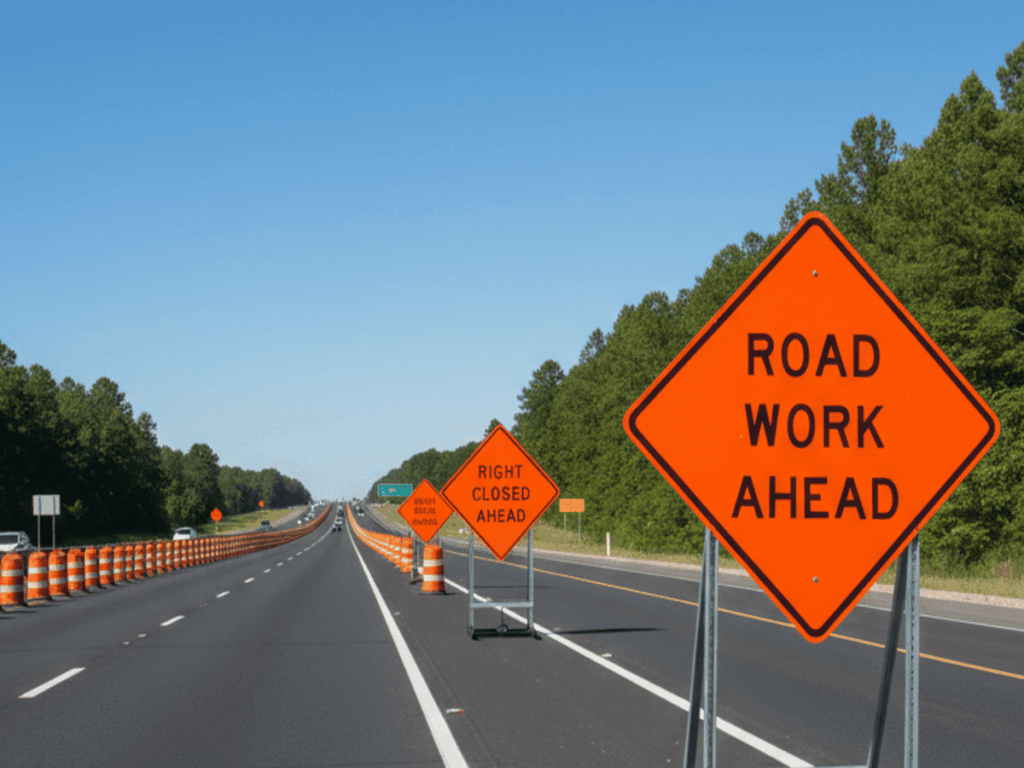
Vorwarnung: Die Schilderfolge „Straße gesperrt“.
You cannot surprise a driver with a dead end. Der “Vorwarnbereich” ist kritisch. You must filter traffic out long before they reach the physical barricade using the Road Closed Ahead sign (W20-3).
Spacing for Construction Detour Signs (Urban vs. Ländlich)
Do not guess the distance. Use the standard “A, B, C” spacing defined by MUTCD Table 6C-1.
- Städtische Straßen (Niedrige Geschwindigkeit): Space your Bauumleitungsschilder 100 Füße auseinander.
- Zeichen A: Die Straße schloss im Voraus (300 ft from closure).
- Zeichen B: Umweg voraus (200 ft from closure).
- Zeichen C: Umleitung beenden / Specific Instruction (100 ft).
- Rural/High Speed Roads: Increase spacing to 500 Füße pro Zeichen.
- You need a full 1,500-Fuß warning zone.
- Fahrer bei 55 mph need this distance to decelerate safely.
Placement of the Detour Sign (W20-2)
Midway through the warning zone, you must plant the Detour sign (W20-2).
- Visual Reinforcement: Pair this sign with a Type B High-Intensity Flashing Light. This grabs attention in low-visibility conditions.
- Management Context: Placing signs is just the execution. Der Strategie of where to divert traffic is a separate challenge.
Planning the Route: Für einen umfassenderen Leitfaden zur Steuerung des Verkehrsflusses und zur Reduzierung von Staus bei Umleitungen, Lesen Sie unsere Leitfaden zur effektiven Verwaltung von Umleitungsschildern.
Kritische Unterscheidung: Schild „Straße gesperrt“ vs. Straßensperrschild
Ingenieure verwechseln diese beiden oft.
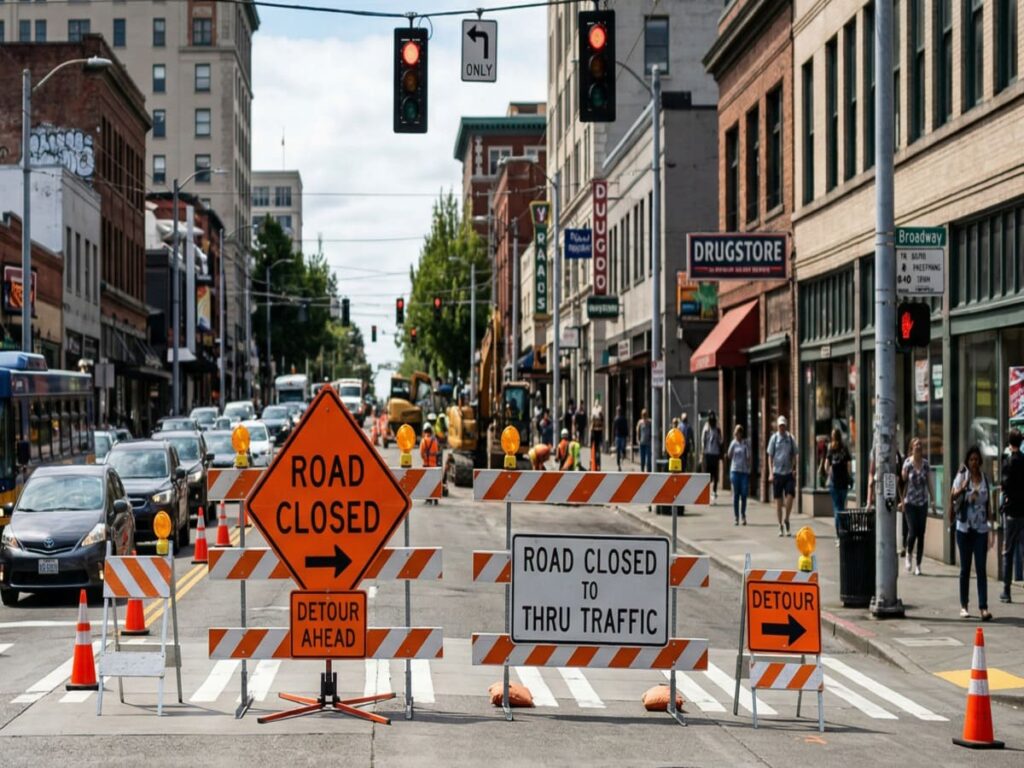
- Die Warnung (Orange): Road Closed Ahead sign (W20-3). Platzieren Sie dies nur im Vorwarnbereich. Es teilt dem Fahrer mit, wo die Straße liegt momentan geöffnet, wird aber bald geschlossen.
- Die Regulierung (Weiß): Schild „Straße gesperrt“. (R11-2). Platzieren Sie dies nur an der eigentlichen Barrikade. Platzieren Sie niemals ein weißes Ordnungsschild im Warnbereich. Es führt dazu, dass Autofahrer auf offener Straße anhalten.
Der harte Abschluss: Barrikaden vom Typ III & Straßensperrschilder
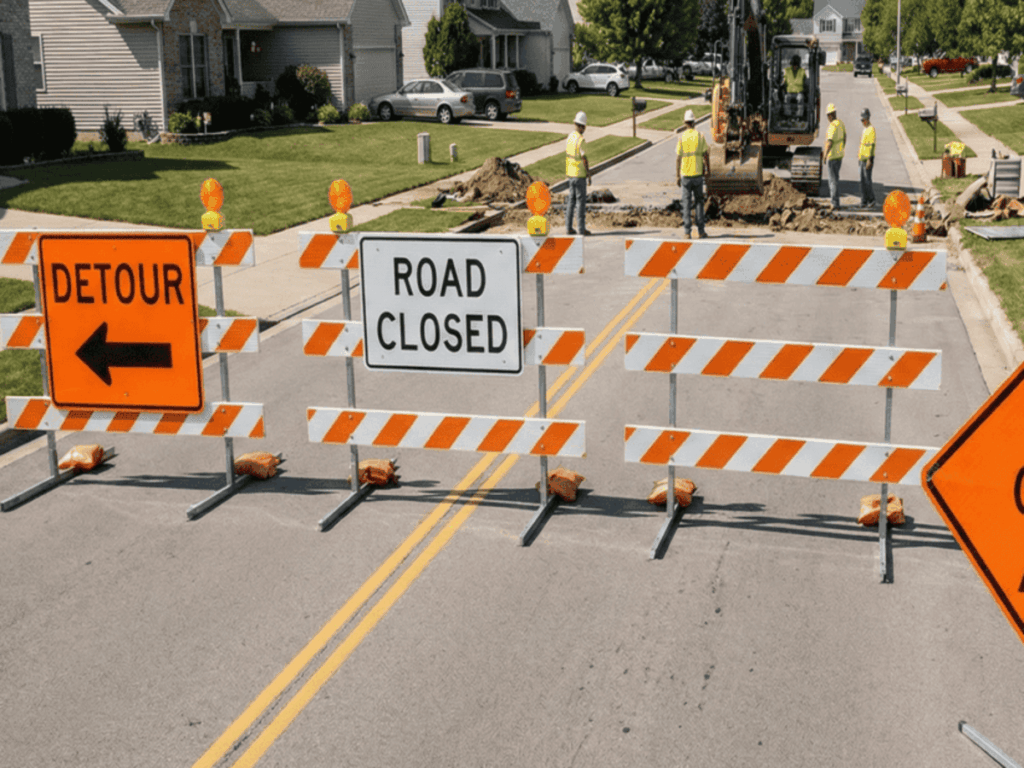
Der “Vorwarnbereich” warnt den Fahrer. Der “Aktivitätsbereich” hält sie physisch auf. An der Stelle, an der die Straße komplett abgeschnitten ist, Sie müssen eine physische Mauer bauen. Kegel und Trommeln reichen hier nicht aus; Sie benötigen Barrikaden vom Typ III.
Warum Barrikaden vom Typ III verwenden??
Für eine Vollsperrung der Straße, MUTCD erfordert ein Gerät, das wie eine Sackgasse aussieht.
- Design: A Barrikade vom Typ III verfügt über drei horizontale Reflektorschienen. Es ist höher (5 Fuß min) und breiter als jeder andere Kanalisierer.
- Funktion: Es schreit optisch “Stoppen.” Es entsteht ein physisches Tor, das die gesamte Fahrspur abdeckt.
- Auswahl: Verwenden Sie hier keine Barrikaden vom Typ I oder II. Für Hochgeschwindigkeitsstraßensperrungen sind sie zu klein.
Die richtige Barriere wählen: Nicht alle Barrikaden sind für den Straßenverkehr geeignet. Um die Unterschiede zwischen Typ I zu verstehen, Ii, und III, Lesen Sie unsere spezifischen Leitfaden zu Verkehrssperren bei Straßensperrungen.
Anbringen des Schildes „Straße gesperrt“. (R11-2)
Ihr Ordnungszeichen gehört dazu An die Barrikade, nicht davor.
- Das Zeichen: Montieren Sie das Weiß Schild „Straße gesperrt“. (R11-2) direkt im Zentrum der Typ-III-Barrikade.
- Das Gesetz: Dieses weiße Schild macht es für die Polizei rechtlich durchsetzbar, Fahrern, die die Schranke umgehen, einen Strafzettel zu verhängen.
- Sichtweite: Stellen Sie sicher, dass das Schild hoch genug montiert ist (mindestens 1 Fuß von der Spitze der Barrikade entfernt) so dass es die Scheinwerfer sofort reflektiert.
Die Umleitungsroute: Kontinuität & Schilder der M4-Serie
Die Straße zu blockieren ist nur die halbe Arbeit. Sie müssen den umgeleiteten Verkehr auf der gesamten Alternativroute leiten, bis er wieder auf seinen ursprünglichen Weg zurückkehrt.
Eine einzige fehlt Umleitungsschild verursacht einen Zusammenbruch “Kontinuität der Route.” Wenn ein Fahrer eine Abbiegung verpasst, Sie verlieren sich in einer unbekannten Nachbarschaft. Dies führt zu Beschwerden, Stauung, und Unfälle. Sie müssen die vollständige Sequenz der M4-Serie verwenden.
1. Die Wende: Vorauszahlung & Kreuzungsbaugruppen (M4-9)
Sie können keinen einzelnen Pfeil an der Ecke platzieren. Professionelle Setups verwenden a “Doppelschlag.”
- Vorwärtsdrehung: Platzieren Sie a Schild „Umleitung voraus“. mit Abbiegepfeil (M4-9) 200 Füße vor die Kreuzung. Dies ermöglicht dem Fahrer einen sicheren Spurwechsel.
- Richtungspfeil: Platzieren Sie das tatsächliche Detour sign (M4-9) an der Kreuzung selbst.
- Montagehöhe (MUTCD 6F.03): In städtischen Gebieten mit parkenden Autos oder Fußgängern, Montieren Sie diese Schilder 7 Füße hoch. In ländlichen Gebieten, 5 Füße ist ausreichend.
2. Die Beruhigung: Den Pfad bestätigen (M4-10)
Nachdem ein Fahrer stressig auf eine neue Straße abgebogen ist, sie geraten in Panik. “Bin ich immer noch auf der Umleitung??”
- Die Lösung: Platzieren Sie a Detour-Beruhigungsversammlung (M4-10) 500 Füße danach jede große Wendung.
- Frequenz: Auf langen Umwegen, Wiederholen Sie dieses Zeichen alle 1 Meile (ländlich) oder alle paar Blocks (urban). Dies bestätigt dem Fahrer, dass er weiterhin unter Ihrer Führung steht.
3. Die Kündigung: Umleitung beenden (M4-8)
Sie müssen den Fahrer offiziell freigeben.
- Das Zeichen: Platzieren Sie ein Umleitungsschild beenden (M4-8a) an der Stelle, an der der Verkehr wieder auf die ursprüngliche Route trifft.
- Warum ist es wichtig: Ohne das, Autofahrer suchen möglicherweise weiterhin nach orangefarbenen Schildern und verpassen ihre normale Ausfahrt.
Häufige Fehler bei der Umleitungseinrichtung
Selbst erfahrene Crews machen diese spezifischen Fehler. Vermeiden Sie sie, um Ihre Haftung einzuschränken.
Versagen 1: Der “Geist” Umleitungsschild
Verlassen a Bau-Umleitungsschild nach Abschluss des Projekts auftauchen, stellt einen schwerwiegenden Verstoß dar.
- Das Risiko: Einheimische lernen, Ihre Schilder zu ignorieren. Wenn Sie nächsten Monat einen echten Abschluss haben, Sie werden direkt durch deine Barrikade fahren.
- Die Lösung: Drehen, Abdeckung, oder alle Schilder der M4-Serie sofort entfernen, wenn die Straße wieder geöffnet ist.
Versagen 2: Widersprüchliche Wegweiser
Haben Sie die vorhandenen grünen Straßenschilder abgedeckt??
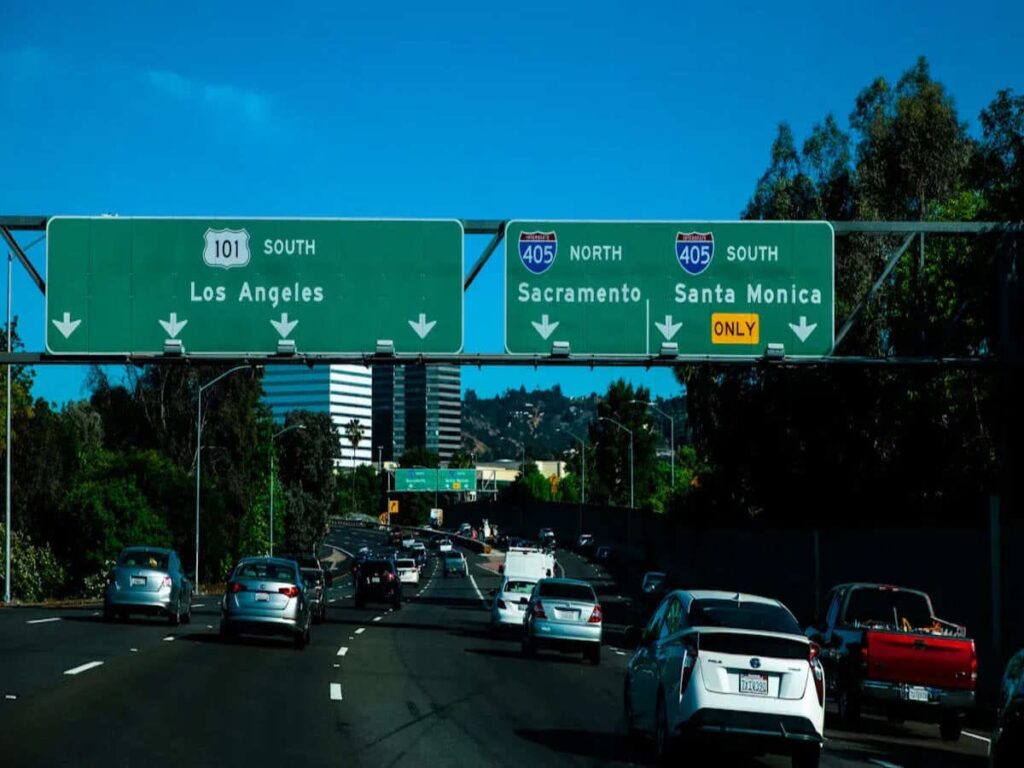
- Der Konflikt: Wenn Ihr Detour sign Punkte übrig, aber das permanente Grün “Zum Highway 101” Zeichen zeigt nach rechts, Der Fahrer wird zögern.
- Die Lösung: Dauerhafte Wegweiser, die Ihrem Umleitungsplan widersprechen, müssen Sie vorübergehend abdecken.
Abschluss: Vervollständigen Sie die Schleife mit Bauumleitungsschildern
Eine Straßensperrung ist nicht nur eine Barriere; es ist ein Versprechen eines alternativen Weges. Dieses Versprechen müssen Sie mit einer fehlerfreien Abfolge erfüllen Bauumleitungsschilder.
Von Anfang an Road Closed Ahead sign bis zur letzten End Detour-Markierung, Jede Komponente muss zusammenarbeiten. Wenn Sie ein Glied in der Kette übersehen – wie zum Beispiel ein beruhigendes M4-10-Schild – geraten Autofahrer in Panik und verstoßen gegen die Verkehrsregeln.
Compliance schützt Ihre Lizenz. Eine wirksame Beratung schützt Ihre Gemeinschaft.
Rüsten Sie Ihren Detour mit Optraffic aus
Mischen Sie keine verblassten Schilder aus verschiedenen Vermietungen. Optraffic bietet das gesamte Ökosystem von Straßenbauschilder.
- Warnung: Hohe Intensität Schilder „Straße gesperrt“..
- Anleitung: Vollständige M4-Serie Umleitungszeichen.
- Schließung: Mutcd-konform Barrikaden vom Typ III für den harten Verschlusspunkt.
Kontaktieren Sie uns noch heute um Ihre Großbestellung von Umleitungsmanagementgeräten zu sichern.
FAQ: Einrichtung von Bauumleitungsschildern
Es kommt auf das konkrete Zeichen an. Das Schild „Umleitung voraus“. (W20-2) ist ein rautenförmiges Warnschild, das im Vorwarnbereich angebracht ist. Jedoch, der Umleitungspfeil (M4-9) ist technisch gesehen ein temporäres Wegweiserzeichen (rechteckig) Wird verwendet, um den Verkehr an der eigentlichen Abbiegung zu leiten. Für eine konforme Einrichtung benötigen Sie beides.
Der Abstand hängt von der Geschwindigkeit ab. In städtischen Gebieten (niedrige Geschwindigkeit), Ortsschilder 100 Füße auseinander, um häufige Kreuzungen zu berücksichtigen. Auf Landstraßen (hohe Geschwindigkeit), Erhöhen Sie den Abstand auf 500 Füße pro Schild, um den Fahrern ausreichend Reaktionszeit zu geben.
Farbe und Platzierung sind entscheidend.
Die Straße schloss im Voraus (Orange): Dies ist ein Warnzeichen (W20-3). Platzieren Sie es vor die Schließung, um Autofahrer zu warnen.
Straße Gesperrt (Weiß): Dies ist ein regulatorisches Zeichen (R11-2). Platzieren Sie es An die Barrikade genau an der Schließungsstelle, um den Zutritt gesetzlich zu verbieten.
Für eine Vollsperrung öffentlicher Straßen, A Barrikade vom Typ III ist Pflicht. Barrikaden vom Typ I und II sind zu klein. Nur ein Typ III (mit 3 Schienen und mindestens 5 Fuß Breite) Bietet die visuelle Dichte, die MUTCD benötigt, um eine Straße physisch zu blockieren.
Ja. Wir fertigen die gesamte M4-Serie, inklusive Umleitung voraus (M4-9), Umleitungspfeile, und Umleitung beenden (M4-8) Zeichen. Wir drucken sie auf hochintensive Prismenfolie, um die Sichtbarkeit bei Nachteinsätzen zu gewährleisten.