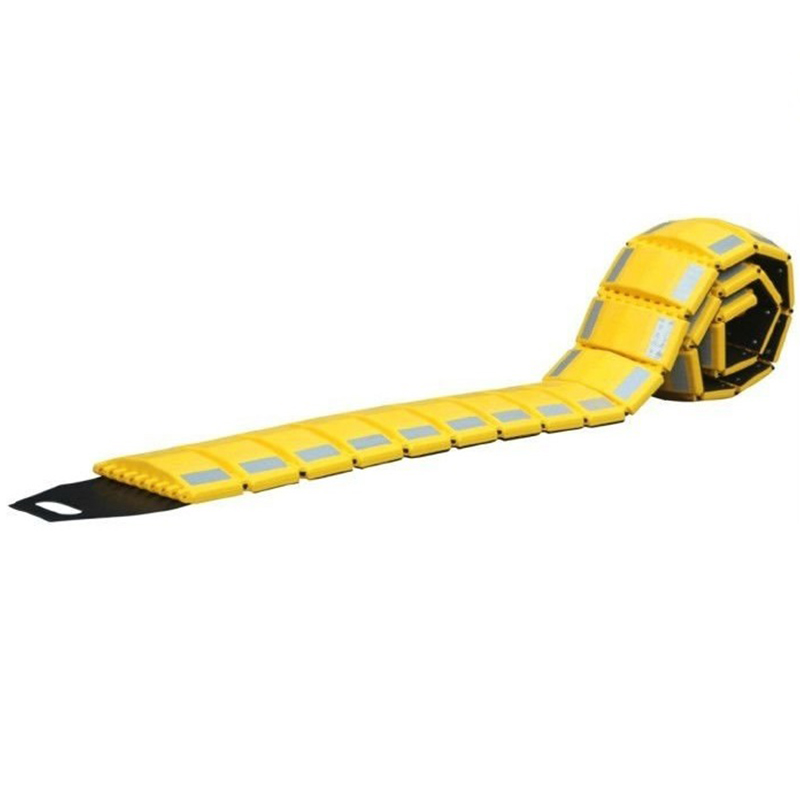
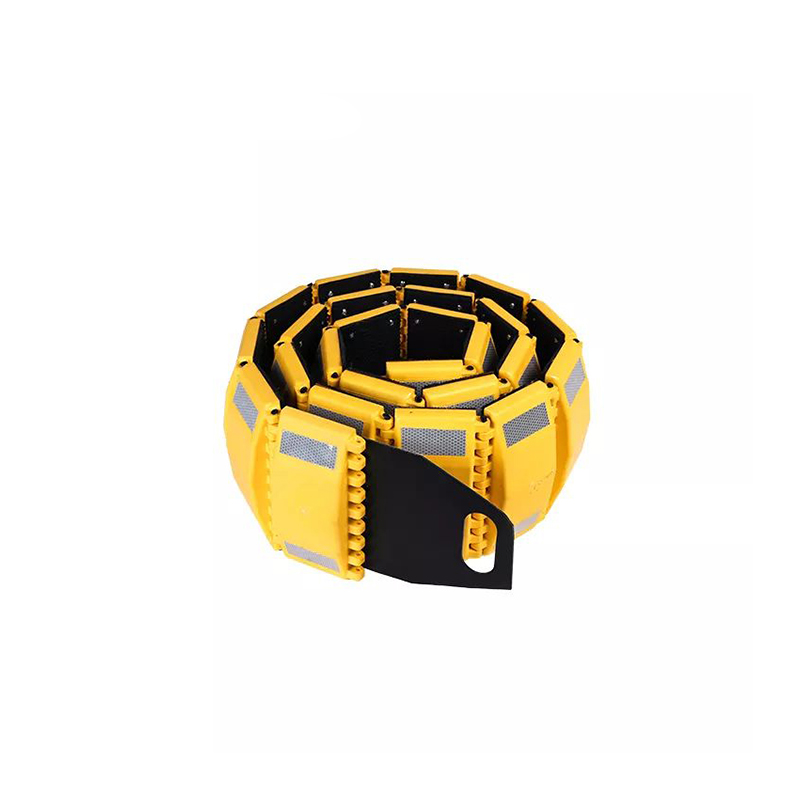
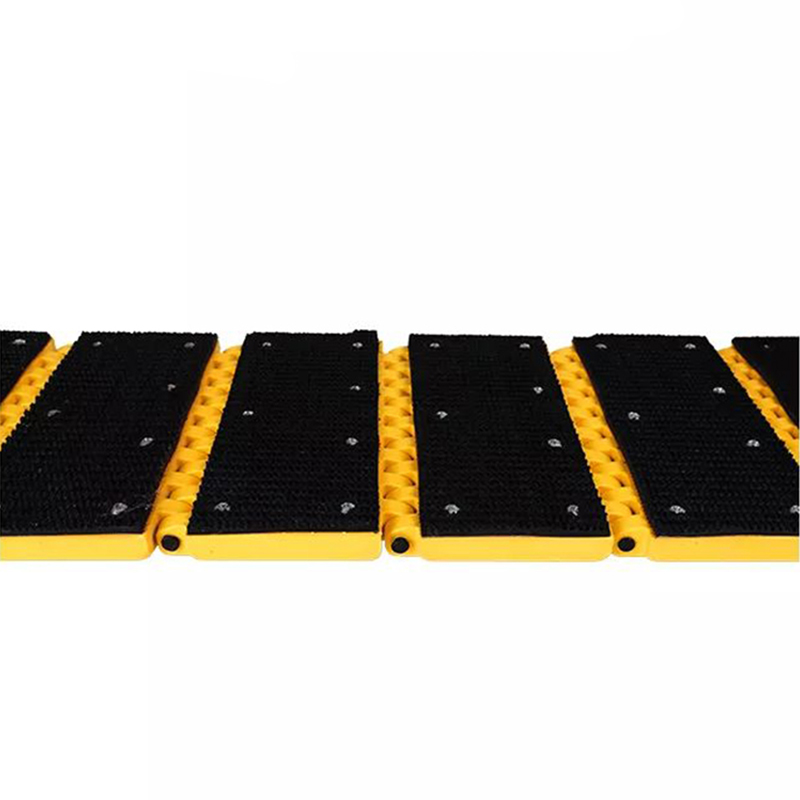
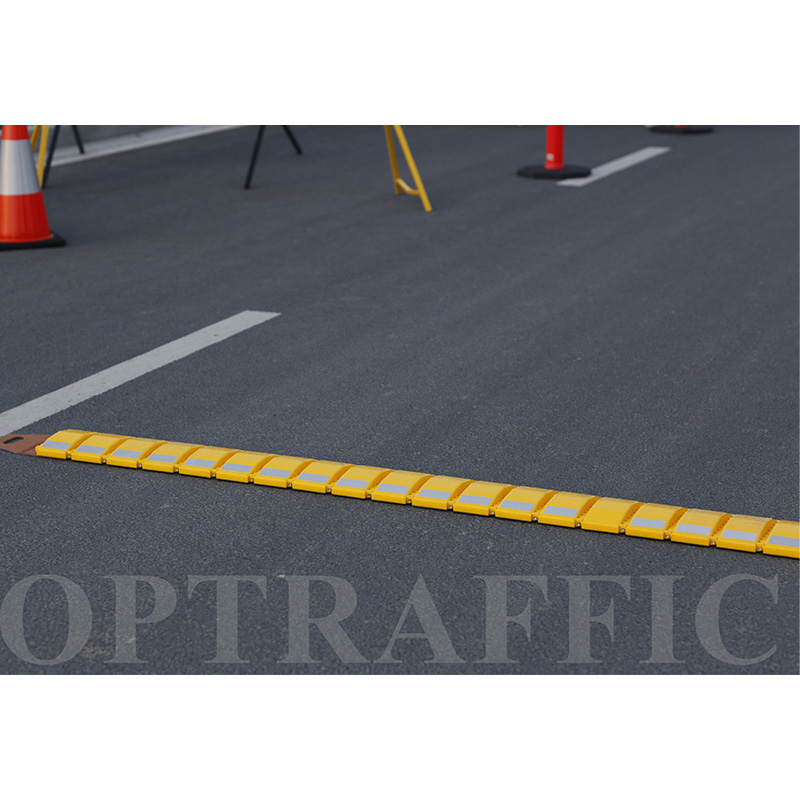
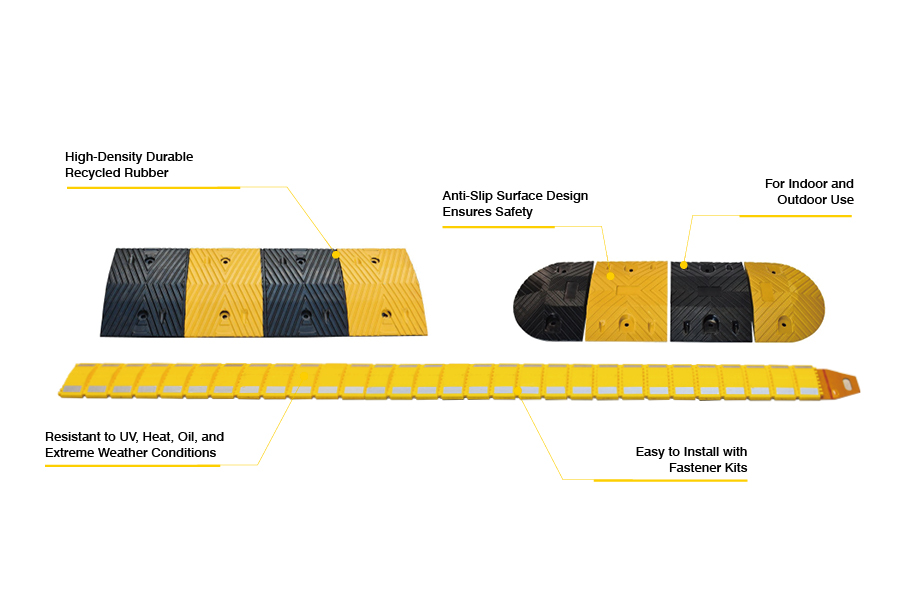
Optsigns Portable Speed Bump is engineered for seamless installation and effortless transportation, making it an ideal solution for managing traffic speed in various settings. Built with long-term durability, this speed bump withstands UV rays, heat, oil, and extreme weather conditions, ensuring reliable performance in any environment. Whether used in temporary work zones, parking lots, school zones, commercial areas, residential neighborhoods, or industrial facilities, the Portable Speed Bump effectively encourages drivers to reduce speed, enhancing safety for pedestrians and vehicles alike.

*We respect your confidentiality and all information are protected.
| Size | 3000*225*50mm |
|---|---|
| Weight | 13.7kgs |
| Reflective Sheet | None, High-Intensity Grade, Class 1 |
| Colour | Yellow, Customizable |
| Load Capacity | 15t |
| Customize | Custom Size and Weight |
Using the Optsigns temporary speed bump is straightforward and efficient. Begin by selecting a suitable location where you want to slow down traffic, such as a parking lot or school zone. Unpack the temporary speed bump and position it on the ground, ensuring it is aligned with the traffic flow. For added stability, secure it using the provided anchors or weights if needed. Once in place, the temporary speed bump will effectively alert drivers to reduce speed in the designated area, promoting safer driving practices.
To use dynabolts, first select the appropriate size based on your project’s needs. Refer to the dynabolt installation guide for detailed instructions. Ensure the installation surface, like concrete, is clean and free of debris. Place the galvanized dynabolts through the fixture and into the pre-drilled hole, then tighten using a suitable tool.
Dynabolts function by expanding within a pre-drilled hole when tightened, creating a secure anchor. This expansion mechanism allows them to hold substantial loads. The stainless steel dynabolts are particularly effective in resisting corrosion, ensuring a long-lasting hold in various environments.
To install a dynabolt, first drill a hole into the concrete of the appropriate size. Insert the dynabolt into the hole, ensuring it is aligned with the fixture. Use a wrench to tighten the nut, which will cause the dynabolt to expand and grip the surrounding material securely. Follow the dynabolt installation guide for specific instructions based on the type used.
To remove dynabolts from concrete, first, unscrew the nut and washer. Then, use a hammer to gently tap the dynabolt, loosening it from the concrete. If it resists, you may need to drill further into the hole or use a wrench to rotate the galvanized dynbolt counterclockwise until it releases.
The weight a dynabolt can hold varies based on its size and the material it is anchored into. Generally, standard galvanized dynabolts can support significant loads when properly installed.